Key Takeaways
- Start with business goals and named owners, and write each goal as one sentence with a number where possible.
- Rank use cases by value times data readiness times adoption, divided by effort, so the order of work is based on numbers.
- Settle ownership, cost sharing and rules before building, and pick technology last with open formats that stay replaceable.
- Plan the first 90 days in three releases and track five measures every month.
A data lake strategy is a short document that answers three questions: why you are building the lake, what goes in first and how you will know it works. Without it, a lake turns into a storage project with no buyer. With it, every later choice about tools, zones and budgets has something to point back to. This article shows how I write one with clients as part of data lake consulting.
You will get a simple scoring formula, an overview table of the strategy steps and a way to turn goals into a ninety-day plan. The method works for a ten-person company and for a business unit inside a large one.
The Strategy at a Glance
| Step | Question it answers | Output |
|---|---|---|
| 1. Goals | What business result do we want? | Three to five goals with owners |
| 2. Use cases | Which work needs raw or large-scale data? | Ranked list with scores |
| 3. Data readiness | Is the data available and usable? | Source inventory with owners |
| 4. Operating model | Who decides, builds and pays? | Roles, funding and rules |
| 5. Roadmap | What happens in the first 90 days? | Release plan with gates |
| 6. Measures | How do we know it works? | Five tracked numbers |
Start With Business Goals, Not Storage Capacity
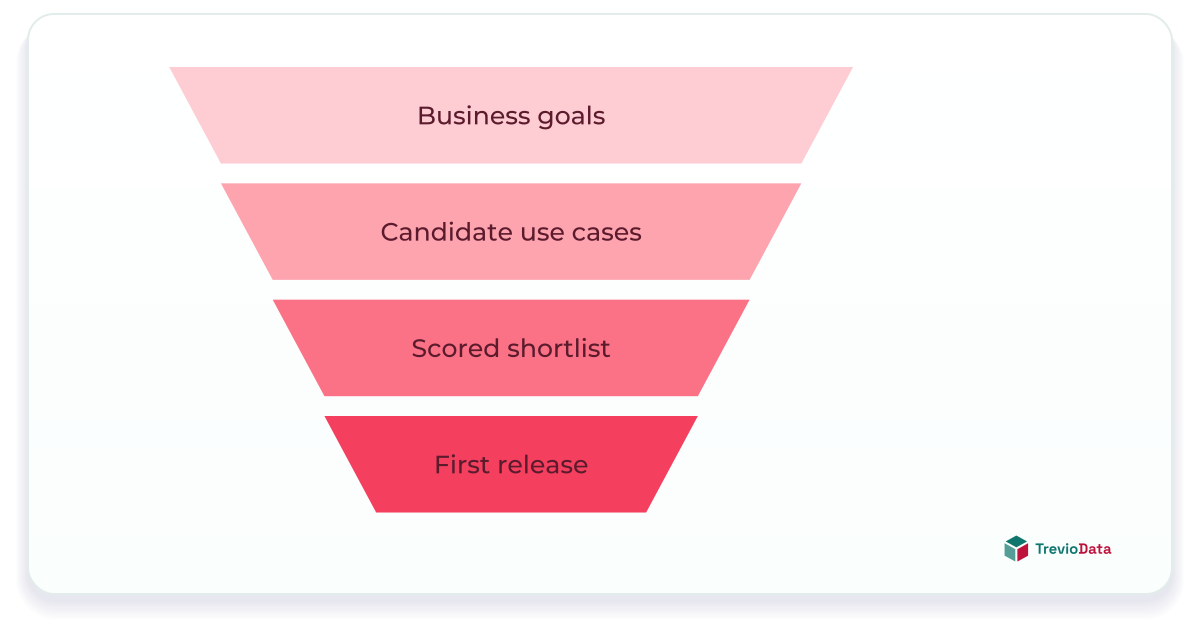
Strategy starts with a result someone cares about: fewer churned customers, faster fraud checks, lower reporting effort or a machine learning model that needs five years of history. Write each goal in one sentence, add a number where you can and name a business owner. A goal that no executive will defend is not a goal yet.
I ask clients one blunt question here: what would you do with the data if it were already clean and in one place? The answer shows whether you need a lake, a warehouse or a better spreadsheet. If the honest answer is monthly reporting on structured data, my overview of data lake pros and cons will help you decide whether a lake is worth the effort.
The Use Case Scoring Formula
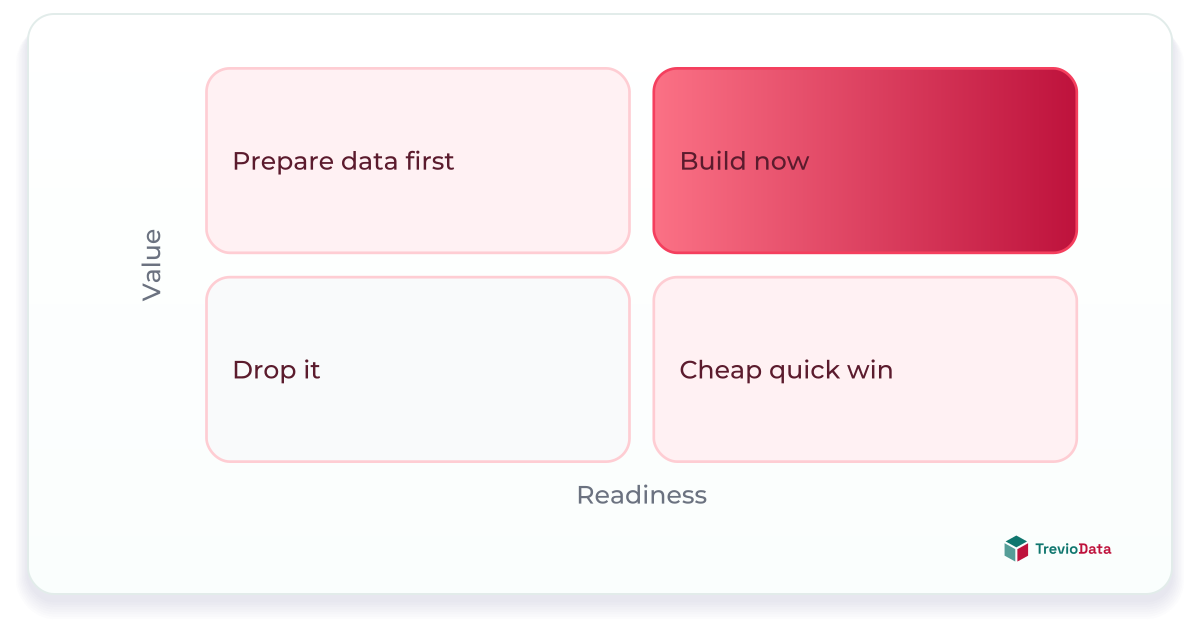
Most companies have more ideas than budget. I rank use cases with one formula so the discussion is about numbers and not about who shouts loudest:
Priority score = (Value × Data readiness × Adoption) ÷ Effort, with each factor rated from 1 to 5.
- Value: money saved or earned, or risk removed, if the use case works.
- Data readiness: whether the data exists, has an owner and is reasonably clean.
- Adoption: whether a team is ready to change how it works with the result.
- Effort: engineering weeks plus the effort of getting other teams to cooperate.
A worked example shows how it plays out. Say you compare three ideas: churn prediction, a customer 360 view and archiving old logs. The scores below are illustrative, and yours will differ.
| Use case | Value | Readiness | Adoption | Effort | Score |
|---|---|---|---|---|---|
| Churn prediction | 5 | 3 | 4 | 4 | 15.0 |
| Customer 360 view | 4 | 2 | 4 | 5 | 6.4 |
| Log archive for audits | 2 | 5 | 3 | 1 | 30.0 |
The log archive wins on score because it is easy and ready, but it is also low value. I would run it as a quick first release to prove the platform, then start churn prediction next. The formula guides the order of work, and judgment still decides the final call.
Check Data Readiness Before You Promise Dates
For every candidate source, record who owns it, how it can be extracted, how often it changes, how clean it is and whether it holds personal data. This inventory takes one to two weeks and often changes the plan. A system that only exports a monthly spreadsheet will not support a daily dashboard, whatever the roadmap says.
Readiness also covers rules. Personal data, regulated data and contract limits shape where data may live and who may see it. Ask your legal or privacy lead early, and treat what they say as input to the design. I do not give legal advice, and the facts depend on your sector and region.
Decide Who Owns What Before Anything Is Built
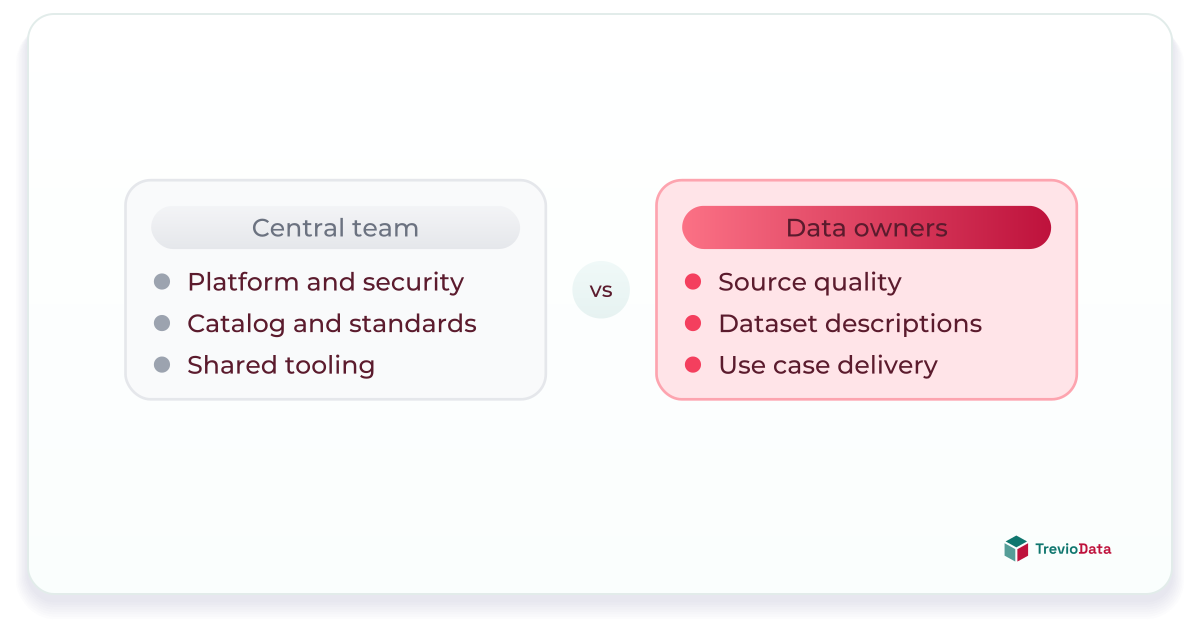
A lake needs a small operating model: a sponsor who funds it, a platform team that runs it, data owners who stand behind their sources and a forum where conflicts are settled. Without it, the lake grows by accident and costs rise with no one accountable.
Decide on cost sharing too. If one team pays for storage and everyone else uses it for free, you get waste. Tagging cost by team from the first month makes usage visible and keeps conversations honest. Rules for naming, zones and access belong here as well, and I list the ones I use in my article on data lake best practices.
Turn the Strategy Into a 90-Day Roadmap
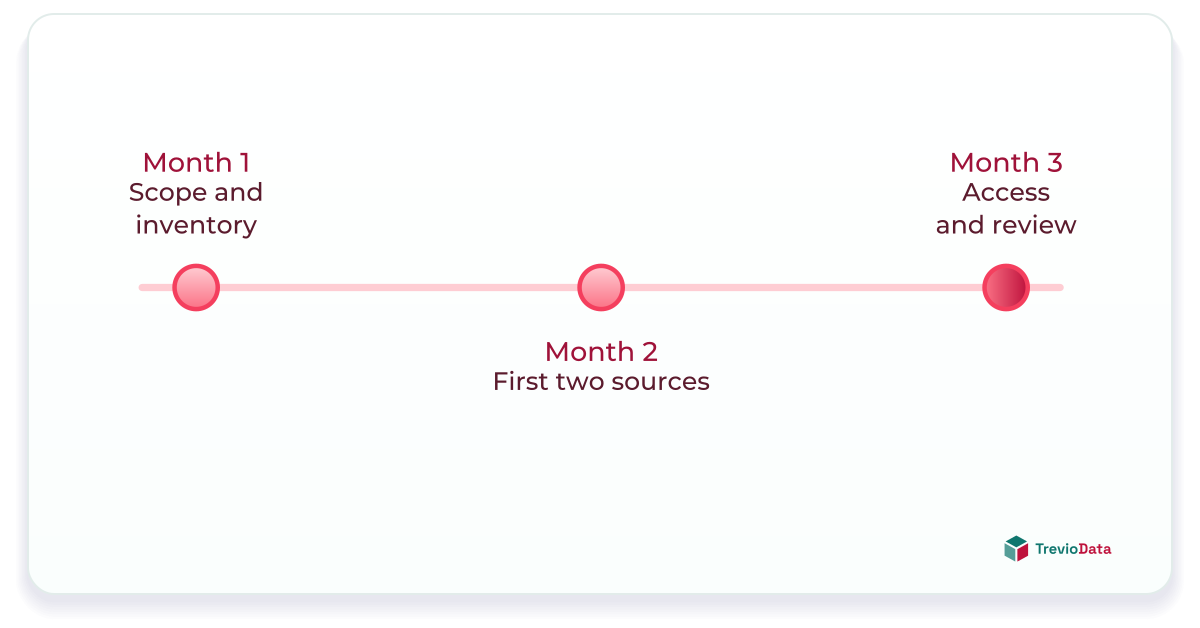
A strategy that does not reach a calendar stays a document. Plan the first ninety days as three releases of about thirty days each, with a decision gate at the end of each one:
- Days 1 to 30: foundation built, one quick-win source loaded and tested.
- Days 31 to 60: first high-value use case live for a small group of users.
- Days 61 to 90: governance in place, cost report running and the next use case approved.
The step-by-step build, including team roles and timelines, is covered in my guide to data lake implementation. Keep the roadmap short enough to fit on one page, and agree what is out of scope for each release.
Choose Technology Last, and Keep It Replaceable
Platform choice follows strategy, not the other way around. Your cloud, your team’s skills and the goals above narrow the field to a few options. Prefer open formats such as Apache Iceberg or Delta Lake so you can change query engines later without moving the data. My ranking of data lake tools compares storage, query and governance options with prices and ratings.
Write the decision and the reason into the strategy document. In two years someone will ask why you chose it, and a one-paragraph answer saves a week of debate.
Measure Five Numbers From Day One
| Measure | Why it matters |
|---|---|
| Active users per month | Shows whether people actually use the lake |
| Datasets with an owner and description | Tracks how far you are from a swamp |
| Data freshness against target | Shows reliability of pipelines |
| Cost per dataset or team | Keeps spending visible and owned |
| Value delivered per use case | Ties the lake back to the goals |
Review them monthly with the sponsor. If value delivered is flat while cost rises, pause new sources and fix the use cases you already have. For the problems that most often derail a plan, see my article on data lake challenges.
Strategy Mistakes I See Again and Again
The first mistake is a strategy that lists technology and no outcomes. A page of logos and architecture boxes does not tell anyone why the lake exists, and it gets ignored by the people who must fund it. The second is a use case list with no owners, which means nobody changes how they work when the data arrives.
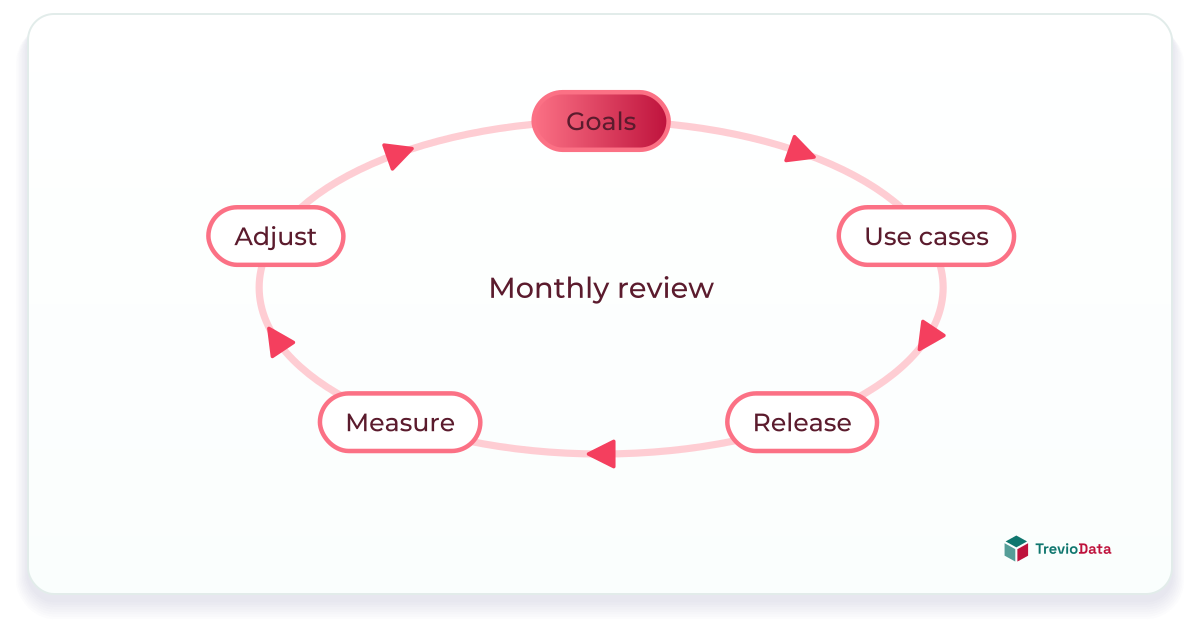
The third mistake is treating the strategy as finished. Business goals change, vendors change and your team learns what works. I schedule a short review every quarter, using the five measures above, and rewrite the roadmap for the next ninety days each time. Teams that skip this end up with a plan that describes a company that no longer exists.
A fourth, quieter mistake is skipping the sunset rules. Decide at the start what happens to data nobody uses: after how many months it moves to cold storage, and when it is deleted. Retention rules protect your budget and reduce the amount of data you must secure and search later.
Finally, keep the strategy readable. If a new manager cannot understand your lake strategy in ten minutes, it is too long. Use plain words, one table for the use cases and one page for the roadmap. Details belong in appendices that engineers maintain, not in the document executives approve.
A short example shows how this plays out. A regional retailer I worked with began with a long list of fourteen use cases. Scoring them with the formula cut the first release to two: a log archive for audit requests and a basket analysis from raw till data. Both had owners, the data was ready and a team was waiting for the result. Ten of the other twelve were dropped or postponed, and nobody missed them. That discipline is the main benefit of having a strategy at all.
Communicate the plan too. Send a one-page summary to every team whose data you will touch, with dates and what you need from them. Surprises in week six are the usual cause of stalled source access, and a simple heads-up avoids most of them.
Also plan how you will say no. A strategy earns its keep when it lets you decline a request politely, by pointing to the scores and the current release. Share the ranked list openly, so teams see where their idea sits and what would move it up, such as a named owner or cleaner data.
How to Choose Between a Light and a Full Strategy
A small team with one clear use case needs a two-page strategy and a working prototype. A company with many units, strict regulation or heavy AI plans needs a fuller document with an operating model and a funding plan. The test is simple: if more than two teams must agree to make the lake succeed, write the longer version.
Questions About Data Lake Strategy
What Is a Data Lake Strategy?
It is a short plan that explains why you are building a lake, which use cases come first, who owns what, which technology you will use and how you will measure success. It links storage and tools back to business goals.
How Long Should a Data Lake Strategy Document Be?
Two to five pages is enough for most companies. Include goals, ranked use cases, a source inventory, an operating model, a 90-day roadmap and five measures. Longer documents tend to go unread.
How Do I Prioritize Data Lake Use Cases?
Score each use case on value, data readiness, adoption and effort, then use value times readiness times adoption divided by effort. Use the result to guide the order of work, and apply judgment for the final call.
Who Should Own the Data Lake Strategy?
A business sponsor should own goals and funding, and a platform or data team should own delivery. Data owners are responsible for their own sources. Shared ownership with no named sponsor usually fails.
Should the Strategy Name a Specific Platform?
It should state the decision criteria and the chosen platform with the reason. Prefer open table formats so you can change engines later without moving data.
How Often Should I Update the Strategy?
Review it every quarter against your five measures, and rewrite goals once a year or when the business changes direction. Keep the roadmap current for the next ninety days at all times.
When Is a Data Lake the Wrong Strategy?
When your data is small, structured and used mostly for standard reports, a warehouse is simpler and cheaper. A lake makes sense for large volumes, varied formats, raw history or machine learning.
Note: This article is general information, not legal, financial or tax advice. Figures and examples are estimates based on typical projects, so check current details with your providers and advisers before you decide.
Was this article helpful?
Thank you for letting us know.
Camille leads the Trevio editorial team and works with our consultants to turn real client projects into practical guides on data strategy, engineering and governance. Before joining Trevio, she spent 11 years in data engineering and analytics roles. She has since edited more than 300 articles on data management and reviewed pipelines and platforms from over 100 client projects. She is based in Denver, Colorado.