Key Takeaways
- A lake gives you cheap storage for large volumes, any data type and raw history for analytics and AI.
- The main risks are the swamp, governance and security work, tuning effort and specialist skills.
- A warehouse is simpler for small, structured data, and many companies end up with both or a lakehouse.
- A lake pays off when at least two of the use case checks apply, and you can commit to owners and quality checks.
A data lake can be the best investment in your data platform or an expensive pile of files. The difference is rarely the technology. It is whether your data, your team and your goals fit what a lake does well. I weigh both sides with clients in data lake consulting before anyone buys anything, and this article gives you the same checks.
You will get the advantages, the drawbacks, a comparison with a warehouse and a short checklist for deciding. I have kept it direct, including where I think a lake is the wrong choice.
What a Data Lake Is in Plain Terms
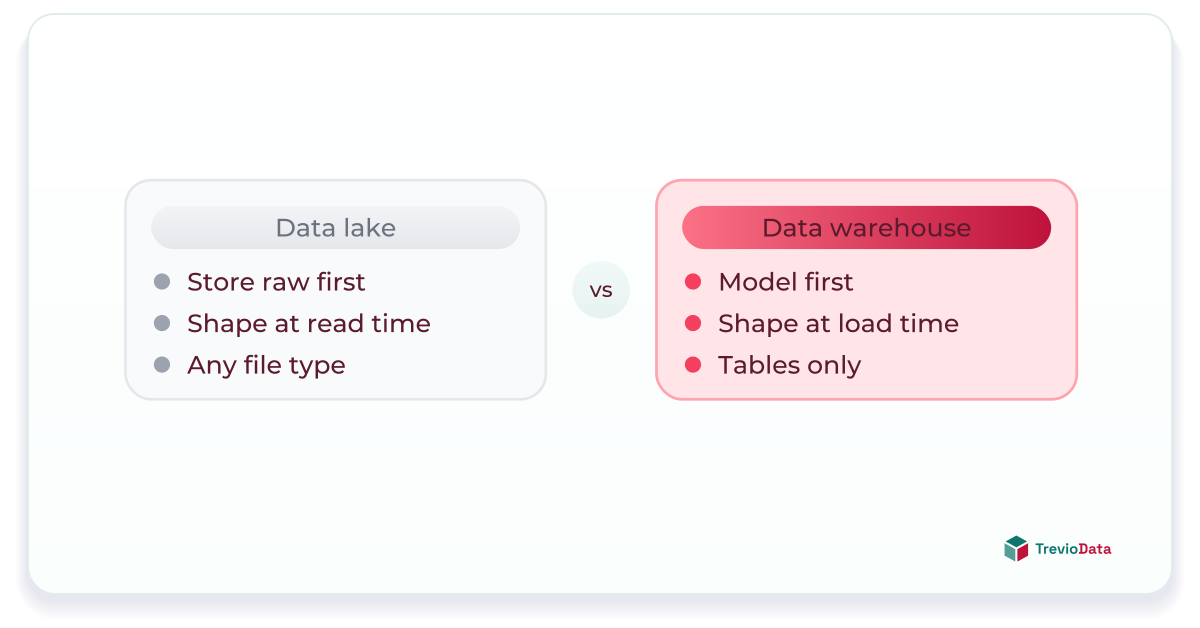
A data lake is low-cost storage that holds data in its original form: tables exported from databases, logs, JSON events, documents, images and sensor readings. Structure is applied when you read the data, not when you store it. Most lakes sit on cloud object storage such as Amazon S3, Azure Data Lake Storage or Google Cloud Storage, with query engines and a catalog on top.
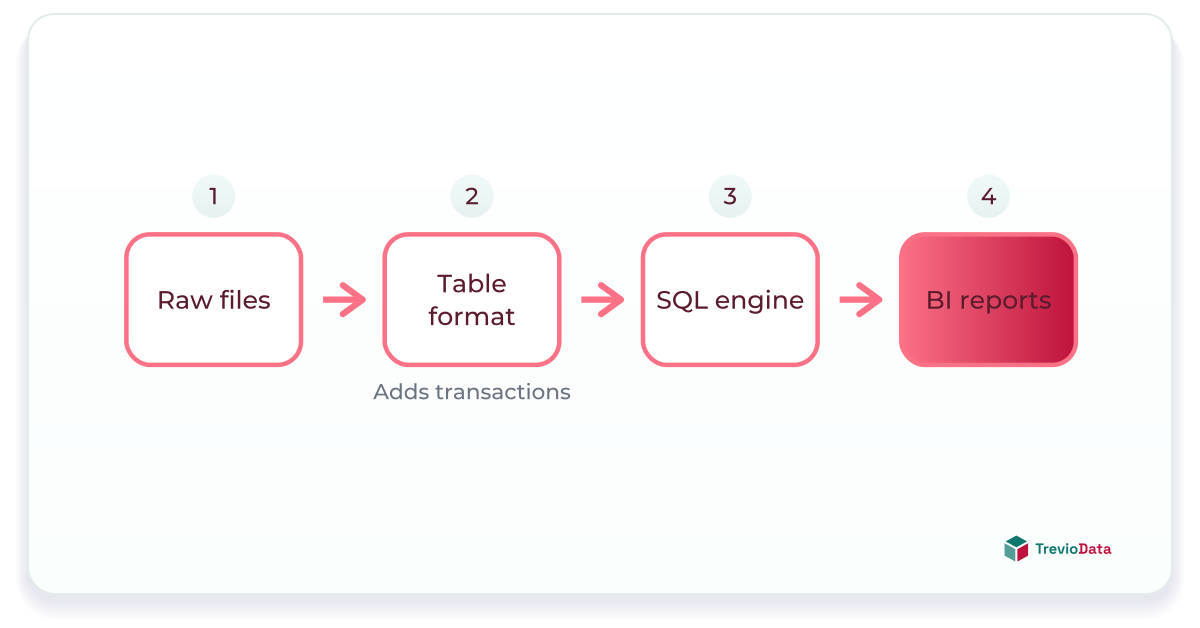
A lakehouse adds open table formats such as Apache Iceberg or Delta Lake, which give the files transactions and fast SQL. Most new projects today aim for that combination, and the pros and cons below apply to both unless I say otherwise.
The Advantages of a Data Lake
Low Storage Cost for Large Volumes
Object storage costs cents per gigabyte per month, and colder tiers cost less again. If you keep years of logs, clickstream or sensor data, a lake is often much cheaper than loading everything into a warehouse. Compute is separate, so you pay for queries only when you run them.
Any Data Type in One Place
A lake takes files that do not fit tables: text, images, audio, nested JSON. That matters for search, document processing and machine learning. If your use case involves anything beyond neat rows and columns, this flexibility is the main reason to build one.
Raw History for Analytics and AI
Data scientists want the original records, not only the cleaned summary. Keeping raw history lets you retrain models, fix a business rule and replay the past, without asking a source system for a new export that may not exist.
Flexibility and Fewer Lock-In Risks
With open formats and storage you own, several engines can read the same data. You can start with one query tool and switch later without moving everything. That is a real advantage over platforms that keep your data in a closed format.
Scale Without Redesign
Adding a new source means landing files in a new folder, not redesigning a schema first. Teams can start small and add sources as value is proven, which fits the phased approach in my guide to data lake implementation.
The Drawbacks of a Data Lake
The Swamp Risk
Because a lake accepts anything, it also accumulates anything. Without owners, descriptions and quality checks, data becomes unfindable and untrusted. This is the most common failure I see, and it is a people and process problem more than a technical one.
Governance and Security Need Real Work
Storage alone gives you buckets and permissions. Column-level rules, masking, audit logs and retention policies are extra work, and mistakes can expose personal data. Check your legal duties with your privacy lead, because they depend on your sector and region.
Slower and Harder Queries Than a Warehouse
A well-tuned lakehouse is fast, but a raw lake with small files and no partitions is not. Analysts used to a warehouse may find the first months frustrating. Performance depends on file layout and table design, which need skills.
Specialist Skills Are Required
Cloud security, distributed processing and table formats are hard to hire for. Smaller teams often underestimate the effort. Several of the problems that follow are covered in my article on data lake challenges.
Costs Can Surprise You
Storage is cheap, but compute, request charges, copies and data transfer are not. Without cost tags and budgets, bills creep up with nobody accountable.
Data Lake vs Data Warehouse at a Glance
| Factor | Data lake | Data warehouse |
|---|---|---|
| Data types | Any: files, logs, JSON, images | Structured tables |
| Structure applied | When data is read | When data is loaded |
| Storage cost | Low | Higher per terabyte |
| Query speed for BI | Good with tuning | Fast by default |
| Machine learning | Strong fit | Limited for raw data |
| Skills needed | Higher | Lower, mostly SQL |
| Governance effort | Must be built | Mostly built in |
Many companies end up with both, or with a lakehouse that blends them. If you want a closer look at the platform choices, my ranking of data lake tools covers storage, query and governance options with prices.
When a Data Lake Is the Right Choice
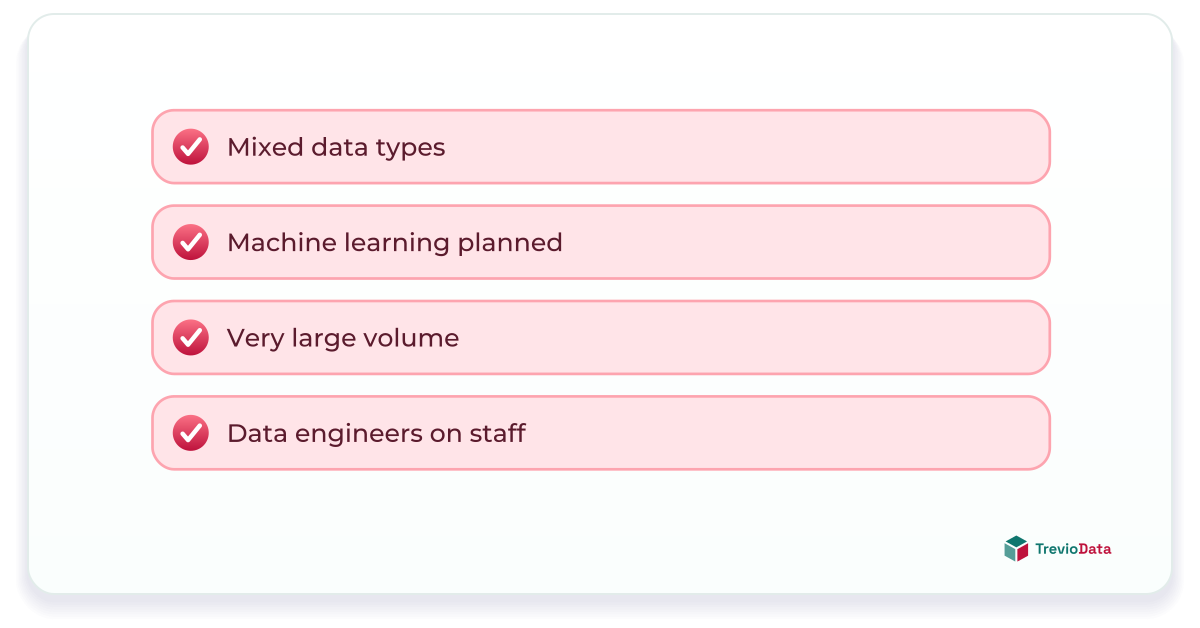
In my experience, a lake pays off when at least two of these are true:
- You hold large volumes of logs, events or sensor data that you want to keep for years.
- You have data that is not tabular, such as documents, images or nested JSON.
- Data science or AI projects need raw history, not only cleaned summaries.
- You want to keep storage open so you can change query engines later.
If your answer is yes to only one, start small and prove it with one use case. A clear data lake strategy helps you test those answers against real goals.
When a Data Lake Is the Wrong Choice
A lake is probably the wrong move if your data is small, structured and used mostly for standard reports, or if you have no engineers who can run it and no budget to hire help. A warehouse such as Snowflake, BigQuery or Redshift is simpler, and you can add a lake later when a real need appears.
In one project, a company with about forty gigabytes of data wanted a lake because a competitor had one. We built a warehouse in half the time, and it covered every report they needed. Copying a competitor’s architecture is not a reason.
How the Costs Compare in Practice
The cost argument for lakes is real but often overstated. A terabyte on cloud object storage costs a small fraction of the same terabyte inside a warehouse. For a few terabytes the difference is a rounding error compared with engineering salaries. For hundreds of terabytes of logs and events, it becomes the main reason to choose a lake.
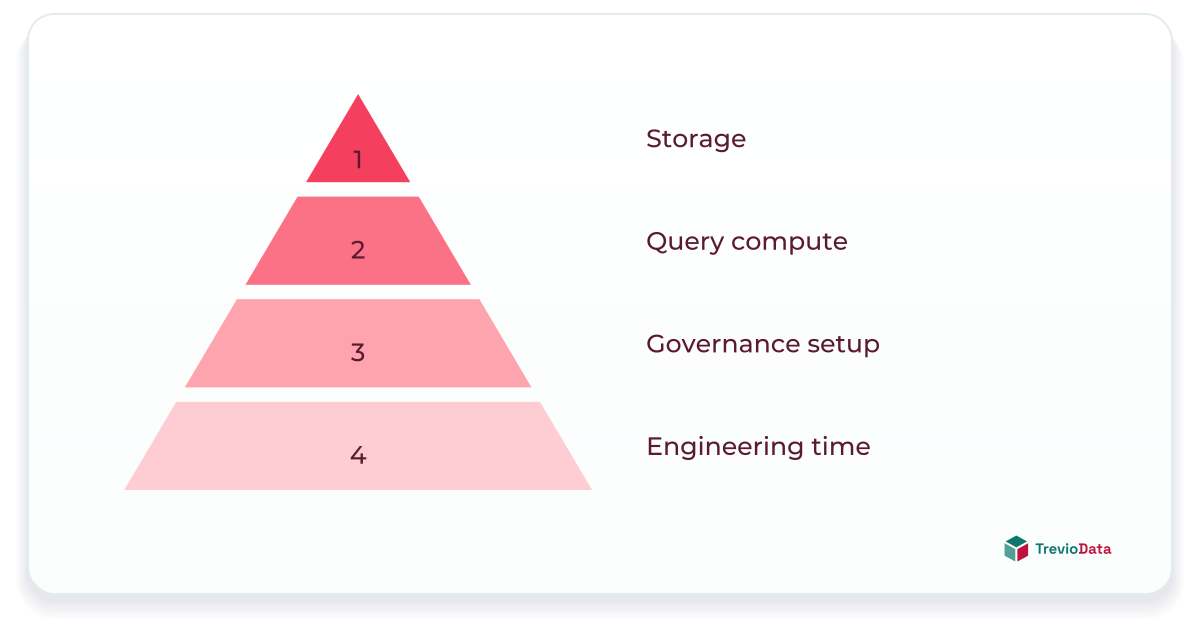
The costs that decide the total are usually elsewhere. Query compute, engineers who understand table formats and the time spent on governance often exceed the storage bill many times over. When I build a comparison for a client, I include storage, compute for expected queries, pipeline development and the cost of one extra engineer for the first year. That makes the numbers honest.
| Cost item | Lake | Warehouse |
|---|---|---|
| Storage per terabyte | Lowest | Higher |
| Query compute | Pay per use, varies by engine | Pay per use or reserved |
| Engineering effort | Higher at the start | Lower at the start |
| Governance setup | Must be built | Largely included |
The Effect on Your Team
A lake changes who does what. Analysts keep writing SQL, but data engineers carry more responsibility for file layout, formats and access. Data owners in business units must describe and approve their data. If these roles are not clear, the lake drifts, and the drawbacks above appear in a matter of months.
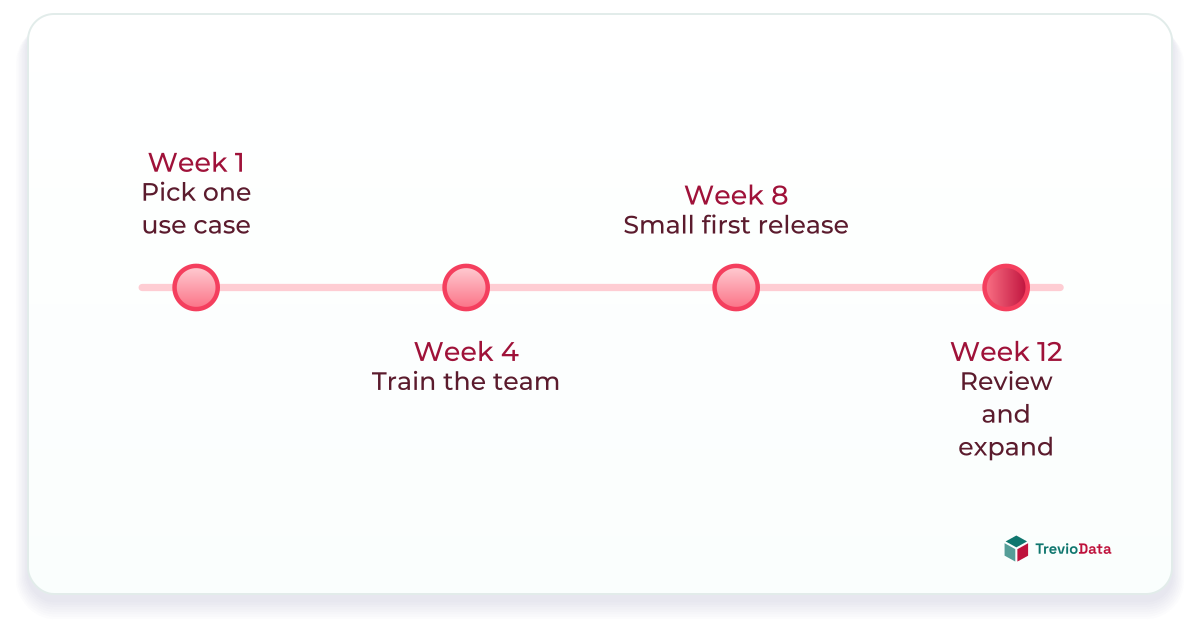
Plan for training, and for the first release to be small. A team that ships one useful dataset in six weeks builds confidence, while a team that spends six months loading everything builds a swamp. Honest pros and cons also include the human side, and it is the part most vendor material leaves out.
If you already have a warehouse and are considering a lake as an addition, keep both for a while. Move one workload at a time, compare results and retire the old path only when numbers match. That approach limits risk and gives you evidence for the next decision.
Another point in favor of a lake is how it handles the unknown. When a new question appears, such as a model that needs a signal nobody stored before, a lake that kept raw history can answer it, while a warehouse that kept only cleaned summaries cannot. That option value is hard to price, but it is the reason several of my clients kept raw data long after the first reports were built.
On the other side, the same flexibility makes it easy to postpone decisions. Teams say they will define the structure later, and later keeps moving. Set a rule that every dataset reaching the curated zone has a schema, an owner and a test, and the drawbacks shrink a lot.
The Verdict on Data Lakes
A lake is worth it when volume, variety or machine learning demands justify the extra governance and skills, and when you commit to owners and quality checks from day one. It is a poor fit for small structured datasets and teams with no capacity to run it. The honest answer for many companies is a warehouse first and a lake when needs grow, and the practices in my list of data lake best practices keep a lake healthy once you build one.
How to Choose Your Next Step
Write down your top three use cases and ask for each whether it needs raw history, varied formats or large volumes. Then count the people who can run the platform. If the use cases fit and the people exist, run a small pilot on one source. If not, strengthen your warehouse first and revisit in a year.
Questions About Data Lake Pros and Cons
What Are the Main Advantages of a Data Lake?
Low storage cost for large volumes, support for any data type, raw history for analytics and AI, open formats that reduce lock-in and easy scaling as new sources arrive.
What Are the Main Disadvantages of a Data Lake?
The risk of a data swamp, real work for governance and security, slower queries without tuning, specialist skills and costs that can creep up without tags and budgets.
Is a Data Lake Better than a Data Warehouse?
Neither is better in general. A lake suits large, varied and raw data and machine learning. A warehouse suits structured data and standard reporting. Many companies use both or a lakehouse.
Can a Small Company Benefit from a Data Lake?
Sometimes, if it has large volumes of logs or events or wants to build machine learning. If the data is small and structured, a warehouse is simpler and cheaper.
Is a Data Lake Cheaper than a Warehouse?
Storage is usually cheaper in a lake. Total cost also includes compute, engineering time and governance, so compare the full cost for your workloads before deciding.
Are Data Lakes Secure?
They can be, with encryption, least-privilege access, column masking and logs. Security is not automatic, so plan it from the start and check your legal duties with your privacy lead.
What Is a Lakehouse and Does It Fix the Drawbacks?
A lakehouse adds table formats such as Iceberg or Delta Lake to lake storage, giving transactions and faster SQL. It fixes many query and reliability issues, but governance, skills and cost control still need work.
Note: This article is general information, not legal, financial or tax advice. Figures and examples are estimates based on typical projects, so check current details with your providers and advisers before you decide.
Was this article helpful?
Thank you for letting us know.
Camille leads the Trevio editorial team and works with our consultants to turn real client projects into practical guides on data strategy, engineering and governance. Before joining Trevio, she spent 11 years in data engineering and analytics roles. She has since edited more than 300 articles on data management and reviewed pipelines and platforms from over 100 client projects. She is based in Denver, Colorado.