Key Takeaways
- Plan data lake implementation in six phases, and end each with a decision gate before you spend more.
- A first useful release usually takes ten to sixteen weeks, and source quality moves the timeline more than tool choice.
- Build the foundation as code and prove your first numbers against a trusted report before adding sources.
- Name owners for every dataset and book the security review in week one to avoid the most common delays.
Most data lake projects do not fail on technology. They fail on sequence: the team buys a platform, loads everything it can find and only then asks who will use it. Good data lake consulting reverses that order, and this guide shows the phases I follow, who you need on the team and how long each part takes.
The timeline below comes from my client work and assumes a mid-sized company with a handful of sources. Treat the weeks as a range, not a promise. Your data quality and the number of people who must approve decisions will move them more than any tool choice.
Six Phases in Brief
| Phase | Typical length | Main output | Decision gate |
|---|---|---|---|
| 1. Goals and scope | 1 to 2 weeks | Ranked use cases and success measures | Is a lake the right tool? |
| 2. Architecture and platform | 2 to 3 weeks | Zones, table format, cloud and security design | Cost and skills fit |
| 3. Foundation build | 2 to 4 weeks | Storage, network, identity, catalog and environments | Security review passed |
| 4. First pipelines | 3 to 6 weeks | Two or three sources loaded and tested | Numbers match trusted reports |
| 5. Governance and access | 2 to 4 weeks | Owners, catalog entries, permissions, quality tests | Audit questions answerable |
| 6. Scale and handover | Ongoing | More sources, cost tuning, training and runbooks | Team runs it alone |
A first useful release usually lands between ten and sixteen weeks after kickoff. Anything promising a full enterprise lake in a month is selling you a bucket, not a lake.
Phase 1: Pin Down Goals Before You Pick a Cloud
Start with the questions the lake must answer. Write down three to five use cases, such as keeping five years of clickstream for churn models or giving analysts one place for device logs, and score each for value and effort. A use case with no named business owner goes to the bottom of the list.
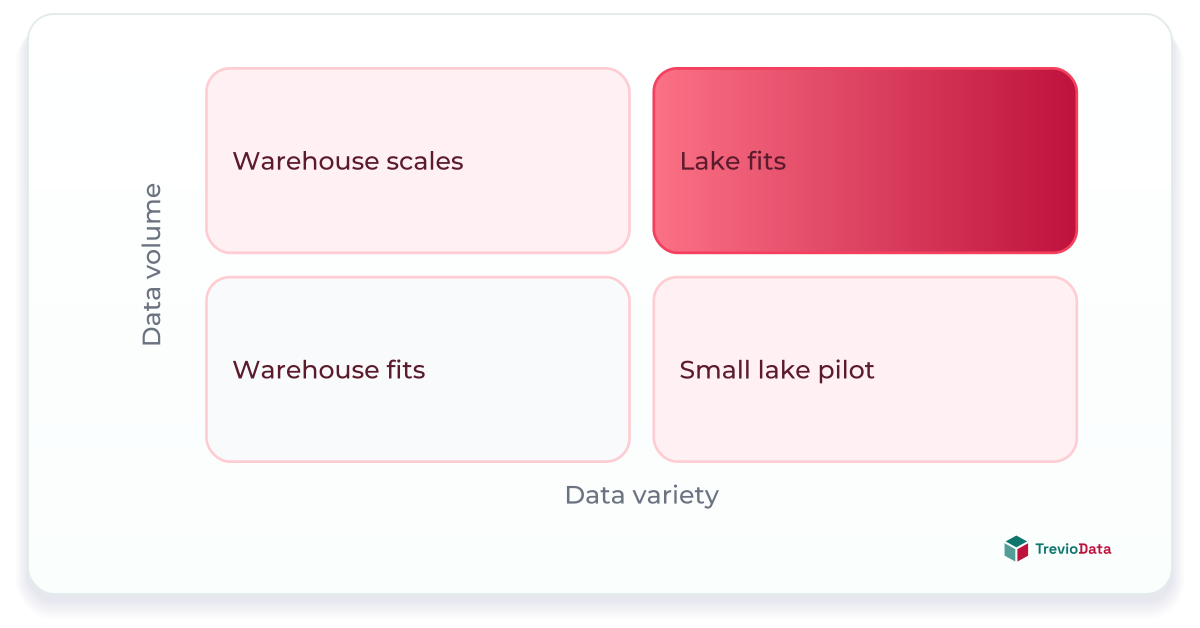
This is also where you check whether you need a lake at all. If your data is clean, structured and small, a warehouse is simpler, and my article on data lake pros and cons lays out when that is the case. The phase ends with a short document: use cases, owners, success measures and a rough budget.
Phase 2: Design Zones, Formats and Security
Architecture decisions are cheap on paper and expensive after load. Four choices matter most: which cloud and storage service, which open table format, how zones are laid out, and how identity and encryption work. Most of my designs use three zones: raw, cleaned and curated, with separate buckets or containers and different permissions for each.
For table format, Apache Iceberg is my default when a client wants to use several query engines, and Delta Lake fits teams committed to Databricks. Pick one and write down why. If you want to compare platforms before deciding, my ranking of data lake tools covers storage, query and governance options with prices.
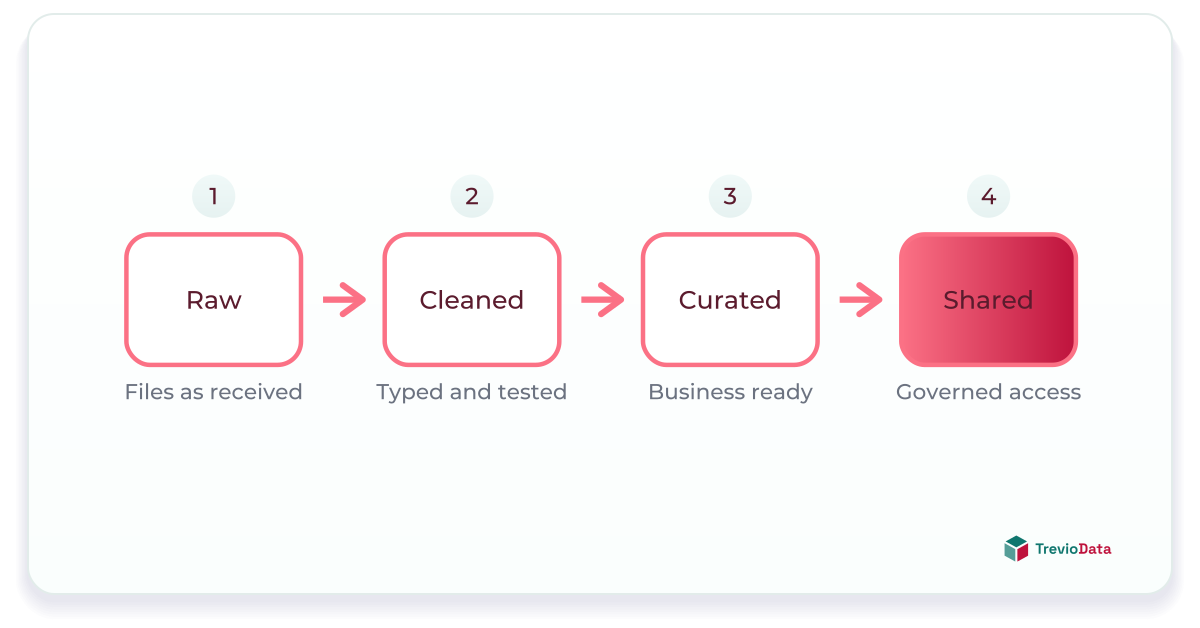
- Zones named and owned, with a rule for what may enter each one
- Folder and partition layout agreed, for example by source, table and load date
- Encryption, key management and network paths documented
- Cost tags and budgets defined before the first load
Phase 3: Build the Foundation Once
Build the empty lake first: accounts or subscriptions, storage with encryption, identity groups, a catalog, logging and separate development and production environments. Infrastructure goes into code from the start, so you can rebuild it and review changes.
Teams tempted to skip this step load files by hand into one bucket and promise to tidy up later. In my experience, later never comes, and a manual lake becomes the one nobody dares to touch. A week of foundation work saves months of cleanup.
Phase 4: Load Two or Three Sources and Prove the Numbers
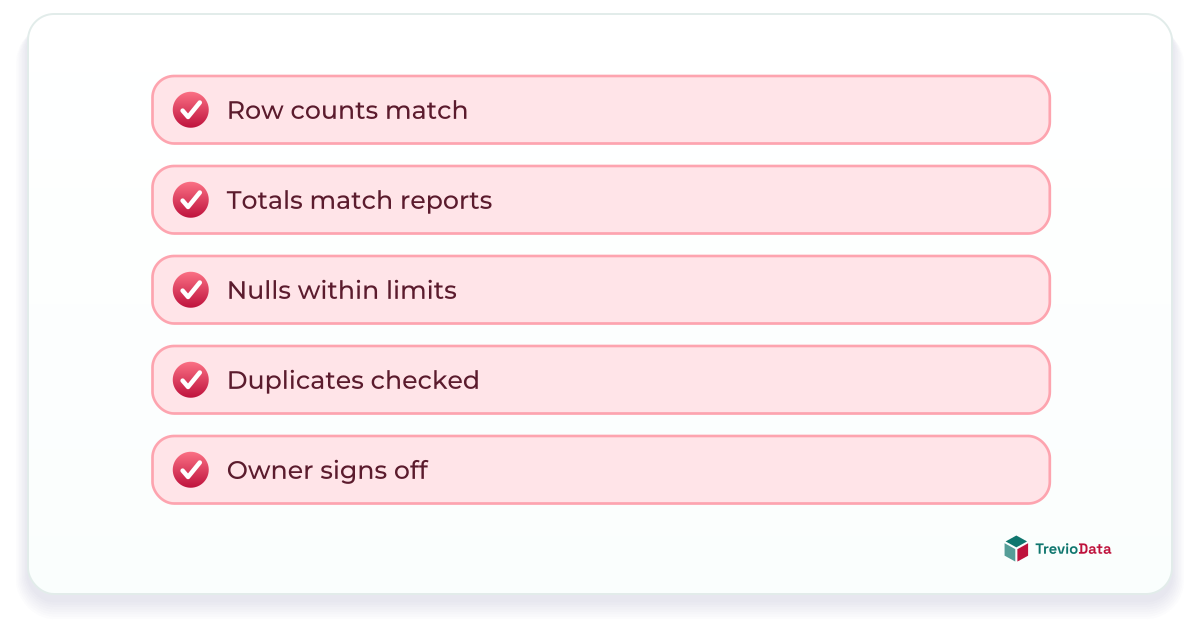
Pick sources that serve your top use case and have a known owner. Land the data raw and unchanged, then build the cleaned and curated tables. Compare the result against a report the business already trusts, row counts and totals first. If they do not match, find out why before you add anything else.
In one retail project, a revenue total in the new lake was two percent lower than finance reported. The cause was returns booked in a second system nobody had mentioned. Finding that in week eight was cheap, and finding it after the dashboards launched would not have been. Add automated tests for keys, nulls and freshness while you are there, and pick loading approaches that fit the source: batch exports, change data capture or event streams.
Phase 5: Add the Catalog, Owners and Access Rules
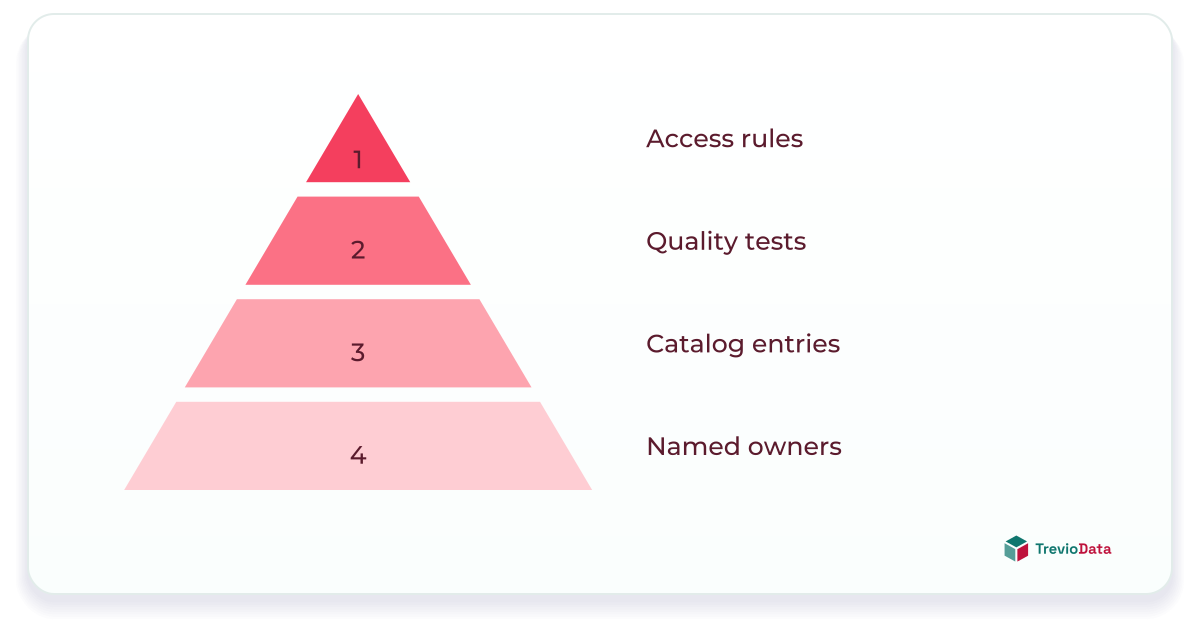
Governance work belongs before the lake grows, not after it spreads. Give every dataset an owner and a plain-language description, tag columns that hold personal data and set permissions per zone and per dataset. Analysts should see the curated zone by default and request access to the rest.
Quality checks run automatically on every load, and failures go to a named person. This is also the point where your approach to the bigger picture matters, and my guide to data lake strategy explains how to tie governance to business goals so it does not feel like paperwork.
Who You Need on the Team
A mid-sized lake project needs fewer people than most vendors suggest, but each role must be filled by someone with time. The table lists what I normally see.
| Role | What they do | Time during build |
|---|---|---|
| Business sponsor | Owns goals, budget and tradeoffs | A few hours a week |
| Data architect | Designs zones, formats and security | Full time in phases 2 and 3 |
| Data engineers (1 to 3) | Build pipelines, tests and monitoring | Full time in phases 3 to 5 |
| Security or cloud engineer | Identity, network, encryption, review | Part time throughout |
| Data owners | Describe, approve and fix their sources | A few hours per source |
| Analyst or scientist | Tests the data against real questions | Part time from phase 4 |
If you lack an architect or engineers, bring them in for the first phases and have your own people shadow the work. Handover is easier when your team has built part of the system, and my article on data lake best practices gives them a shared set of rules to follow.
Phase 6: Scale, Tune Cost and Hand Over
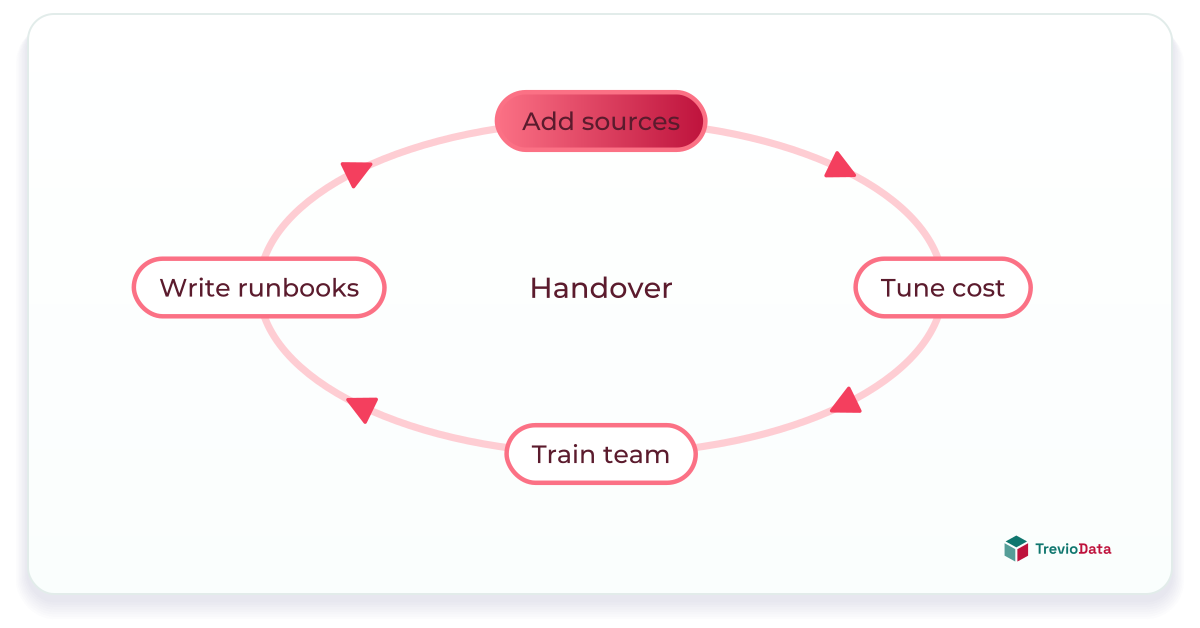
With the first release live, add sources in order of business value. Each new source follows the same checklist: owner, description, tests, access rules and cost tag. Review the storage and query bill monthly, and compact small files, partition large tables and move cold data to cheaper tiers.
Handover means more than a folder of documents. Your team should be able to add a source, fix a failed load and answer an access request without help. I usually run two short rehearsals where your engineers do the work while I watch, then leave runbooks for the ten most likely incidents.
What Slows Data Lake Projects Down
Three delays show up again and again. Source owners who cannot be reached, security reviews that start late and scope that grows after phase 2. Book the security review in week one, name source owners in the kickoff and keep a visible list of what is out of scope for release one.
Some problems are structural and need their own plan. I cover the most common ones in my article on data lake challenges, including small files, runaway cost and unclear ownership.
How to Budget for Each Phase
Cloud storage is the smallest line in a lake budget. Most of the money goes to design time, engineering for pipelines and the query compute your analysts use once the lake is live. I suggest you plan phases 1 and 2 as a small fixed-price assessment, phases 3 to 5 as a build with a cap, and phase 6 as a monthly run cost with a review every quarter.
Leave room for two things people forget: security review time and the effort of getting source owners to export data. Both often take longer than the engineering. A ten to fifteen percent contingency on the build phases is realistic, and you should ask for it openly so it does not turn into a surprise later.
- Phase 1 and 2: assessment and design, fixed price
- Phases 3 to 5: build with a cap and a gate at the end of each phase
- Phase 6: monthly run cost, reviewed every quarter
- Contingency for security review and source access
Finally, keep a short decision log through every phase. One line per decision, with the date, the reason and who approved it, saves long debates later and helps new team members understand why the lake looks the way it does.
How to Choose Between Building Alone and Getting Help
Build alone if you already have engineers with cloud and Spark or SQL engine experience and time to spare. Get help if the lake is a first for your team, if a deadline is fixed, or if sensitive data needs a clean security design from day one. A common middle path is a consultant for phases 1 to 4 and your own team for phases 5 and 6.
Whichever route you take, ask for a fixed scope per phase, a decision gate at the end of each one and a handover plan in writing.
Questions About Data Lake Implementation
How Long Does a Data Lake Implementation Take?
A first useful release usually takes ten to sixteen weeks for a mid-sized company with a handful of sources. Larger programs with many teams, streaming data or strict compliance take longer. Source quality and approval speed affect the timeline more than the choice of platform.
What Are the Main Steps in Implementing a Data Lake?
Define goals and use cases, design the architecture, build the foundation, load and test the first sources, add governance and access rules, then scale and hand over. Each phase should end with a decision gate.
How Many People Do I Need for a Data Lake Project?
Usually one architect, one to three data engineers, part-time security support, source owners and an analyst to test results. A business sponsor must be available for decisions. Smaller projects can combine roles.
Should I Build the Lake on AWS, Azure or Google Cloud?
Choose the cloud your company already uses unless there is a strong reason not to. Skills, identity setup and nearby systems matter more than small price differences between storage services.
What Should Go into the Data Lake First?
Start with two or three sources that serve your highest-value use case and have a named owner. Compare the results with a report the business already trusts before loading more.
How Much Does It Cost to Implement a Data Lake?
Storage itself is cheap. The larger costs are design, pipeline development, query compute and ongoing support. A fixed quote per phase after a short assessment gives you a firm number instead of a guess.
What Is the Biggest Risk During Implementation?
Loading data without owners or use cases. It creates a swamp that nobody trusts, and cleaning it up costs far more than planning would have. Keep release one small and tied to named goals.
Note: This article is general information, not legal, financial or tax advice. Figures and examples are estimates based on typical projects, so check current details with your providers and advisers before you decide.
Was this article helpful?
Thank you for letting us know.
Camille leads the Trevio editorial team and works with our consultants to turn real client projects into practical guides on data strategy, engineering and governance. Before joining Trevio, she spent 11 years in data engineering and analytics roles. She has since edited more than 300 articles on data management and reviewed pipelines and platforms from over 100 client projects. She is based in Denver, Colorado.