Key Takeaways
- Anchor the strategy in three to five business outcomes, and drop any integration you cannot trace to one.
- Inventory systems, flows, tools and costs first, because most companies find unowned flows and double-paid tools.
- Score flows on value, risk, effort and dependencies, and mix quick wins with foundations.
- Set a freshness target and an owner per flow, and review the plan every quarter.
A data integration strategy answers three questions: which systems must share data, how fast, and who is accountable when a flow breaks. Without those answers, every team connects its own tools, and a year later you run a tangle of scripts and overlapping subscriptions. In data integration consulting projects, the strategy document is usually short, and it saves months of rework.
Below is the playbook I use: five phases, the priorities inside each and the decisions you should write down. If you want the build model that follows the strategy, my data integration framework covers it step by step.
The Five Phases of a Data Integration Strategy
| Phase | Question it answers | Output | Typical time |
|---|---|---|---|
| 1. Anchor | Which business outcomes need connected data? | Three to five ranked outcomes | 1 to 2 weeks |
| 2. Inventory | Which systems, flows and costs exist today? | Systems and flows register | 2 to 4 weeks |
| 3. Prioritize | Which flows come first? | Scored backlog and roadmap | 1 to 2 weeks |
| 4. Decide | Which patterns, tools and owners? | Decision record and standards | 2 to 3 weeks |
| 5. Deliver and measure | Is it working? | First flows live, scorecard | Ongoing |
Phase 1: Anchor the Strategy in Business Outcomes
Start with what the business wants, not with systems. A finance director who wants a daily cash view, a marketing lead who wants one customer record and an operations manager who wants live stock all need different flows. Ask each leader which decision is slow or wrong today because data is not connected, and write the answers as outcomes with a number attached.
Keep the list short. Three to five outcomes are enough, and each should name an owner on the business side. If an integration cannot be traced to one of them, it goes to the bottom of the backlog.
Phase 2: Inventory Your Systems and Flows
You cannot prioritize what you cannot see. List every system that holds business data, every flow between systems, including manual exports and spreadsheets, and the tools and people behind each one. Include cost where you can find it: licenses, cloud usage and the hours someone spends on upkeep.
This step surfaces surprises. In my client work, a mid-size company usually finds several flows nobody owns and at least one tool paid for twice. The inventory also feeds your decisions in phase 4, because overlap becomes visible. Many teams discover the problems I describe in data integration challenges right here, such as legacy systems with no API.
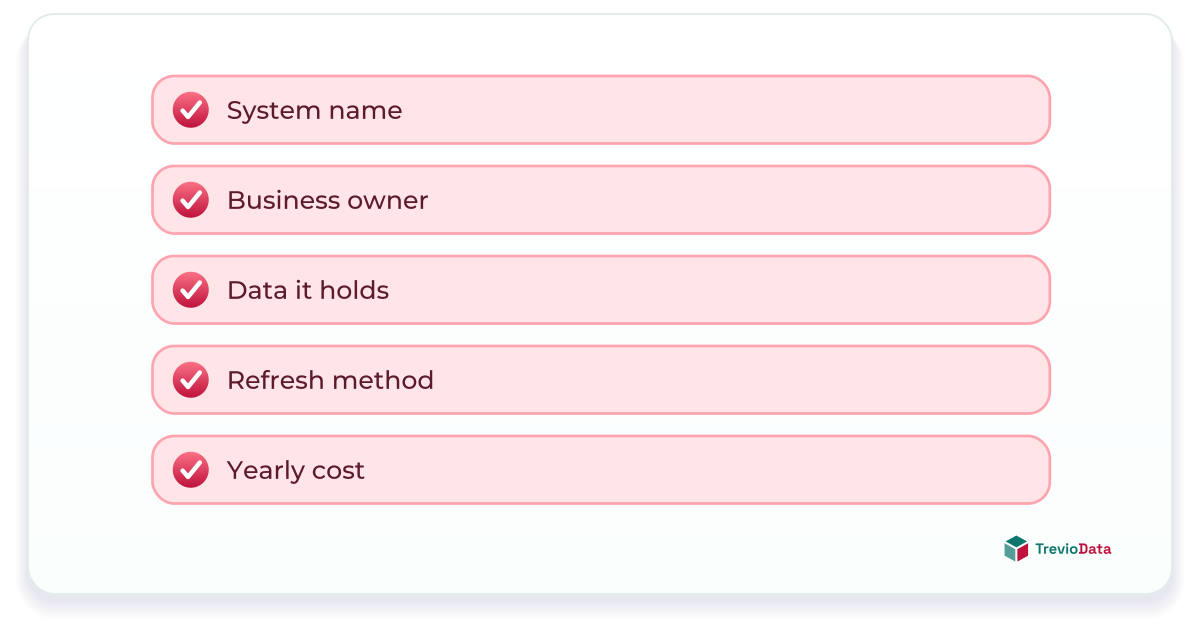
- One row per flow: source, target, method, schedule, owner
- One row per tool: purpose, cost, renewal date
- A mark for every flow that involves a person copying data
Phase 3: Prioritize With a Simple Score
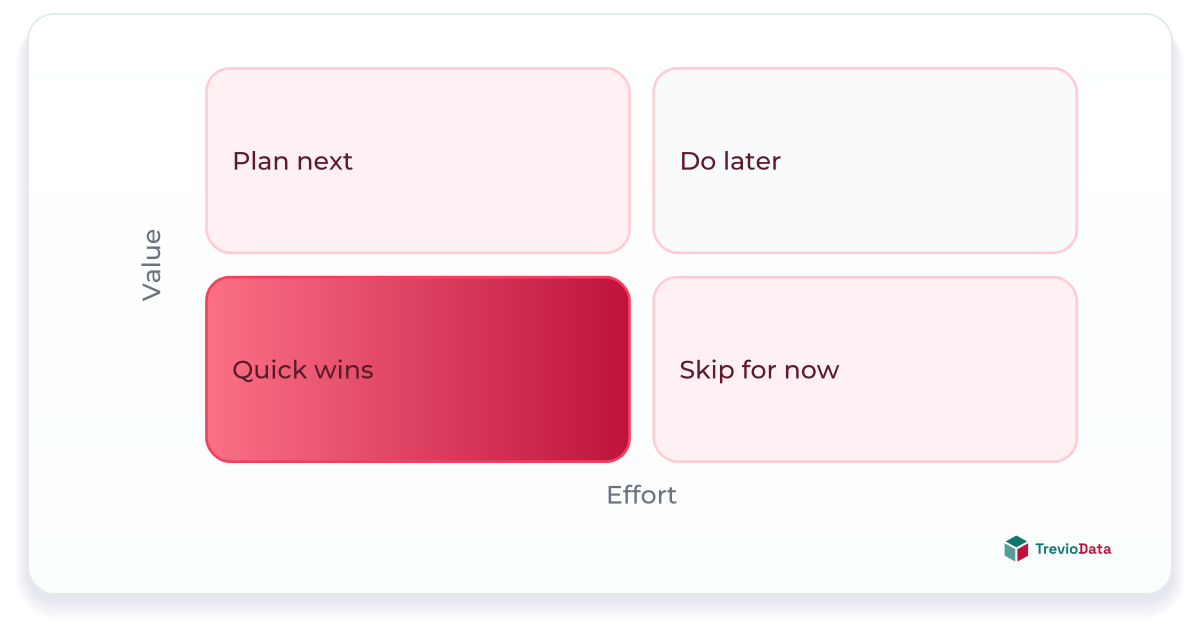
Score each candidate flow from 1 to 5 on business value, risk if it fails, effort and how many other flows depend on it. Rank by value and risk, then break ties with effort. Avoid fine-grained scoring; a coarse score you can defend in ten minutes is better than a model nobody trusts.
Mix quick wins with foundations. A manual two-system handoff that you can automate in two weeks builds trust. A shared customer identifier takes longer, but it supports every later flow, so give it a slot in the first quarter.
| Flow type | Value | Risk | Effort | Usual slot |
|---|---|---|---|---|
| Manual handoff between two apps | Medium | Low | Low | First 30 days |
| Core reporting sources into a warehouse | High | Medium | Medium | First quarter |
| Shared customer or product identifier | High | High | High | First quarter |
| Legacy system extraction | Medium | High | High | Second quarter |
| Real-time operational flow | Medium | Medium | High | Only with a stated need |
Phase 4: Decide Patterns, Tools and Owners
Now make the decisions that stop sprawl. For each flow type, pick a default pattern: batch ELT for reporting, event-driven flows for operations, API calls for lookups. Set a freshness target per flow and write it down, so nobody pays for streaming when hourly would do.
Choose a small tool stack. Most companies need one loader, one warehouse, a modeling layer and one tool for application workflows. My ranked list of data integration tools compares twelve options, with the prices and ratings that are public. Name an owner for each flow and for the stack as a whole, and agree on standards from my data integration best practices: field mapping, rerun safety, checks and documentation.
Build or Buy for Each Flow
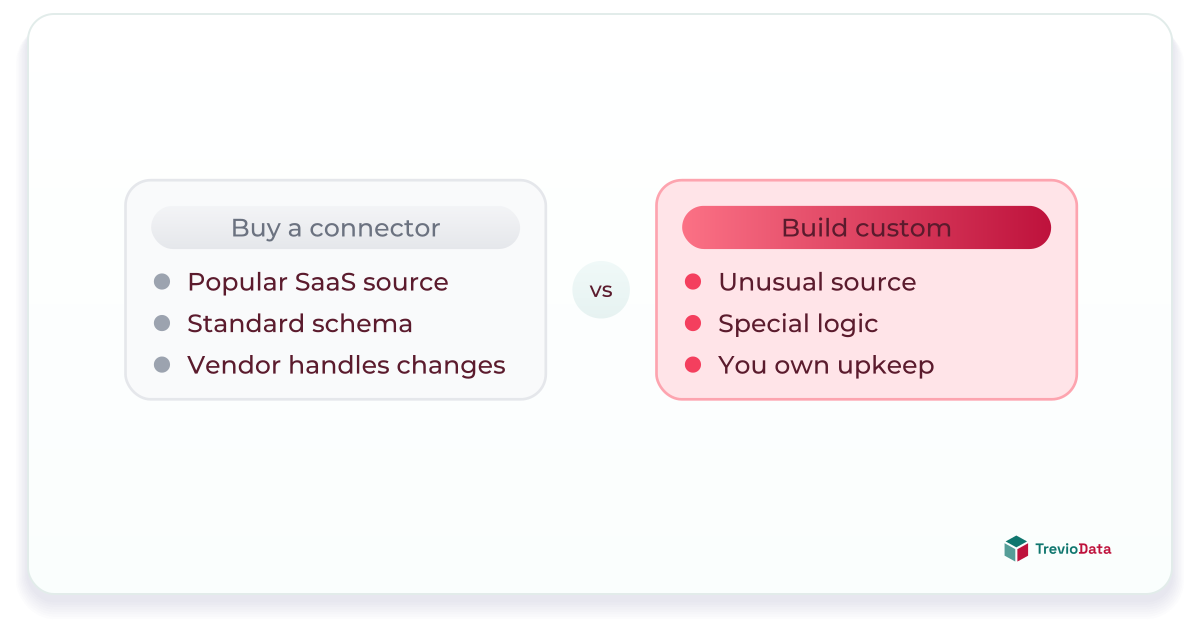
Buy a maintained connector when the source is popular and the vendor keeps it current. Build only when no connector exists or when the logic is unique to you. Putting a price on maintenance is the key step. A script that took two days to write can cost two days every quarter for years.
Phase 5: Deliver, Measure and Adjust
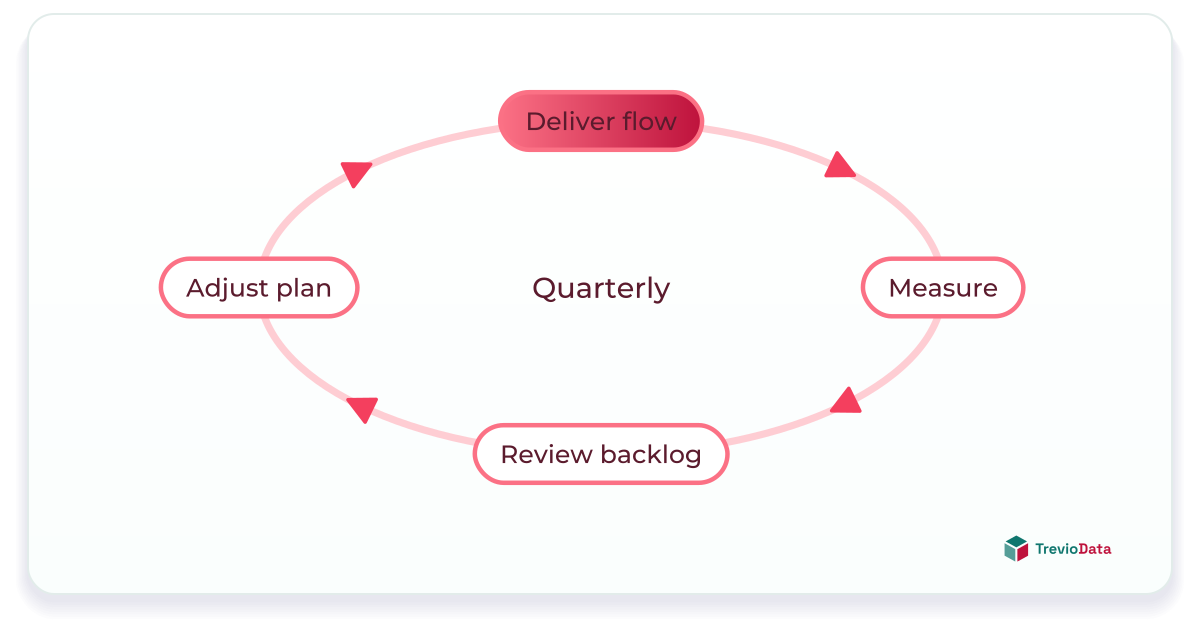
Ship the first flows within weeks, and measure them against the baseline from phase 1. Useful measures are hours of manual work removed, time from event to report, failed runs per month and cost per flow. Review them monthly with the business owners, not only with engineers.
Update the strategy every quarter. Systems get replaced, vendors change their APIs and priorities move. A living one-pager beats a binder. To see what the early wins look like, read my data integration examples.
Roles and Decision Rights
A strategy stays alive when people know who decides what. Three roles cover most companies. A business owner per outcome decides what matters and accepts the result. A technical owner for the integration stack decides patterns, tools and standards. A flow owner for each integration answers when it breaks and approves changes to its mapping.
Write these roles into the strategy document with names, not titles. In small companies one person often holds two roles, which is fine as long as the second hat is written down. Add a monthly thirty-minute review where the three groups look at the scorecard and the backlog together. It is usually the cheapest governance you will ever run, and it connects to wider data governance work when you are ready for it.
Budget and Cost Expectations
Integration costs come from four places: tool licenses or usage fees, cloud storage and compute, engineering time to build and engineering time to maintain. The last item is the one most plans leave out. A common rule from my client work is that yearly maintenance of a custom flow costs a meaningful share of its build cost, so cheap scripts get expensive over time.
| Cost area | What drives it | How to control it |
|---|---|---|
| Tool fees | Rows, events or credits moved each month | Sync only the tables you report on |
| Cloud compute and storage | Full reloads, idle warehouses | Incremental loads and auto-suspend |
| Build effort | Number of systems and quality of their APIs | Start with sources that have connectors |
| Maintenance | Source changes and failed runs | Maintained connectors, alerts and runbooks |
Ask every vendor for a quote based on your real volumes, and keep a monthly cost-per-flow number in the scorecard. It makes cost visible before it becomes a budget fight.
A Realistic First 90 Days
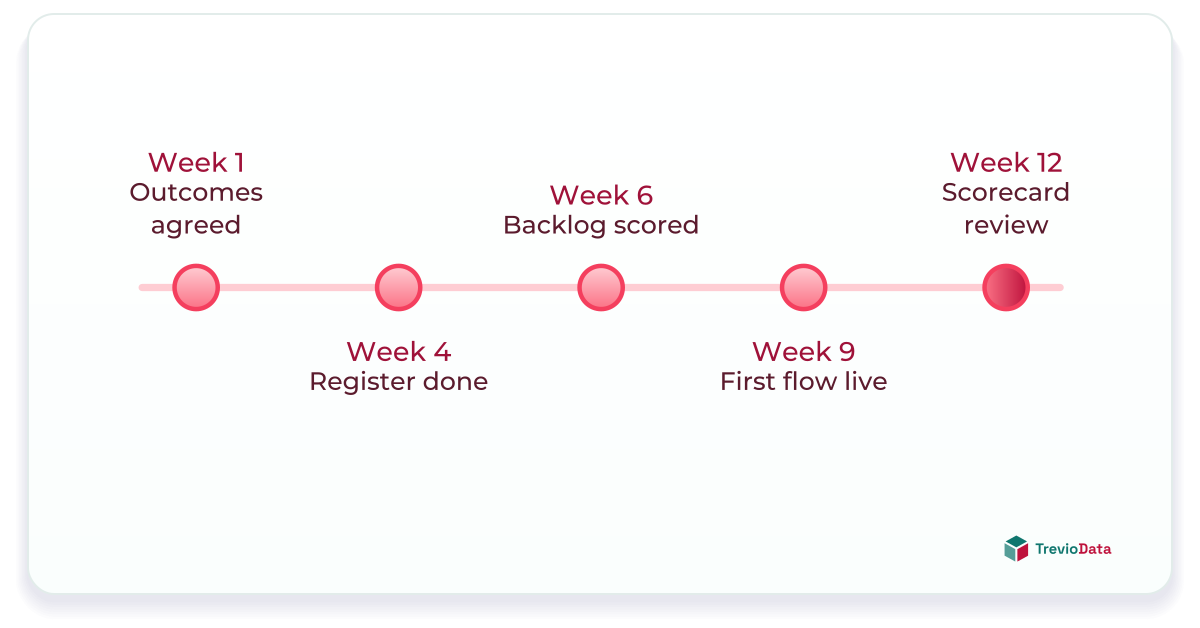
In weeks one and two, hold the outcome interviews and agree three outcomes. In weeks three to six, build the inventory and score the backlog. In weeks seven to ten, make the pattern and tool decisions and name owners. By week twelve, one quick-win flow and the first foundation flow should be live, with alerts and a scorecard.
Expect delays. Access to systems, security reviews and a vendor who is slow with API credentials push the dates more often than technical problems. Build two weeks of slack into the plan and tell sponsors in advance.
Common Priority Mistakes
Three mistakes show up again and again. The first is starting with a platform purchase, which locks you into a shape before you know the need. The second is skipping the inventory, so the first project reveals the surprises at the worst time. The third is treating real-time as a default, which raises cost without raising value.
A fourth, quieter one is leaving ownership vague. If the strategy does not name who answers when a flow fails at night, you have a wish list, not a strategy.
How the Strategy Connects to Governance and Privacy
Integration moves personal and financial data between systems, so the strategy needs a line on privacy. Decide which fields leave their source system, which are masked in the destination and who approves new flows that carry sensitive data. If you work in healthcare or finance, check current rules with your privacy lead before you build, and keep the answers in the flow brief.
The same document should say how new systems join the plan. A simple rule helps: any new application that holds business data gets an entry in the inventory and a named owner before its first integration goes live. That one rule stops sprawl better than any tool.
Where You Should Begin
If you have fewer than twenty flows, a spreadsheet inventory and a monthly review are enough, and you can write the strategy in a week. With dozens of systems or regulated data, bring in someone who has done it before, because the decisions in phase 4 are hard to reverse.
- Do you know which three outcomes depend on connected data?
- Can you list your flows and their owners today?
- Do you have a written freshness target for each flow?
- Does a named person own the tool stack and its cost?
Questions About Data Integration Strategy
What Is a Data Integration Strategy?
It is a short plan for which systems must share data, how fast, with which tools and who owns each flow. It ties integration work to business outcomes and sets standards, so teams stop building one-off connections.
How Long Should It Take to Write One?
For a mid-size company, a useful strategy takes four to eight weeks, most of it spent on the inventory. If it takes longer than two months, you are probably planning a project instead.
Where Should I Start?
Start with the business outcomes that depend on connected data, then inventory your systems and flows. Prioritize with a simple score, and begin with one quick win and one foundation such as a shared customer identifier.
Should My Strategy Include Real-Time Integration?
Only where a decision depends on speed. Set a freshness target per flow and use event-driven patterns where minutes matter. Use batch where hourly or daily data is enough.
How Do I Choose Integration Tools?
Pick a small stack with clear jobs: a loader for reporting data, a warehouse, a modeling layer and a tool for application workflows. Compare options on connector coverage, pricing model and your team’s skills.
Who Is Accountable for the Strategy?
A named person on the data or IT side owns the stack, and a business owner owns each outcome. Review it together every quarter.
Can a Consultant Help Me Write It?
Yes. A consultant can run the inventory, score the backlog and write the decisions with your team, then hand over the document. You can start with a free discovery call.
Note: This article is general information, not legal, financial or tax advice. Figures and examples are estimates based on typical projects, so check current details with your providers and advisers before you decide.
Was this article helpful?
Thank you for letting us know.
Camille leads the Trevio editorial team and works with our consultants to turn real client projects into practical guides on data strategy, engineering and governance. Before joining Trevio, she spent 11 years in data engineering and analytics roles. She has since edited more than 300 articles on data management and reviewed pipelines and platforms from over 100 client projects. She is based in Denver, Colorado.