Key Takeaways
- A privacy strategy connects business goals to a short, ordered list of privacy work with named owners.
- Five phases cover it: goals, data map, risk ranking, controls and review.
- Rank gaps by impact and effort, then do the cheap, high-impact items first.
- Two to four pages is enough. Put the plan on one page that leadership can read in five minutes.
Teams often start privacy work with a long list of tasks pulled from a regulation. The list is correct and still useless, because it has no order. When I help a client with data privacy consulting, the first deliverable is a ranking: what matters most to this business, and in what sequence you fix it.
The framework below has five phases. Each one has a short output, an owner and a test for when you can move on. It works for a 50-person software firm and for a regional health group, though the depth differs.
The Five Phases in Short
| Phase | Question it answers | Output | Typical effort |
|---|---|---|---|
| 1. Goals | Why does privacy matter to your business? | Three to five goals with a measure each | 1 to 2 workshops |
| 2. Data map | What personal data do you hold, and where? | Inventory of systems, vendors and flows | 2 to 6 weeks |
| 3. Risk ranking | Which gaps matter most? | Ranked risk register | 1 to 3 weeks |
| 4. Controls | What changes, and who does it? | Phased roadmap with owners | Rolling, in quarters |
| 5. Review | Is it working, and what changed? | Quarterly report, yearly refresh | Half a day per quarter |
The effort column depends on your size and how scattered your systems are, so treat it as a planning range. A data estate with 15 systems takes far less time than one with 80.
Phase 1: Tie Privacy to Business Goals
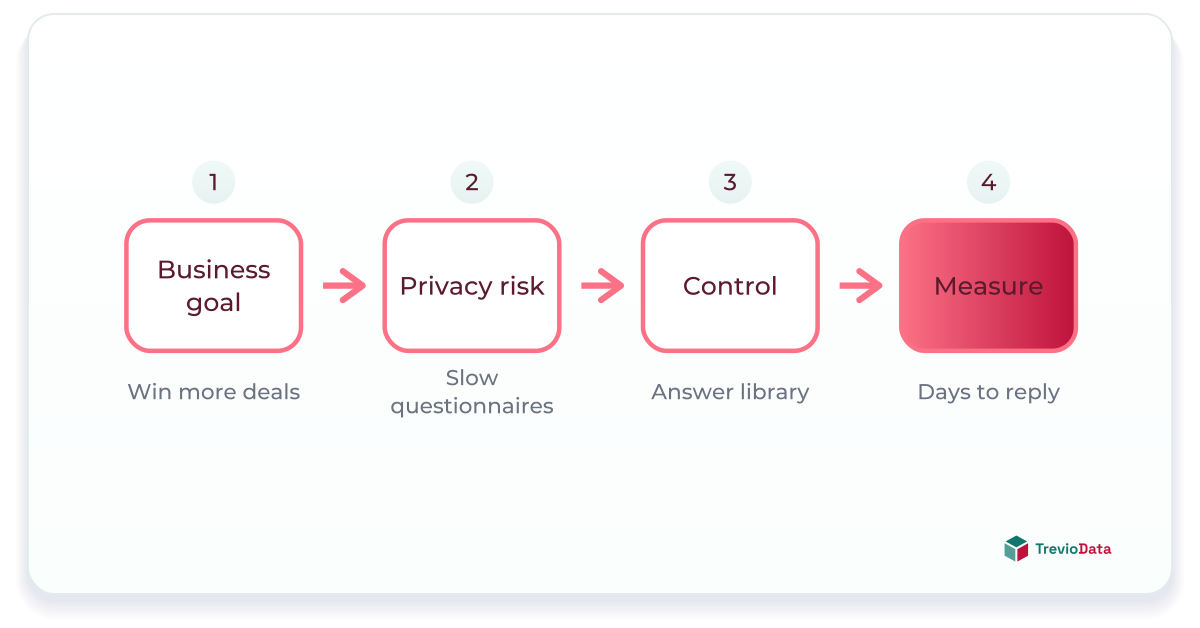
Start by asking leadership what privacy should achieve. Typical answers are shorter security reviews for enterprise buyers, fewer hours spent on individual requests, readiness for a new market or a smaller impact if a breach happens. Pick three to five and give each a measure, such as days to complete a security questionnaire or hours per request.
Goals decide the ranking later. A company that loses deals to questionnaires should fix evidence first. A company with high request volume should fix the workflow first. Without goals, you rank by whoever shouts loudest.
Phase 2: Map Your Personal Data
You cannot rank risk on data you have not found. Build the inventory described in my guide to data privacy management: systems, data types, purpose, owner, location, vendor and retention. Include exports, spreadsheets and test copies, since they cause surprising amounts of exposure.
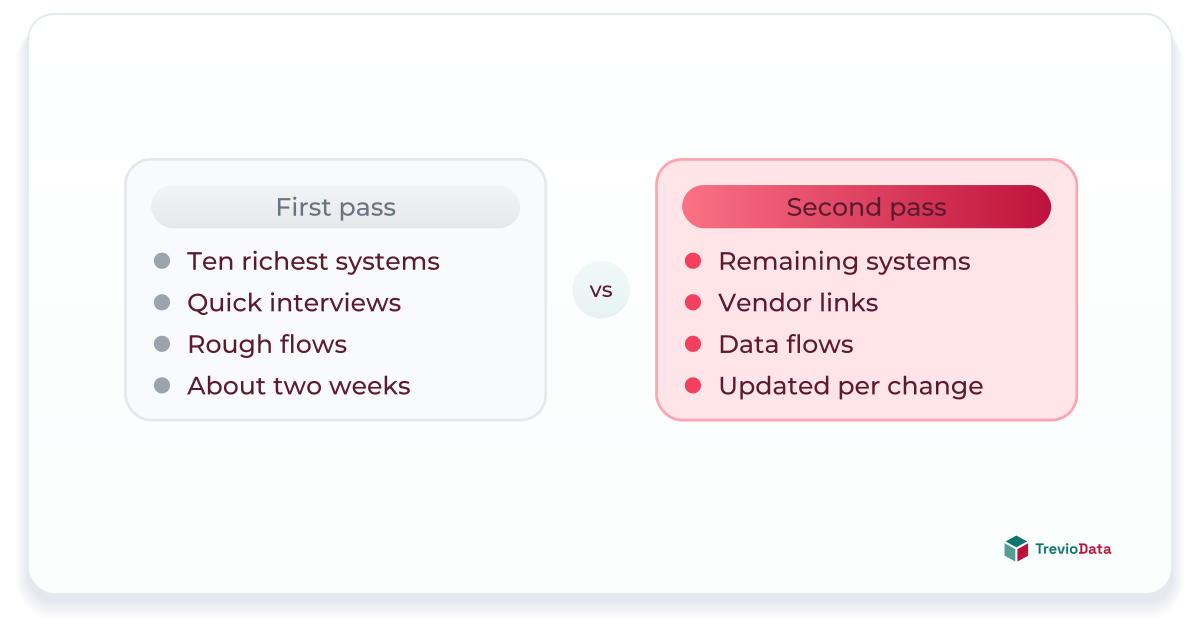
Do the map in passes. A first pass with the ten richest systems takes about two weeks and already shows the main risks. A second pass adds vendors and flows between systems. Discovery tools help in large estates by scanning databases and cloud storage, and my review of data privacy tools explains which categories to look at.
Phase 3: Rank the Gaps
Take every gap you found and score it twice: how bad if it goes wrong, and how hard to fix. Impact combines data sensitivity, number of records and how exposed the system is. Effort covers time, cost and the number of teams involved.
Plot the results in four groups. High impact and low effort goes first. High impact and high effort becomes a funded project. Low impact and low effort fills spare capacity. Low impact and high effort waits or is accepted with a written reason. This ranking is the heart of the strategy. The audit method I use to find and score gaps is in my data privacy audit guide.
| Quadrant | Example gap | Action |
|---|---|---|
| High impact, low effort | Customer exports sitting in shared drives | Delete or lock this quarter |
| High impact, high effort | No retention job on the main warehouse | Fund as a project with an owner |
| Low impact, low effort | Outdated privacy page wording | Fix in spare time |
| Low impact, high effort | Rewrite of a rarely used legacy tool | Defer and record the decision |
Phase 4: Turn Priorities Into a Roadmap
Group the ranked items into quarters. The first quarter should contain quick wins and the workflows that need to exist before anything else: the request process and the new-project review. The second and third quarters hold the larger projects. Leave 20 percent of capacity open for surprises, because new vendors and incidents will arrive.
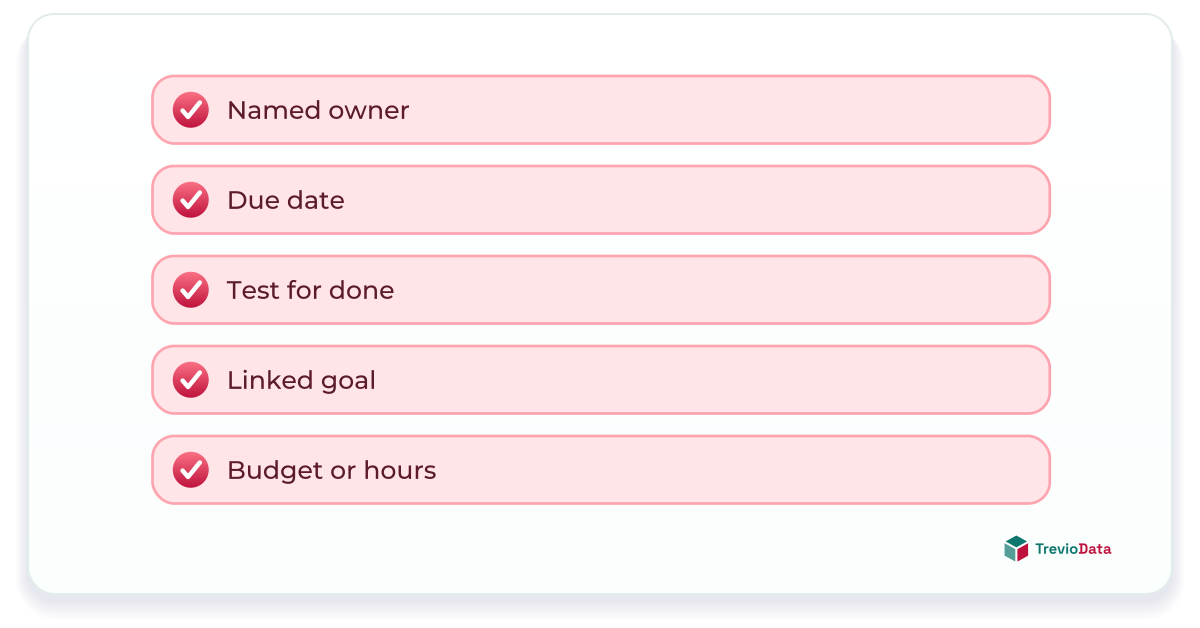
Each roadmap item needs an owner, a due date and a test for done. "Retention rule on customer table, applied by a scheduled job, verified by a sample check" is a good test. "Improve retention" is not. Roadmaps that name tests survive staff changes, since a new person can read the item and know what finished looks like.
Be honest about delays. In my projects, the item that slips most is the one needing another team's engineering time. Book that time at the start of the quarter, in writing, with the engineering manager.
Phase 5: Review and Adjust
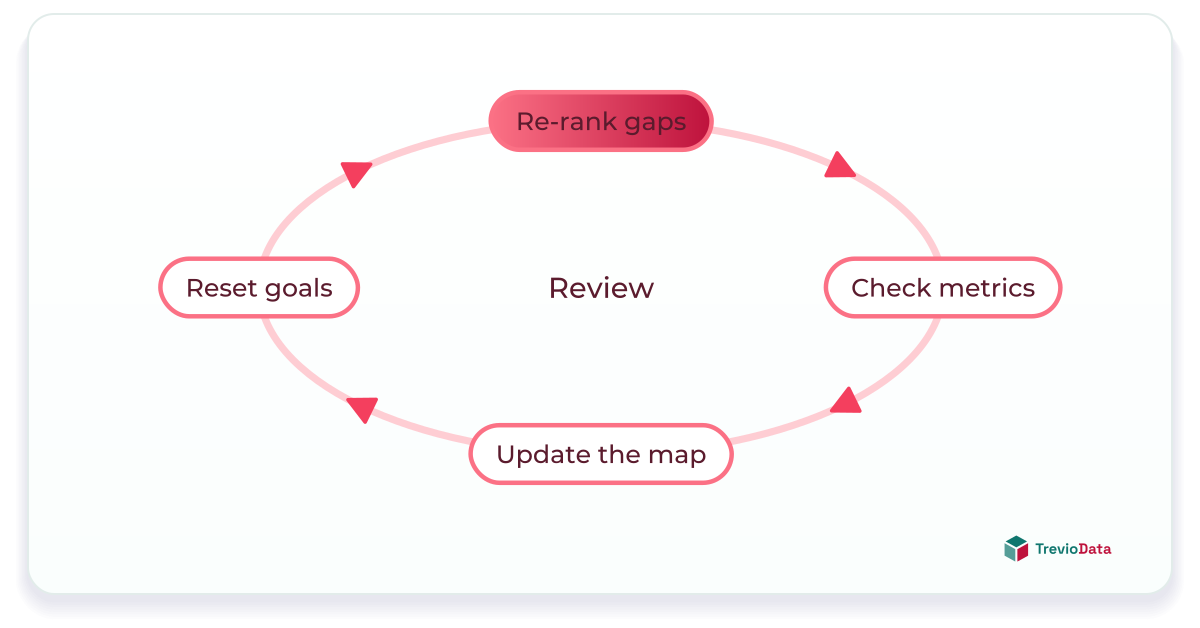
Once a quarter, spend half a day on five questions. What was finished? What slipped, and why? What changed in the business? Which new risks appeared? What moves up or down? Report the answers on one page to your sponsor, using the metrics from phase 1.
Once a year, rebuild the ranking. New state rules, new vendors and shifts in how buyers ask about privacy all change priorities. Many of these shifts are summarized in my overview of data privacy trends, and a fresh data privacy assessment shows how far your maturity has moved.
A Worked Example: A 120-Person Software Company
Here is a composite based on projects like those I run. A B2B software company with 120 staff sold mostly to US mid-market buyers and had started winning enterprise deals. Those deals came with 200-question security and privacy questionnaires, and each one took the CTO and a lawyer about two weeks.
Phase 1 produced two goals: cut questionnaire time to one week and reduce the amount of customer data held in non-production systems. Phase 2 found 34 systems with personal data, including four analytics tools marketing had added without review and a staging database with a full copy of production. Phase 3 ranked the staging copy first, since it was high impact and cheap to fix with masked test data.
The roadmap put three items into the first quarter: mask the staging data, write a reusable answer library for questionnaires and install a new-tool review. The second quarter added retention jobs for the two largest tables and a request workflow with a tracker. By the end of the year, questionnaire time had dropped to about eight working days, and the company knew exactly which vendors held what. Nothing in that plan needed new software.
| Quarter | Items | Result |
|---|---|---|
| Q1 | Mask staging data, answer library, new-tool review | Highest-impact exposure removed, reusable evidence |
| Q2 | Retention jobs on two largest tables, request workflow | Less stored data, requests tracked |
| Q3 | Vendor review of top 12 processors | Open findings listed with owners |
| Q4 | Yearly refresh and re-ranking | Plan for the following year |
Where Strategies Go Wrong
Three failures show up again and again. The first is writing the strategy before the data map exists, so the priorities rest on guesses. The second is copying a regulation's headings as the plan, which produces a long list with no order and no link to what the business needs. The third is having no owner for items that cross teams. A task that needs both marketing and engineering and belongs to neither will stay open for a year.
A fourth, quieter failure is over-ambition. A plan with 40 items in the first year gets 12 done and feels like a failure. A plan with 12 items gets 12 done and builds trust for the next round. I would rather you finish a short list than start a long one.
What the Plan Costs in Time and Money
Leaders ask for a number, and the honest answer depends on size and sprawl. Time is the larger cost in the first year. A coordinator needs roughly a fifth to a half of a role at the start, depending on how many systems you run. Dataset owners need an hour or two per quarter, and engineers need project time for retention jobs, masking and access changes.
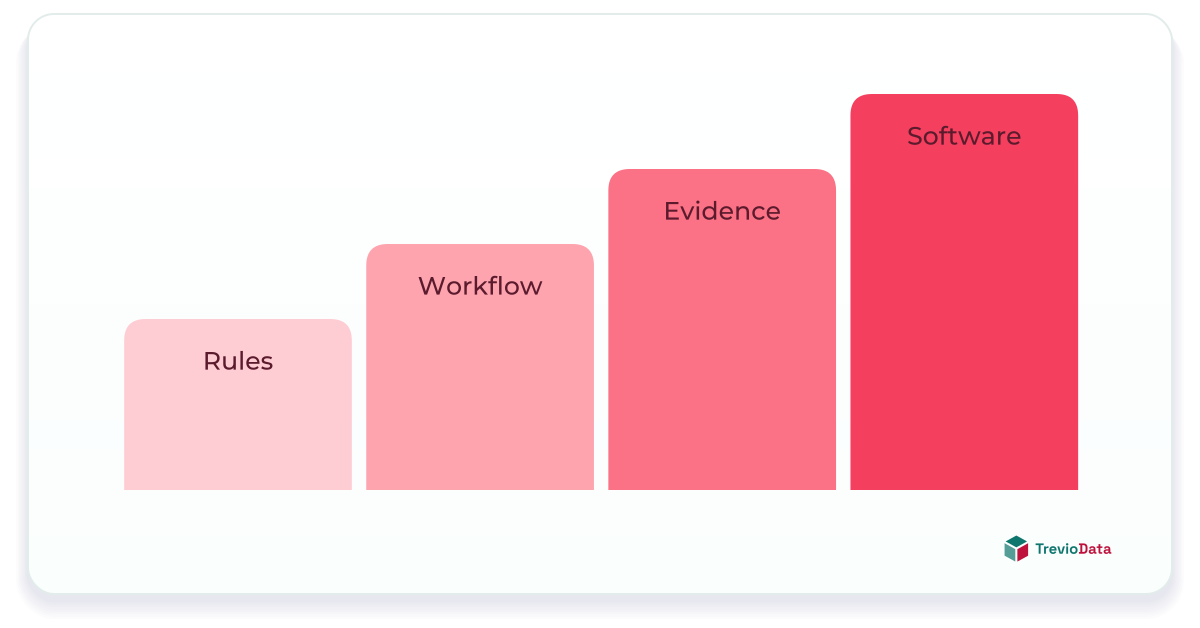
Software comes later. Many teams buy a consent or request tool in the first quarter because a vendor demo was convincing, and then find the inventory is too thin for it to work. I suggest you hold software spending until phase 3 is done, when you know which gap a tool closes. Outside help is most efficient on the data map and the ranking, since those are the two steps where experience shortens the work the most.
Budget a small reserve for legal review. Counsel should read your rules, your vendor terms and your request responses at least once, and it is cheaper when they review clean, documented facts than when they dig for them.
A One-Page Plan You Can Copy
Put your strategy on a single page with these headings. If a heading is hard to fill in, that is where your thinking is thin.
- Goals, each with a measure and a target date.
- Scope: regions, business units and data types covered.
- Top five risks from the ranking, with owners.
- Roadmap by quarter with tests for done.
- Roles: coordinator, dataset owners, sponsor and counsel.
- Metrics reported each quarter and who receives them.
Picking a Place to Begin
Your starting phase depends on what exists. If you have no inventory, begin at phase 2 and pull goals from a single conversation with your sponsor. If you have an inventory but no ranking, start at phase 3. If a rulebook exists but nothing runs, jump to phase 4 and build the request workflow first. Starting at the wrong phase is the most common reason strategies fail, because teams write goals while the data map is still missing.
If you want a second opinion on where you stand, a short call is usually enough to point to the right phase.
Questions About Data Privacy Strategy
What Is a Data Privacy Strategy?
It is a written plan that links your business goals to the privacy outcomes you need, such as faster sales reviews, lower breach impact or entry into a new market. It names priorities, owners, a sequence of phases and the measures that show progress. A policy says what is allowed. A strategy says what you will do, in what order, with whose time and money.
How Long Should a Privacy Strategy Be?
Two to four pages is plenty for most companies. If it takes longer to read than a meeting lasts, people will not use it. Put the goals, priorities, phase plan, owners and metrics on the first page, and keep supporting detail in appendices.
Who Should Write the Strategy?
The privacy lead drafts it, with input from legal, IT, security, marketing and the business owners of your main datasets. An executive sponsor approves it. Outside help is most useful for the data map and the gap ranking, where fresh eyes find the systems your own team no longer notices.
How Often Should I Update the Strategy?
Review it every year and after any major change, such as a new market, a merger, a new core system or a serious incident. Keep the phase plan flexible, because new rules and vendor changes will shift priorities within a year.
What If I Have No Budget for New Tools?
Most early phases need time, not software. Inventory, rules, request workflows and vendor reviews can run on spreadsheets and the tools you already pay for. Spend on software later, once you know which gap a tool would close and what it saves.
How Do I Get Leadership to Support It?
Tie each phase to something leadership already cares about: deals that stall in security review, hours lost to manual requests, or the cost of an incident affecting every record you hold. Present a small first phase with a clear result and a date.
How Is a Privacy Strategy Different from a Compliance Plan?
A compliance plan lists requirements and who meets them. A strategy sets priorities among them and connects them to business goals. You need both, and the strategy decides which items in the compliance plan get done first.
Disclaimer: This article is general information, not legal advice. Privacy rules differ by country and state and change often, so confirm your obligations with your own counsel.
Was this article helpful?
Thank you for letting us know.
Camille leads the Trevio editorial team and works with our consultants to turn real client projects into practical guides on data strategy, engineering and governance. Before joining Trevio, she spent 11 years in data engineering and analytics roles. She has since edited more than 300 articles on data management and reviewed pipelines and platforms from over 100 client projects. She is based in Denver, Colorado.