Key Takeaways
- Data privacy management is an operating routine with owners, records and a calendar, not a one-time policy project.
- One coordinator plus many small dataset owners holds up better than a program owned by legal alone.
- The data inventory is the base for everything else: requests, consent, retention and vendor checks all depend on it.
- Start with a short list of rules your team can follow, then add tools once request volume or system count justifies them.
Most companies I meet already have a privacy policy on the website. Far fewer can say which of their 40 systems hold customer email addresses, or who would answer a deletion request on a Friday afternoon. That gap is what data privacy consulting usually closes, and it is the real subject of data privacy management.
This guide explains how a working program is structured: the layers, the owners, the routines and the records. I also show where tools fit, so you can decide what to build yourself and what to buy.
What Data Privacy Management Covers Day to Day
Data privacy management is the ongoing work of controlling how personal data is collected, used, shared, kept and deleted, and keeping evidence that you did it. A privacy policy states intent. Management turns the intent into routines that people actually perform.
In practice the work falls into six jobs. You keep an inventory of personal data. You set rules for purpose and retention. You handle consent and preferences. You answer requests from individuals. You check vendors that process data for you. You record what happened, so you can show it later. Each job needs an owner and a rhythm.
Where this goes wrong is rarely the policy text. It goes wrong when the inventory is a year old, when the vendor list lives in one person's inbox, or when a request arrives and nobody knows which tool holds the record. A good structure removes those single points of failure.
The Five Layers of a Privacy Program
I explain structure to clients as five layers, from the data itself up to the people who steer the program. Each layer depends on the one below it, which is why skipping the inventory never works for long.
| Layer | What it contains | Typical owner | Review rhythm |
|---|---|---|---|
| 1. Inventory | Systems, datasets, data types, purposes, locations, retention times | Data or IT lead with each system owner | Yearly, plus on every major change |
| 2. Rules | Purpose limits, retention schedules, access rules, masking and deletion standards | Privacy lead with legal input | Yearly |
| 3. Workflows | Consent handling, individual requests, incident steps, new-project review | Privacy lead with support and IT | Quarterly check of metrics |
| 4. Vendors | List of processors, agreements, review dates, open findings | Procurement and privacy lead | Yearly per vendor |
| 5. Oversight | Metrics, risk register, reports to leadership, training | Executive sponsor | Quarterly |
Notice how few of these layers are legal tasks. Counsel shapes layers 2 and 4, but engineers, support teams and marketers do most of the real work. That is why privacy management belongs close to data governance, which already assigns owners to datasets.
Start With an Inventory You Can Keep Current
The inventory is the layer people skip, and the one every later task leans on. It does not need to be fancy. A table with one row per system, with columns for data types, purpose, owner, location, vendor and retention, is enough to begin.
Build it from the systems outward. Ask finance which tools they pay for, ask IT for the list of single sign-on apps and ask each team what they export to spreadsheets. In one mid-sized retail project, the first pass found 11 tools that nobody in IT had listed, three of which held customer emails. Exports and shadow tools are where personal data hides.
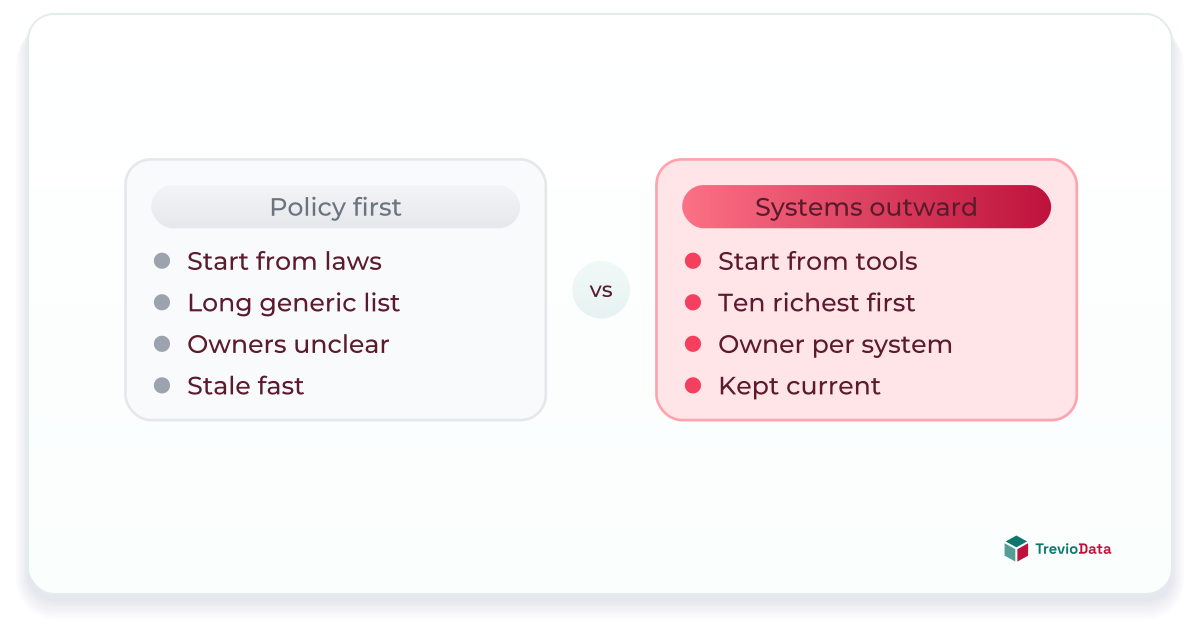
Keep the first version small. Cover the ten systems that hold the most personal data, then extend. A smaller inventory that is checked every year beats a complete one that nobody trusts. If your data stack is large, a platform with automated discovery speeds this up, and my ranked data privacy tools show which ones handle discovery well.
Who Owns What
Ownership is where structure gets real. Four roles cover most mid-sized companies.
The coordinator, often called the privacy lead, runs the program, keeps the records and leads reviews. They do not own every decision. The dataset owners are business or technical leads who decide how the data in their area is used and who sign off on its retention. The executive sponsor removes blockers and receives the quarterly report. Counsel, internal or external, answers legal questions and reviews rules.
Some regions and some kinds of processing require a formally appointed data protection officer. Whether that applies to you is a legal question, so ask your counsel instead of assuming. Either way, the working structure above still applies.
The Routines That Keep It Alive
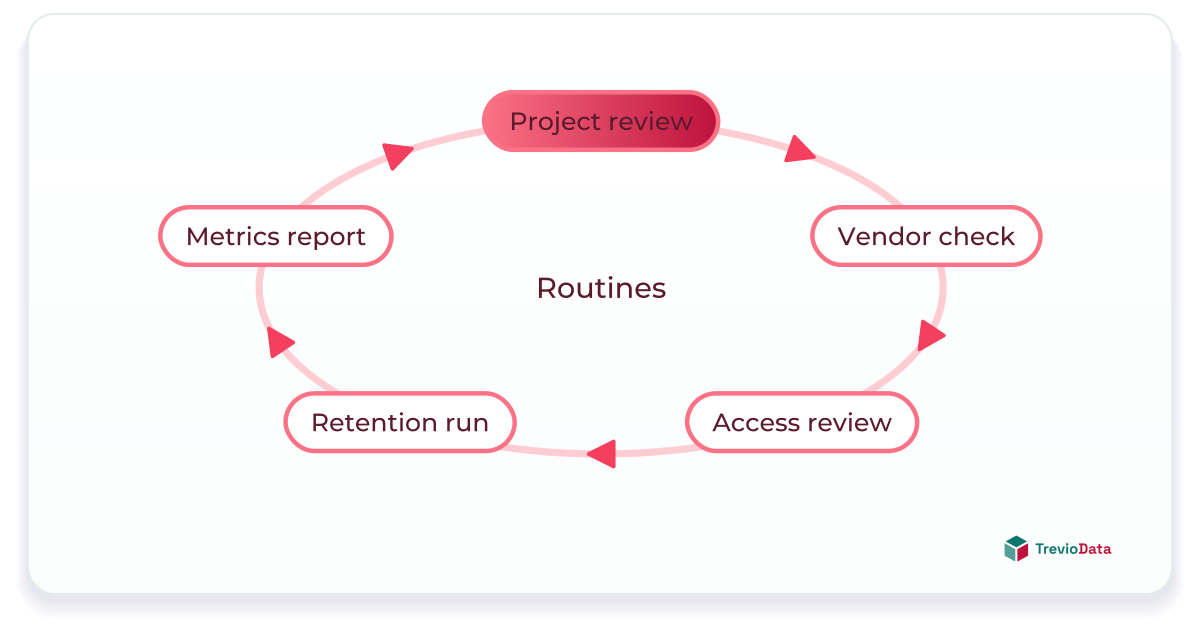
A program is a set of routines with dates. These are the ones I install first, in order of value.
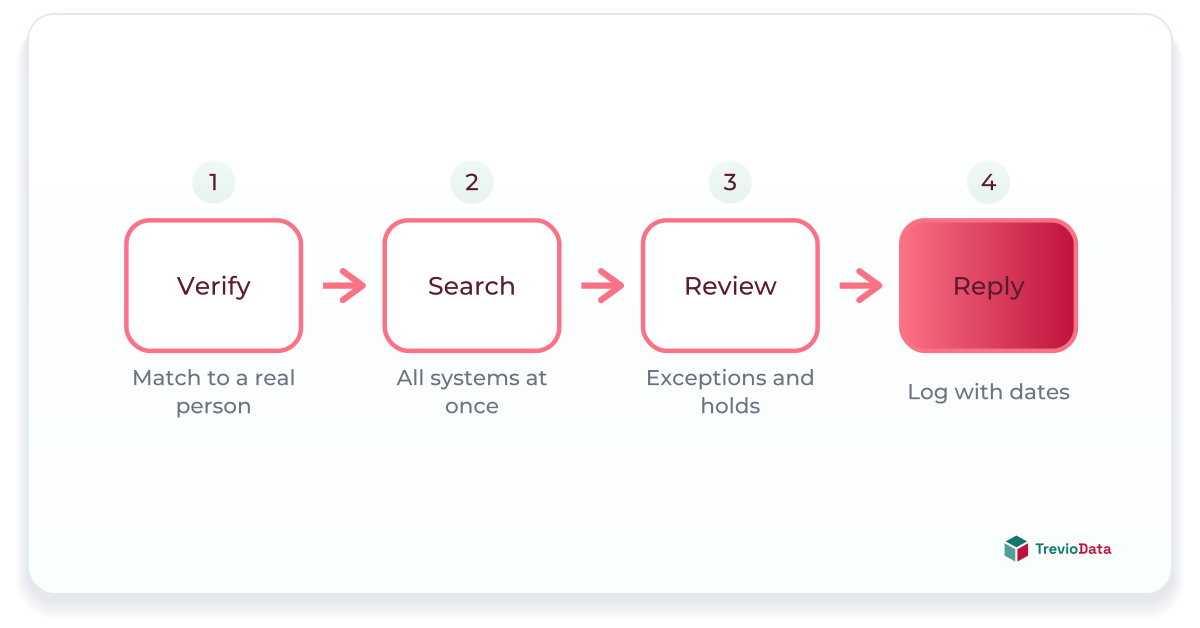
- A request workflow with intake, identity check, search, review and response, plus a log of each step.
- A short review for every new tool, vendor or project that touches personal data, finished before it goes live.
- A yearly refresh of the inventory and vendor list, owned by named people.
- A quarterly look at metrics and open risks with the executive sponsor.
- A short training for new staff and a refresher for teams that handle data daily.
The new-project review is the cheapest control in the whole program. Asking five questions before launch (what data, why, where stored, who has access, how long kept) prevents most of the cleanup work I see later. It also feeds the inventory automatically.
Handling Individual Requests Without Chaos
People can ask you what you hold about them, ask for corrections or ask for deletion, depending on the rules that apply to you. Deadlines are set by those rules, so confirm the current ones with counsel. What management adds is a repeatable process.
The workflow should answer four questions in order. Is this person who they say they are? Which systems might hold their data? What must be provided, corrected or removed, and what must stay for legal or operational reasons? Who signs off on the response? A shared tracker with a due date per step is enough while volumes are low.
When requests arrive weekly, manual search across many tools becomes the bottleneck. That is the point where discovery and request automation tools pay for themselves. A simple test: if your team spends more than a couple of hours per request on searching, price a tool. Until then, a good inventory shortens the search more than software does.
Metrics That Show the Program Works
Fewer, simpler numbers win. I suggest five, reported quarterly, and I explain how to read them below.
| Metric | What you learn | Warning sign |
|---|---|---|
| Request turnaround | Whether your workflow runs on time | Requests close to their deadline, or rising searches by hand |
| Systems with a named owner | Whether the inventory has accountability | Share dropping after reorganizations |
| Vendors reviewed in the past year | Whether third-party risk is checked | New vendors added with no review |
| Datasets with an applied retention rule | Whether old data is really removed | Rules written but no deletion job running |
| Open high-risk findings and age | Whether problems get closed | Findings older than one quarter |
The metric most programs skip is applied retention. Writing a rule is easy. Running a deletion job against a warehouse table is the part that reduces risk, and it is where privacy and a data privacy audit usually find the largest gaps.
Connecting Management to Strategy and Assessment
Management keeps the program running. Strategy decides where it goes next, and my data privacy strategy framework turns goals into phases with owners. If you do not know your starting point, a data privacy assessment scores your current maturity before you plan anything.
Outside forces also change the work. New state laws, signals such as Global Privacy Control and tighter expectations from buyers all land on your routines, which I follow in my overview of data privacy trends. A program that has owners and a calendar absorbs those changes, because each one becomes an update to a rule or a workflow.
Your First 90 Days
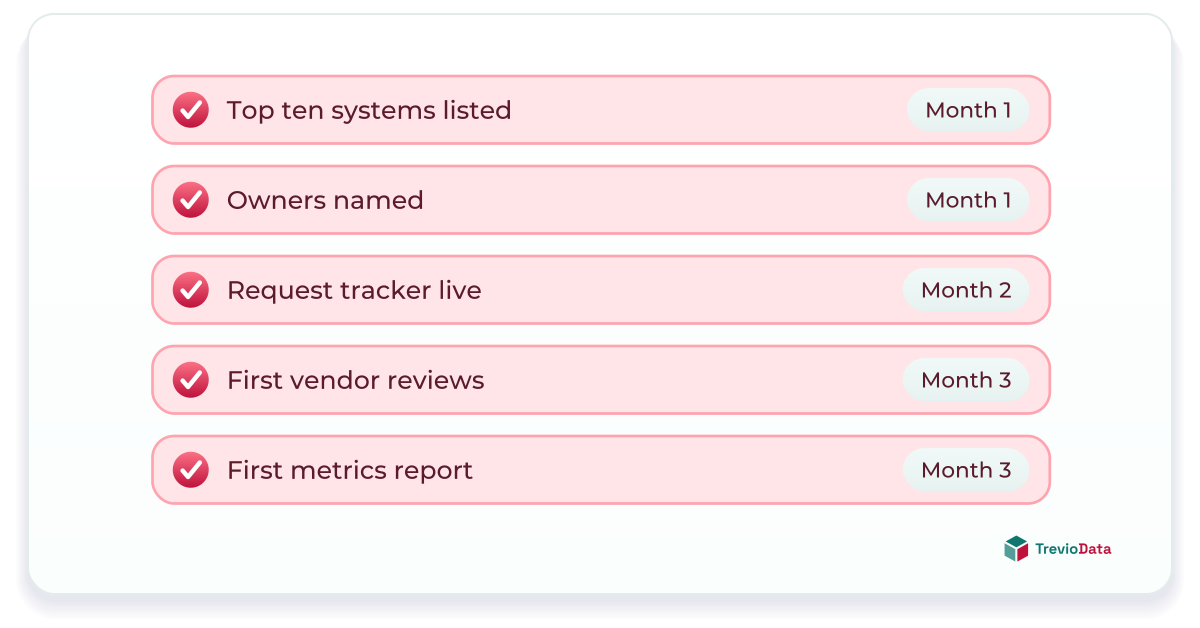
If you are starting from little, this sequence works well and keeps the effort manageable. In the first month, name the coordinator, list your ten richest systems and write down how requests are handled today, even if the answer is "by email." In the second month, add owners to every system on the list, write retention rules for the two largest datasets and set up the new-tool review. In the third month, run a test request end to end, review your top vendors and present the first metrics to your sponsor.
Expect friction in month two. Owners will say they have no time, and the honest answer is that each owner needs about an hour per quarter. Show them that number early, along with what you ask them to do in that hour.
How to Choose Your Program Structure
Size and risk decide how much structure you need. A 30-person software company does not need a privacy committee, and a hospital group does. These three setups fit most of the clients I work with.
| Setup | Fits | Example |
|---|---|---|
| Lean | Under about 100 staff, low request volume | One part-time coordinator, spreadsheet inventory, shared request tracker, yearly review |
| Standard | 100 to 1,000 staff, several regions or regulated data | Dedicated privacy lead, owners per system, privacy tool for requests and consent, quarterly reports |
| Embedded | Large or heavily regulated organizations | Privacy team plus champions in each department, automated discovery, formal committee and audits |
Move up a level when requests grow, when you enter a new region or when an enterprise buyer asks for evidence you cannot produce. If you are unsure which level fits, a short call usually settles it.
Questions About Data Privacy Management
What Is Data Privacy Management in Simple Terms?
It is the day-to-day work of knowing what personal data you hold, deciding who may use it, protecting it and proving you did. It includes an inventory of data, rules for use and retention, consent handling, request workflows, vendor checks and records. Think of it as an operating system for personal data, with owners, routines and evidence.
Who Should Own Data Privacy Management in a Mid-Sized Company?
Give one named person the coordination role, often a privacy lead, a data protection officer where one is required, or a head of compliance. Then spread ownership of each dataset to the business team that uses it. In my client work, programs with a single coordinator and many small owners hold up far better than programs owned by legal alone.
Do I Need Privacy Management Software?
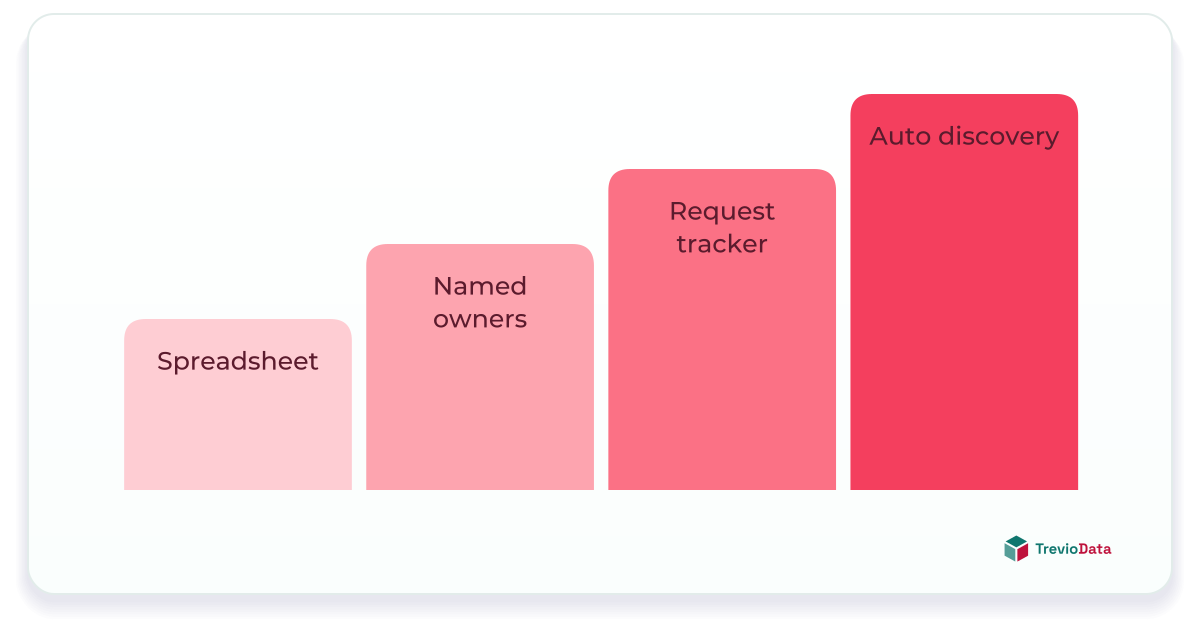
Not on day one. A spreadsheet-based inventory and a shared request tracker are enough for many teams with low request volumes. Software starts to pay off when requests arrive weekly, when you run many systems or when you need automated data discovery. My ranking of privacy tools compares the main options by use case.
How Is Privacy Management Different from Data Governance?
Governance covers all data: quality, ownership, definitions and access. Privacy management is the part that deals with personal data and the rights of the people it describes. The two share an inventory and a set of owners, so building them together avoids doing the same mapping twice.
How Often Should I Review My Privacy Program?
Review the data inventory and vendor list at least once a year, and again whenever you add a major system, enter a new market or change what you collect. Check request metrics and open risks every quarter. A short review on a fixed rhythm beats a big annual project that nobody has time for.
What Should I Measure to Know the Program Works?
Track how long requests take from intake to response, the share of systems with a named owner, the number of vendors reviewed in the last year and how many datasets have a retention rule that is actually applied. Add open high-risk findings and their age. Fewer, simpler numbers are easier to keep current.
Can a Small Team Run Data Privacy Management?
Yes. A small team needs a short inventory, three or four written rules, one request workflow and a yearly review. The main risk for small teams is dependence on one person, so write down how requests are handled and where records live.
Disclaimer: This article is general information, not legal advice. Privacy rules differ by country and state and change often, so confirm your obligations with your own counsel.
Was this article helpful?
Thank you for letting us know.
Camille leads the Trevio editorial team and works with our consultants to turn real client projects into practical guides on data strategy, engineering and governance. Before joining Trevio, she spent 11 years in data engineering and analytics roles. She has since edited more than 300 articles on data management and reviewed pipelines and platforms from over 100 client projects. She is based in Denver, Colorado.