Key Takeaways
- Implement in six phases, and release one business area at a time instead of building everything first.
- Agree on metric definitions and an owner before any table is built.
- Run old and new reports side by side until the numbers match, and keep a rollback plan.
- Budget for monitoring and cost controls from the first load, not after the first surprise invoice.
Most warehouse projects I get called into did not fail on technology. The platform worked, the pipelines ran, and the business still kept using spreadsheets, because nobody had agreed what the numbers meant. A clear sequence prevents most of that. It is the same sequence I follow in data warehouse consulting work.
The plan below has six phases. Each has a goal, the work involved, a gate you must pass before moving on and the usual way it goes wrong. If you have not yet decided what the warehouse is for, read my data warehouse strategy guide first and come back.
Six Phases in Brief
| Phase | Goal | Gate to pass | Typical duration |
|---|---|---|---|
| 1. Scope | Pick the first business area and owner | Owner signs a one-page scope | 1 to 2 weeks |
| 2. Design | Define metrics, models and the platform | Definitions approved by finance and sales | 2 to 4 weeks |
| 3. Foundation | Set up accounts, security and environments | Dev and prod work, access reviewed | 1 to 3 weeks |
| 4. Load and model | Build pipelines, tests and tables | Totals reconcile with the source | 4 to 10 weeks |
| 5. Parallel run | Compare old and new reports | Users sign off matching numbers | 2 to 6 weeks |
| 6. Launch and operate | Switch over, monitor and tune | Stable for one full reporting cycle | Ongoing |
The durations are ranges from my own projects. They grow with the number of sources and shrink when decisions are made quickly.
Phase 1: Scope One Business Area and Name an Owner
Pick the area where bad numbers cost the most, often sales, finance or inventory. Write a one-page scope with the questions it must answer, the sources it needs and the people who will use it. Name one business owner with the authority to settle arguments, because every warehouse project hits a day when two departments define a customer differently.
Resist adding scope. Every extra source adds weeks, and the first release is your proof. In one retail project we dropped three of eight planned sources from release one. The first dashboards went live a month earlier, and the other sources followed once people were using the numbers.
Gate: the owner signs the scope. Where it goes wrong: the scope is a list of tools instead of a list of questions, so nobody can say later whether it worked.
Phase 2: Design Metrics, Models and the Platform
Write down each metric in plain words, with its formula, its source and its edge cases. Revenue is the classic: does it include tax, refunds, free trials? Then design the tables around business entities such as customers, orders, products and dates. This is where the warehouse gets its value, and it is cheap to change on paper.
Choose the platform now, not before. Compare two or three options on a sample of your real workload, using the criteria in my ranking of data warehouse tools. Where your data lives, your team's skills and your usage pattern usually decide it.
Gate: definitions approved and the model reviewed by an analyst who will use it. Where it goes wrong: the design copies the source system's tables, and the warehouse inherits every quirk.
Phase 3: Build the Foundation Before the Pipelines
Set up cloud accounts, networking, roles and separate development and production environments. Put all code in version control, create the secrets store and decide naming rules. It is dull work and it prevents the worst surprises later, such as a developer with write access to production tables.
Set cost guardrails on day one. Tag compute by team, set budgets with alerts and make idle compute shut down automatically. Cloud warehouses bill for what runs, so a missing guardrail shows up on the next invoice.
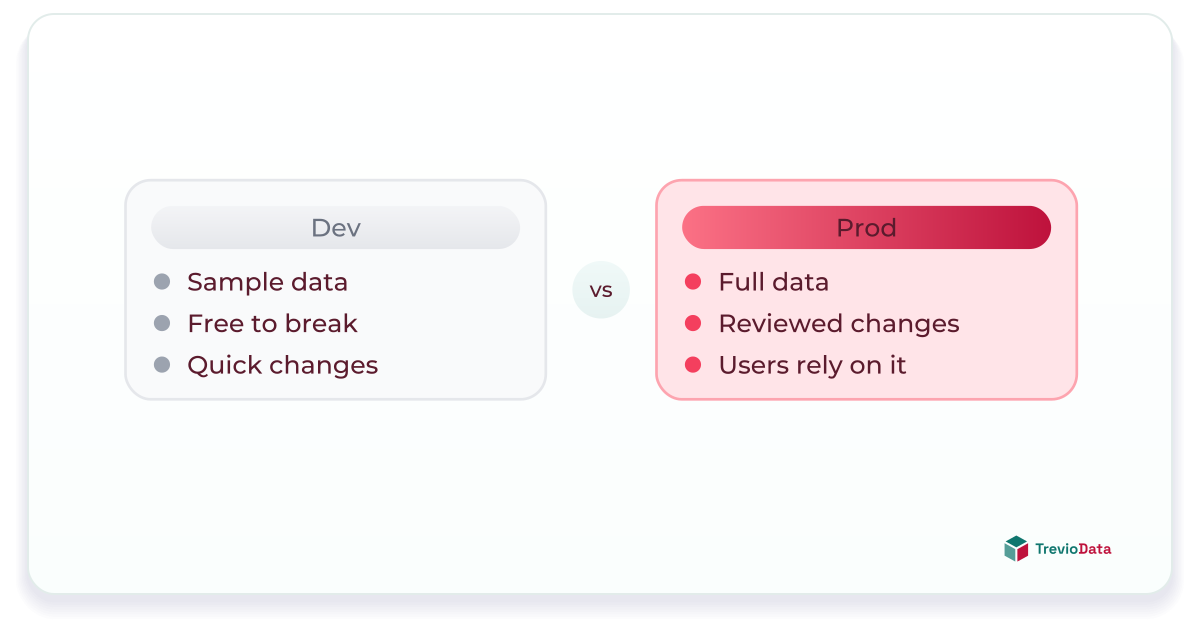
Gate: both environments work, access has been reviewed by security and budgets are active. Where it goes wrong: the team builds in production "just for now" and never moves.
Phase 4: Load, Test and Model the Data
Load source data unchanged into a raw layer, then clean it into staging tables and shape it into the models you designed. Use incremental loads where a source has a reliable change marker, and full reloads for small tables. My notes on data warehouse best practices cover layering, rerun-safe loads and testing in more detail.
Tests are part of the build, not a later task. Check that keys are unique, required fields are filled, row counts are close to the source and data arrived on time. Reconcile totals against the source system for every load. When a total does not match, you want to find out in week five, not in front of the CFO.
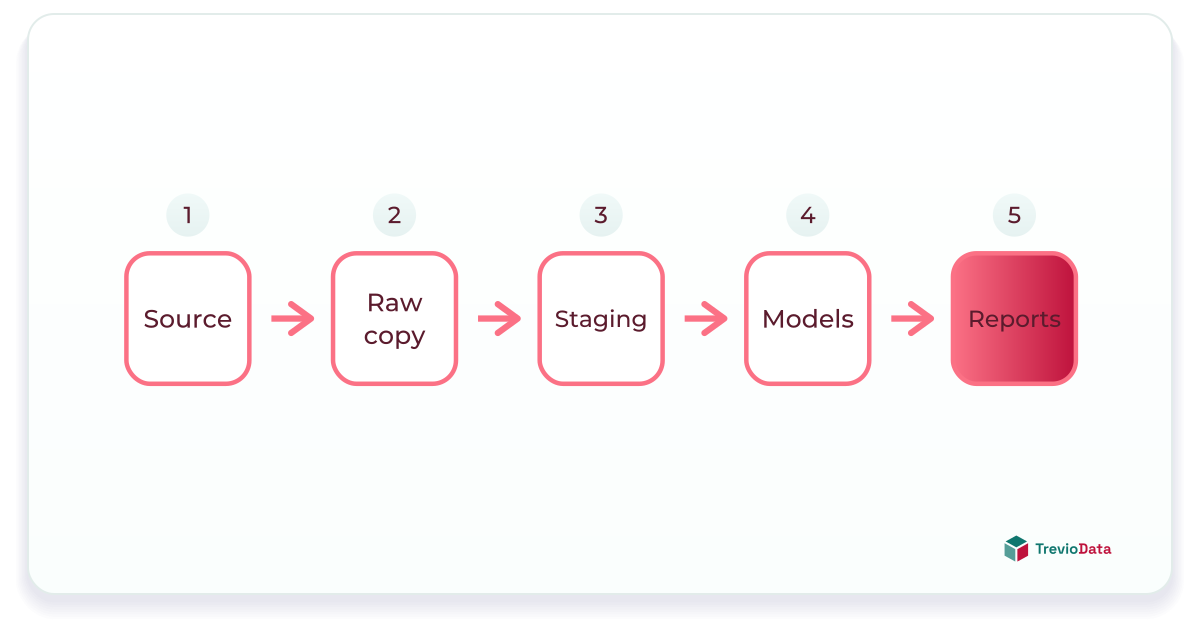
Expect this phase to expose data problems that nobody knew about: duplicate customers, impossible dates, products with no category. Keep a short issue log with an owner for each item. Some are fixed in the pipeline and some need the source team to change how they enter data.
Gate: totals reconcile and tests pass on a full history load. Where it goes wrong: issues are patched in the report layer, and each dashboard ends up with its own fix.
Phase 5: Run Old and New Side by Side
Before anyone switches, run the old reports and the new ones in parallel and compare them. Differences are normal. Most come from a rule that was undocumented in the old report, and each one deserves a decision: which version is right, and why. Write the answer next to the metric definition so the next person does not reopen it.
Have the people who read the reports sign off, not only the team that built them. A finance lead who recognizes the numbers is a better test than any automated check. If the old system is being retired, keep it available for at least one full reporting cycle after the switch.
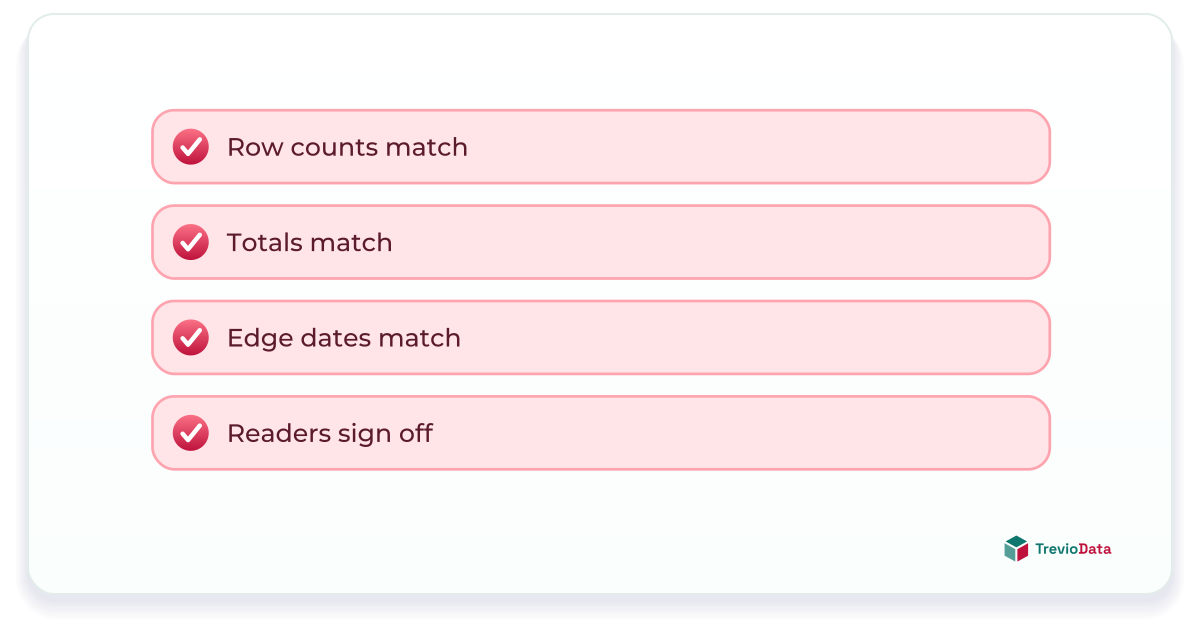
Gate: named users sign that the new numbers match, or that differences are explained. Where it goes wrong: the parallel run is skipped to meet a date, and the first month-end becomes the test.
Phase 6: Launch, Monitor and Tune
Switch dashboards over one group at a time, starting with a friendly team. Announce the change, show the new definitions and keep a clear place to report problems. A rollback plan, even a simple one, lets people relax and helps adoption.
After launch, three monitors matter: data freshness, test failures and cost. Look at the five most expensive queries every month with their owners, because a few reports usually cause most of the bill. My article on data warehouse cost shows what typical running costs look like and how to budget them.
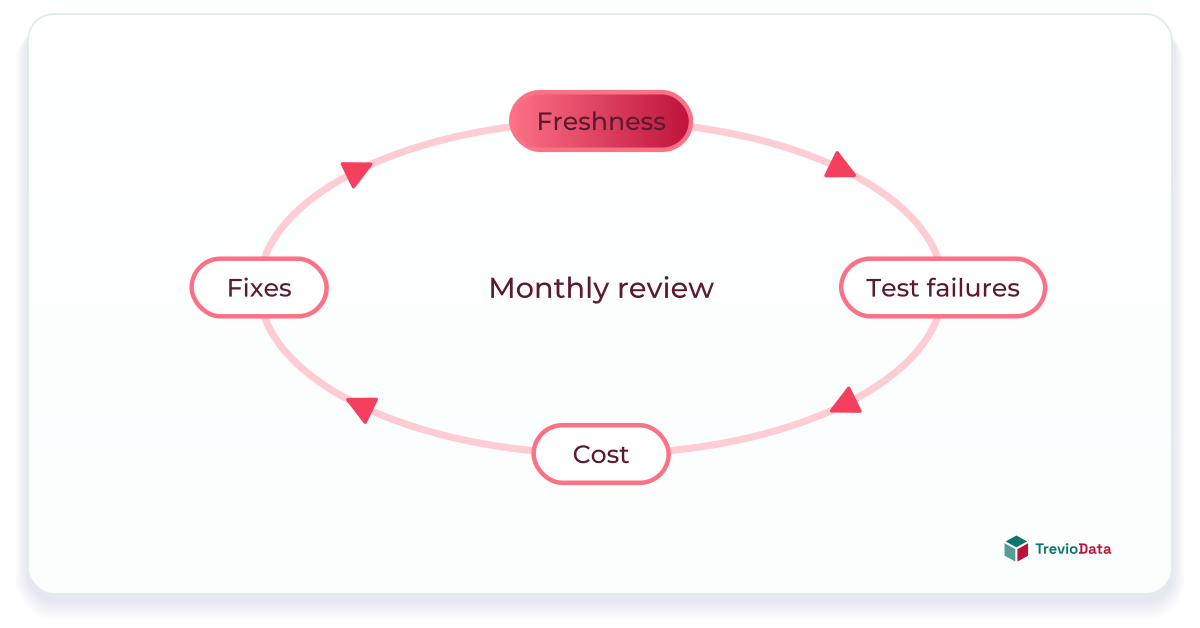
When the first area is stable, pick the next one from your list. Many teams find that the second release takes half the time of the first, because the foundation, the habits and the trust are already there. The data warehouse use cases in my other guide help you choose which area to take next.
Where the Schedule Usually Slips
Three things delay warehouse projects more than anything else. The first is access: getting credentials, firewall changes and API keys for each source can take weeks, so start those requests in phase 1. The second is definitions. A metric that two departments define differently stalls the model until someone with authority decides. The third is undocumented reports, which surface only during the parallel run and send you back to the model.
Build slack into the plan for each. I add roughly a quarter to any estimate that depends on external teams, and I tell the owner so on day one. A plan that admits delays up front looks worse in a kickoff meeting and better on the launch date.
Who You Need on the Team
A first release does not need a large team. You need a business owner who decides, a data engineer who builds, an analyst who knows the reports and checks them, and a security reviewer for a few hours. A project lead helps once more than two sources are involved. If you do not have these people in house, a consultant can fill the engineering and design roles while your team takes ownership of definitions and sign-off.
What I look for most is a business owner who answers questions within a day. Waiting a week for a decision on whether refunds count as revenue costs more than any tool choice. Ask for that commitment up front.
How to Choose Your Own Starting Point
If you have an old warehouse, start with phase 1 and an honest inventory of the reports people really open. If you are building new, start with phase 2 and write the metric definitions before you touch a platform. If a project has stalled, check phase 5: many stuck projects have a working warehouse and an unfinished reconciliation. A short audit can tell you which phase you are really in.
Questions About Data Warehouse Implementation
How Long Does a Data Warehouse Implementation Take?
A first release with two or three sources and a handful of reports often takes six to twelve weeks. A full program with many sources, years of history and a legacy migration takes six months or more. The number of sources, the cleanliness of the data and how fast owners make decisions move the timeline more than the platform does.
Should I Build the Whole Warehouse First or Release in Pieces?
Release in pieces. Pick one business area, such as sales or finance, take it from source to dashboard and let users depend on it before you start the next. A big-bang build hides problems until the end, and by then the requirements have moved.
Which Team Members Do I Need?
At minimum you need a business owner who can decide, one data engineer or consultant to build, an analyst who knows the reports and a part-time security reviewer. Larger programs add a project lead and a tester. People matter more than the platform.
What Is the Difference Between a Warehouse Migration and a New Build?
A migration has an old system with reports and users that cannot stop working, so you run old and new side by side and compare outputs. A new build has no such constraint but needs more requirements work, because there is no existing report list to copy.
How Do I Test a Data Warehouse?
Test three things. Reconcile row counts and totals against the source for every load. Run data tests for keys, nulls and value ranges on every refresh. Compare the figures in key reports with the numbers finance already trusts, and have a business user sign them off.
What Are the Most Common Reasons Implementations Fail?
The usual causes are an unclear owner, scope that grows every week, definitions nobody agreed on and a cutover with no rollback. Platform choice rarely appears on the list. Most failures show up as a warehouse that works technically and that nobody trusts.
Do I Need a Consultant for the Implementation?
Not always. If your team has built a warehouse before and the scope is small, you can run it yourself. A consultant helps most with the first design, platform choice, a migration or a stalled project, and the best engagements end with your team owning everything.
Note: This article is general information, not legal, financial or tax advice. Figures and examples are estimates based on typical projects, so check current details with your providers and advisers before you decide.
Was this article helpful?
Thank you for letting us know.
Camille leads the Trevio editorial team and works with our consultants to turn real client projects into practical guides on data strategy, engineering and governance. Before joining Trevio, she spent 11 years in data engineering and analytics roles. She has since edited more than 300 articles on data management and reviewed pipelines and platforms from over 100 client projects. She is based in Denver, Colorado.