Key Takeaways
- A twelve-month roadmap in four phases keeps data work visible and finishable.
- Quarter one covers owners, definitions, a baseline and one quick fix.
- Plan buffers, because first projects usually slip by a few weeks.
- Report results every quarter in the numbers your leaders already track.
A roadmap turns intentions into a calendar. You can copy the one below as a starting point and change the details to fit your size. If you want help adapting it, data management consulting usually begins by testing the first quarter against your real constraints.
I built this sequence from projects where the order mattered more than the tools. The phases are short on purpose, and each ends with one result you can show.
The Twelve Months at a Glance
| Phase | Months | Main work | Result you can show | Owner |
|---|---|---|---|---|
| 1. Kickoff and baseline | 1 to 2 | Goals, source map, owners, definitions, baseline numbers | One-page plan and a baseline report | Data lead with business sponsor |
| 2. First fix | 2 to 4 | Repair the top problem, add checks and alerts | Before and after numbers for one domain | Domain owner |
| 3. Build the foundation | 4 to 8 | Pipelines, central store, quality rules, access control, catalog | Trusted reports from one source | Data engineering lead |
| 4. Scale and sustain | 8 to 12 | Extend to more domains, train teams, quarterly review | Second and third domains live, scorecard in use | Data lead and owners |
Phase One: Kickoff and Baseline (Months 1 to 2)
Begin with a two-hour kickoff with the business sponsor and the heads of finance, sales, operations and IT. Agree on three goals and a measure for each. Then spend two to four weeks on a source map and an owner list. A shared sheet is enough. The details of this phase are in my data management strategy guide.
Record baseline numbers before you change anything: hours spent on report preparation, failed pipeline runs per month, duplicate rate in the customer table and time to answer a typical data request. Without these, nobody can later show the project worked.
Typical delay: getting access to source systems. Ask for it in week one, because security reviews and vendor tickets take longer than anyone plans.
Phase Two: The First Fix (Months 2 to 4)
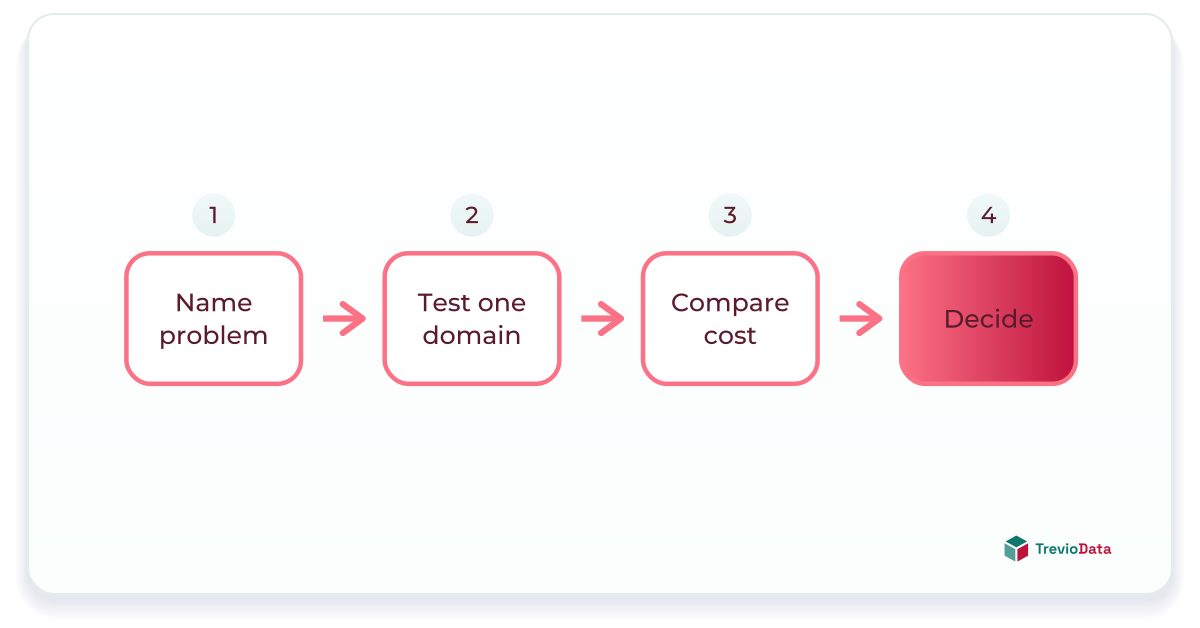
Choose the top problem from your ranked list and finish it. Common first fixes are repairing a failing pipeline set, merging duplicate customers or agreeing on a disputed metric. Add checks and alerts so the improvement lasts, and send the alerts to a named owner.
At the end, write one page: baseline, change, date and what you will do next. Share it with the sponsor. That page decides whether the program keeps its momentum, so spend an hour on it. Several habits from my list of data management best practices belong in this phase, especially ownership and monitoring.
Phase Three: Build the Foundation (Months 4 to 8)
Now the larger work begins: reliable pipelines from your key sources, a central store such as a cloud warehouse, quality rules that run daily, role-based access and a catalog or glossary. Deliver in small releases, one domain at a time, and run old and new reports side by side until the numbers match.
This is also when you choose platforms. Write down the problem each tool must solve and who will run it, then compare options in my ranking of data management software. Avoid buying more than the current domain needs.
The structure behind this phase is the model in my data management framework guide: architecture, quality, security and lifecycle all move up one level here.
Phase Four: Scale and Sustain (Months 8 to 12)
With one domain proven, extend the same pattern to the next two. Reuse the templates for owners, definitions, checks and documentation. Train the people who will run it, and hand over runbooks for the top failures.
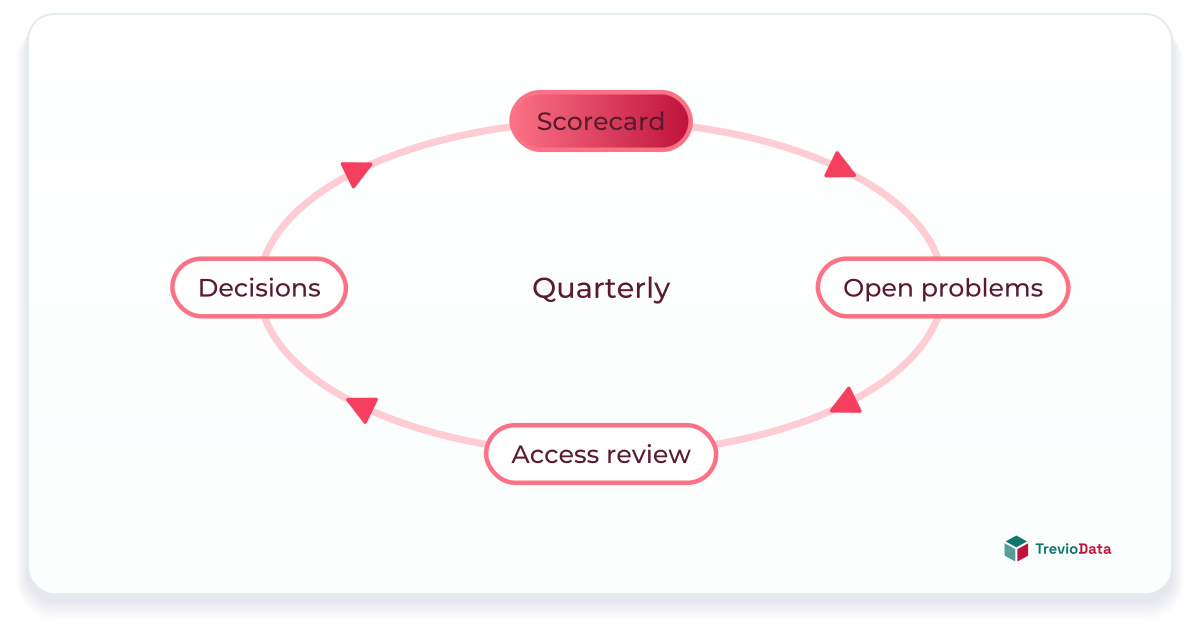
Set up the quarterly review: scorecard, open problems, access review and next quarter's priorities. Retire the roadmap items that are done and add the new ones. To see how finished projects looked, browse these data management examples.
Who Does What Across the Year
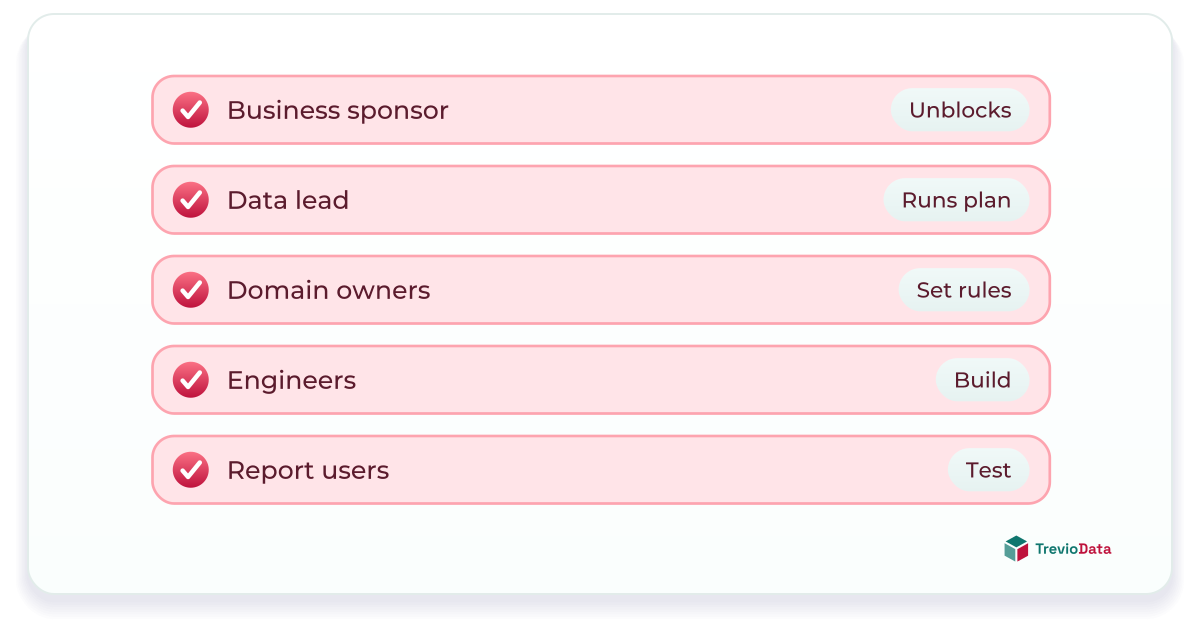
A roadmap fails quickly when nobody knows who does the work. Four roles cover most mid-sized programs. The sponsor is an executive who removes blockers and attends the quarterly review. The data lead runs the plan day to day, keeps the priority list and reports progress. Domain owners decide what their data means and approve changes. Engineers and analysts build and run the pipelines, checks and reports.
In smaller companies one person often holds two of these roles, and that is fine. What matters is that every item on the roadmap has exactly one name next to it. When I review stalled programs, the cause is usually an item owned by a team instead of a person, or a sponsor who stopped attending reviews after the kickoff.
Time is the real cost. Expect domain owners to spend a few hours a month in the early phases, and the data lead to spend most of their week on the plan. If those hours are not freed up, the dates in the table will slip, whatever the tools do.
What to Report Each Quarter
Report a short set of numbers that leaders already care about. In quarter one, show the baseline. In quarter two, show the before and after for the first fix, for example failed loads per month or duplicate rate. In quarter three, show how many reports now run from the central store and how many hours of manual preparation disappeared. In quarter four, show the scorecard trend across domains and the list of problems still open.
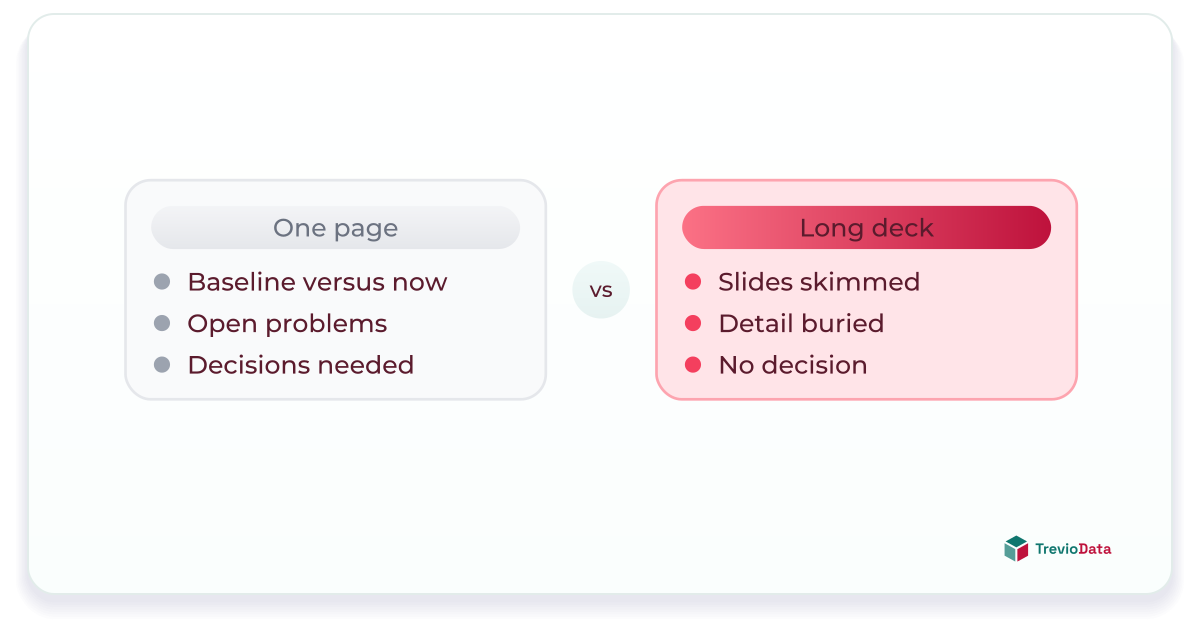
Keep each report to one page. Leaders read a page and skim a deck. If a number gets worse, say so and explain the cause. In my experience a roadmap earns more trust from an honest dip than from a line that only goes up.
Finally, keep a short log of decisions: which definition was chosen, which system became the master and why. The log saves hours later, when someone asks why the numbers changed or why a tool was picked.
One more habit helps across all four phases: write down what you decided not to do. A short list of deferred items, with the reason, stops the same ideas from returning every month and shows stakeholders that their requests were heard, not lost.
A Quarter-by-Quarter Checklist
Use this as a working list. Quarter one: goals agreed, source map done, owners named, ten definitions written, baseline recorded and the first fix started. Quarter two: first fix delivered, alerts running, results shared and the next domain chosen. Quarter three: central store live for the first domain, quality rules running daily, access reviewed and documentation in place. Quarter four: two more domains moved, runbooks handed over, scorecard in use and next year's priorities written.
If you finish a quarter with half of the items done, do not add new ones. Finish the open items first, then move on. A roadmap with fewer finished items beats a long one that nobody completes.
Budget and Effort, Roughly
Roadmap budgets depend on company size, so I avoid quoting a single number. What I can say is where the money tends to go. The first two phases are mostly staff time: workshops, source mapping and the first fix. Phase three carries the platform and engineering cost, and phase four is mostly training and the recurring review. Many companies find that licenses are the smaller line item and people time the larger one.
To keep spending under control, tie each purchase to a roadmap item and a measure. A warehouse is justified by the reports that will run from it. A catalog is justified by the number of people who will use it. If you cannot name the item, wait one quarter and ask again. Delaying a purchase rarely hurts, while buying too early leaves you paying for shelfware.
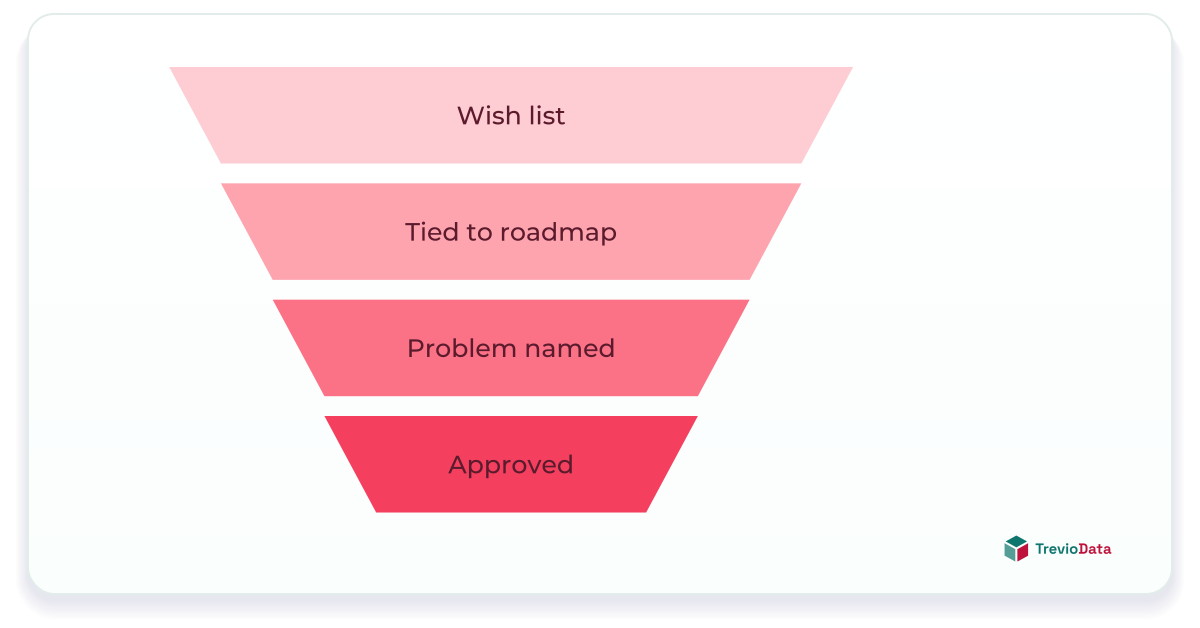
Review the budget at each quarterly meeting alongside the results. If the first fix saved a measurable number of hours, say so, and use it to justify the next step. If it did not, find out why before asking for more.
Where Roadmaps Slip, and How to Plan for It
Delays follow a pattern. The table lists the causes I see most often, with a simple way to plan around each.
| Cause | How it shows up | Plan for it by |
|---|---|---|
| Slow access to systems | Work waits on tickets and approvals | Requesting access in week one |
| Undocumented reports | Users appear late in the project with must-have reports | Surveying report users before design |
| Unclear ownership | Decisions stall in meetings | Naming one owner per domain first |
| Scope growth | A fix turns into a program | Parking extras on a later list |
| Key person leaves | Knowledge disappears with them | Writing short runbooks as you build |
Build a buffer of about a quarter of the time into the first project, and treat milestones as dates you review monthly. If a milestone slips twice, split it into smaller pieces.
How to Adapt the Roadmap to Your Company
Adjust the timing, not the order. A small company can compress phases one and two into six weeks. A larger one may need a quarter for phase one because of the number of sources and stakeholders. Check your version against this list:
- Each phase ends with a result someone outside the data team can see.
- Every item has one named owner and a date.
- The next quarter is detailed, and the rest is outlined.
- A monthly review is already in the calendar.
If you are unsure about any phase, test it on one domain before you commit the whole organization.
Questions About the Data Management Roadmap
What Is a Data Management Roadmap?
A data management roadmap is a dated sequence of projects that moves your data from its current state to a target state. It lists what you will do in each quarter, who owns it and how you will measure it. It is shorter and more concrete than a strategy.
How Long Should a Data Management Roadmap Cover?
Twelve months, with detail for the next quarter and rough outlines beyond that. Longer plans go out of date before the work reaches them, because the business changes.
What Should Come First on the Roadmap?
Owners, definitions and a baseline. They cost little and they make everything after them easier. Then pick one painful problem, such as failing pipelines or duplicate customers, and fix it in the first quarter.
How Do I Handle Delays?
Plan for them. In my experience the first project slips by a few weeks more often than not, usually because a source system is harder to access than expected. Leave a buffer in the first quarter and keep the milestones small enough that a slip does not hide a larger problem.
Who Should Review the Roadmap?
The data lead, the business owners of the main domains and one executive sponsor. Meet monthly for thirty minutes to review progress, and rewrite priorities once a quarter.
How Much Does the Roadmap Cost to Run?
That depends on your size and how much work you do in-house. Most of the early work is staff time. Budget separately for tools only after the first quarter, when you know which jobs need software.
Can I Use the Same Roadmap for a Migration or an AI Project?
Yes. A migration or an AI project becomes one workstream on the roadmap. Check that the data it needs is owned, documented and of good quality before it starts, or add that work ahead of it.
Note: This article is general information, not legal, financial or tax advice. Figures and examples are estimates based on typical projects, so check current details with your providers and advisers before you decide.
Was this article helpful?
Thank you for letting us know.
Camille leads the Trevio editorial team and works with our consultants to turn real client projects into practical guides on data strategy, engineering and governance. Before joining Trevio, she spent 11 years in data engineering and analytics roles. She has since edited more than 300 articles on data management and reviewed pipelines and platforms from over 100 client projects. She is based in Denver, Colorado.