Key Takeaways
- Outsource when you need speed, a short project or skills you lack, and hire in-house when the workload is steady and central to your business.
- A mixed model works for many companies: a partner builds the foundation and trains an internal owner.
- You can outsource build-only, fix-only or run-only work, so match the model to the skill gap.
- Protect yourself with code in your repository, least-privilege access, written documentation and a handover plan agreed at the start.
The question I hear most from founders and heads of data is simple: should we hire engineers or pay someone to do it? The honest answer depends on workload, timing and risk. A trusted data engineering consulting partner is one answer, a full-time team is another, and many companies need both at different stages.
Here is how I compare the two, where each one wins, and how to structure an outsourced engagement so you keep control of your data.
In-House vs Outsourced at a Glance
| Factor | In-house team | Outsourced partner |
|---|---|---|
| Time to start | Months to recruit a good engineer | Weeks, often after a short audit |
| Cost shape | Fixed salaries, benefits and tools | Project fee or monthly retainer |
| Breadth of skills | Limited to the people you hire | Several specialists on demand |
| Business knowledge | Deep and growing | Starts shallow, grows with the engagement |
| Control | Full | Shared, depends on the contract |
| Best for | Steady, strategic workloads | Projects, migrations, fixes and gaps |
Neither column wins everywhere. In-house knowledge compounds over years, and a partner buys you speed and breadth. The rest of this article helps you decide which weights matter for you.
When Outsourcing Data Engineering Makes Sense
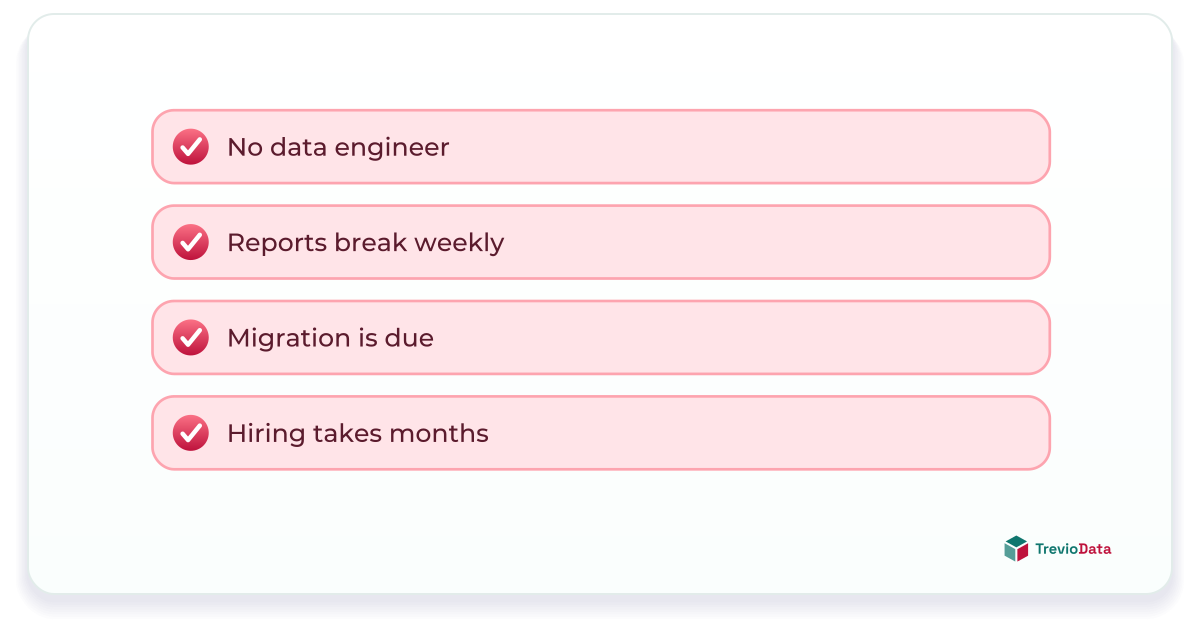
I recommend an outside partner in five situations. If two or more fit you, outsourcing at least the first phase is usually the right call.
- You have no data engineer yet and need a platform before you can justify a hire.
- A migration or rebuild is coming, and nobody on your team has done one.
- Your pipelines are unstable, and the person who built them has left.
- You need a specialist skill for a few months, such as streaming or a new cloud platform.
- Your one engineer is a single point of failure and needs backup.
The first case is the most common. A company with five analysts and a pile of exports rarely needs a permanent team on day one. It needs a working warehouse, a handful of pipelines and someone to explain them, which is a project with an end date.
When an In-House Team Is the Better Choice
Data engineering is worth building in-house when it sits close to your product or revenue. A software company whose product depends on event data, or a retailer that changes its data model every month, benefits from engineers who live inside the business. The workload is steady, the knowledge is specific and the context changes too fast to hand over in documents.
There is also a plain cost argument. Once you need two or three engineers full time, every year, an internal team is often cheaper than a retainer. Do the sum with real numbers: salary, benefits, recruiting, tools and management time on one side, the partner’s quote on the other. The trade-offs are not always where people expect, and my article on data engineering challenges lists the hiring and skill problems that push teams toward outside help.
Four Ways to Split the Work
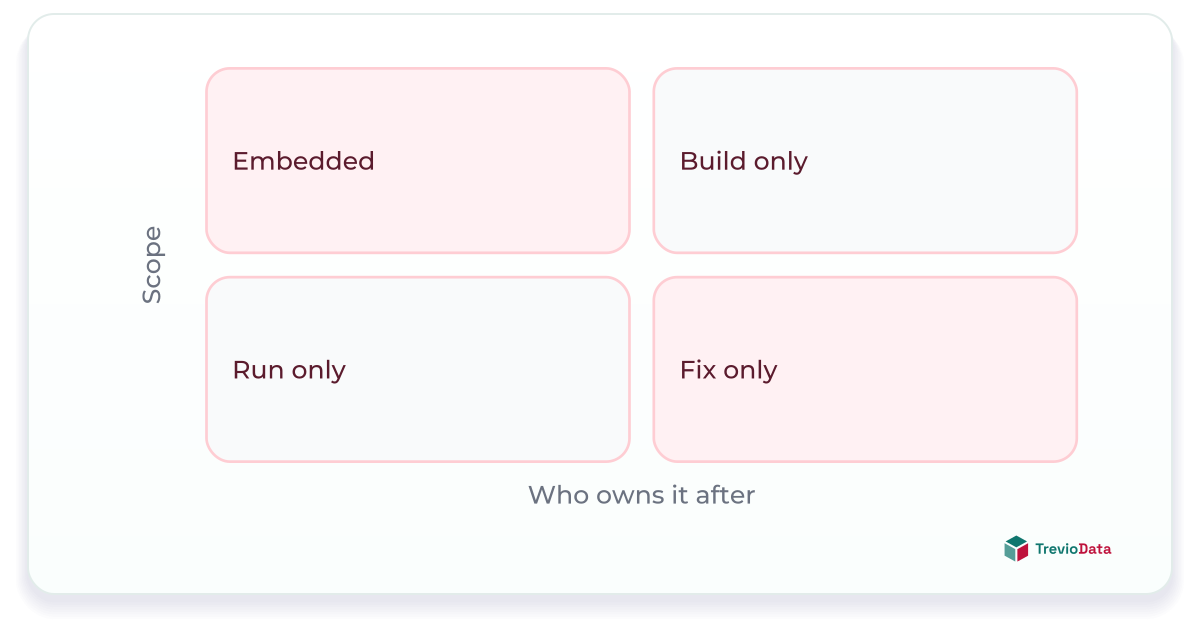
Outsourcing is not all or nothing. The model you pick should match the skill you lack.
| Model | What the partner does | What you keep | Good fit when |
|---|---|---|---|
| Build only | Designs and builds the platform and pipelines | Running and extending it | You have an engineer but no design experience |
| Fix only | Audits, repairs and documents existing pipelines | Day-to-day ownership | Jobs fail and nobody understands them |
| Run only | Monitors, patches and supports the platform | Priorities and new requests | You want stability without a full team |
| Embedded | Specialists work inside your team for a period | Direction and final decisions | You need skills and want your people to learn |
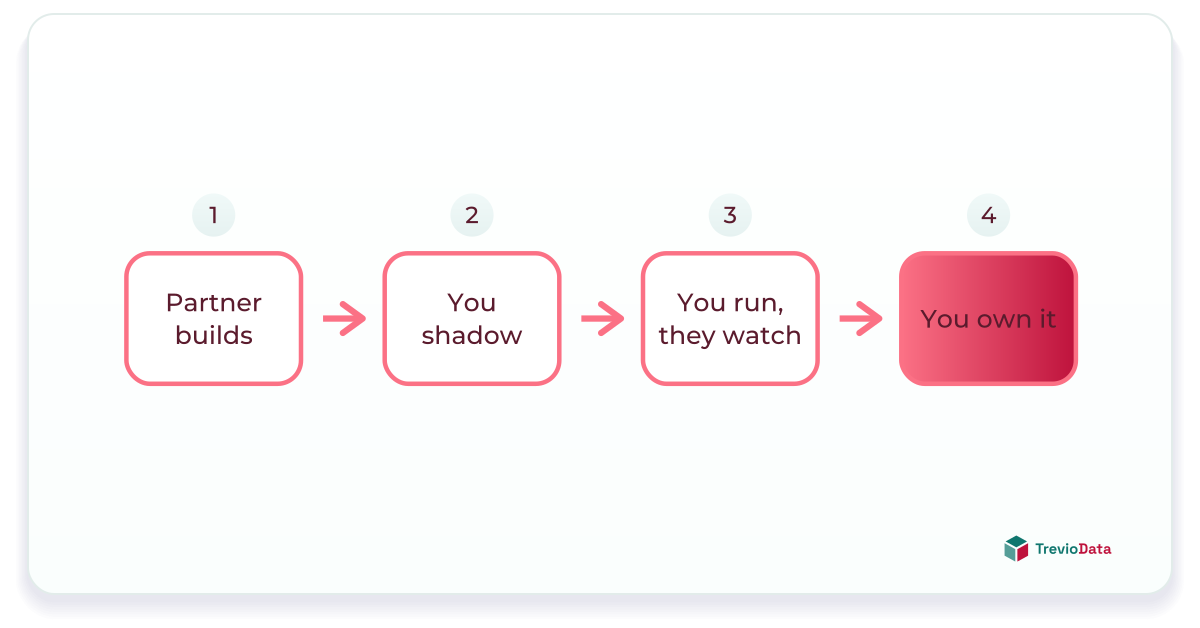
For most first projects I suggest build plus embedded training. The partner builds the foundation while your internal owner shadows the work, then takes over. That route protects you from the biggest risk of outsourcing, which is a platform nobody in your company understands.
The Risks and How to Reduce Them
Outsourcing goes wrong in predictable ways. Each risk has a simple defense, and you should agree on it before work starts.
Lock-In to One Vendor
If the code lives in the partner’s repository, you are tied to them. Insist that all code, infrastructure and documentation sit in your own accounts from day one. Prefer open tools and standard formats so another team can pick up the work.
Knowledge That Leaves With the Contract
Pipelines need people who understand them. Ask for runbooks, architecture notes and recorded walkthroughs as deliverables, and name an internal owner who attends the reviews. A handover plan with a date works better than good intentions.
Security and Privacy
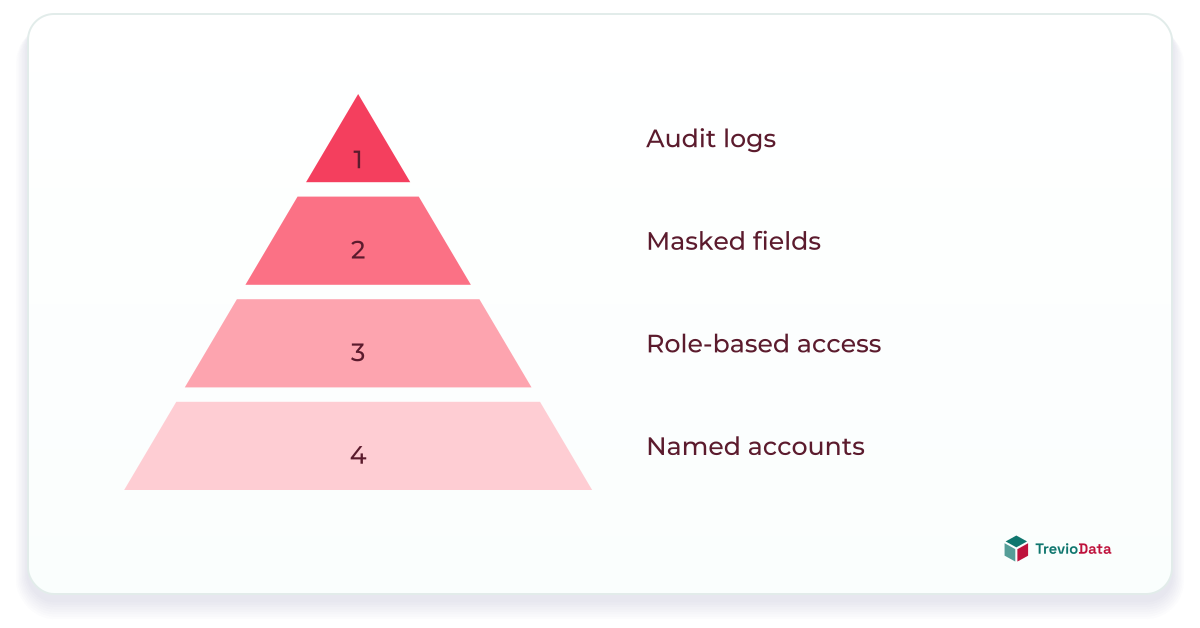
Give the partner access only to what the work needs, inside your cloud account, with logs you can review. Mask personal data where you can, and sign an NDA and a data processing agreement. For health or financial data, check controls before granting any access.
What an Outsourced Project Looks Like Week by Week
A typical first engagement runs about three months, and delays usually come from access and source data, not from the build. This is the sequence I plan around, with the internal owner involved at every step.
| Phase | Typical length | What happens | Your part |
|---|---|---|---|
| Audit | 1 to 2 weeks | Sources, existing jobs and reports are reviewed and ranked | Share access and name the key reports |
| Design | 1 to 2 weeks | Architecture, data models and metric definitions are agreed | Approve definitions in writing |
| First pipelines | 3 to 5 weeks | Priority sources load into the warehouse with tests | Check numbers against reports you trust |
| Monitoring and handover | 2 to 3 weeks | Alerts, runbooks and training are completed | Internal owner runs a pipeline end to end |
The single most common delay is access. A source system owner takes three weeks to create an API key, and the schedule slips with it. Ask for all credentials in the first week, and name someone with the authority to unblock requests.
The most common surprise is data quality. Once the first pipeline loads real records, you discover that a third of customer emails are missing or that two systems use different IDs for the same account. That is not a failure of the engagement. It is the main value of it, because those problems were already affecting your reports. Plan time to fix them with the teams that own the sources.
On one mid-sized client project, the in-house analyst joined every weekly review from the start. By week ten she had changed two models herself, and by the end she ran the daily checks. The partner stayed on a small support plan for a quarter and then stepped back. That is the pattern I aim for, since it leaves you with skills and not just software.
How to Compare the Real Costs
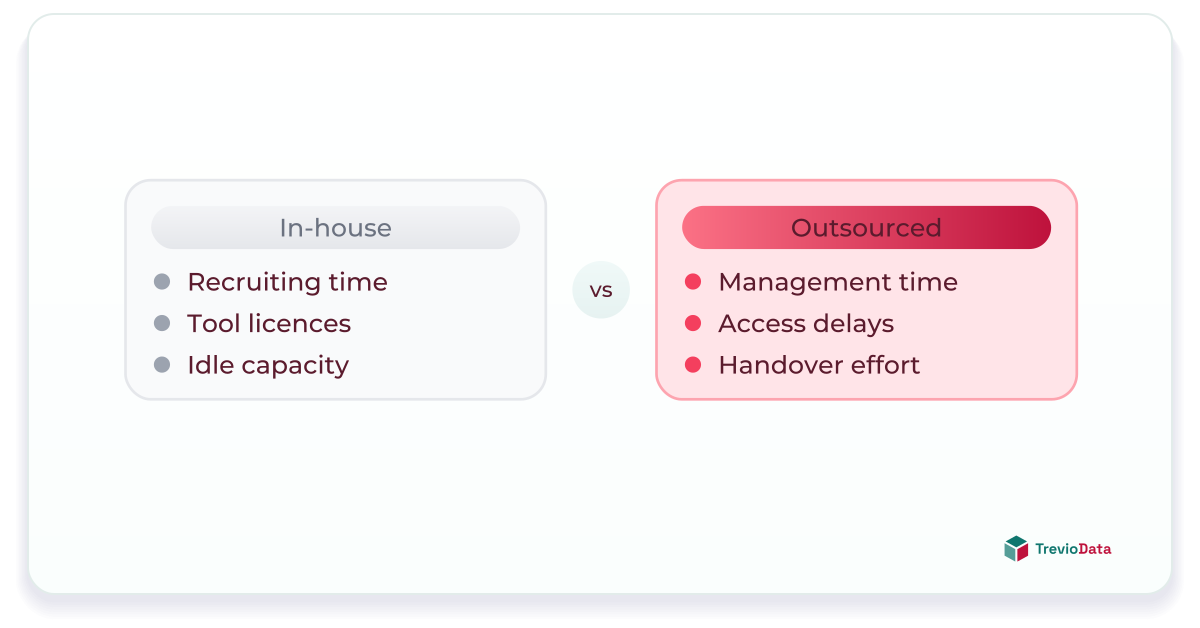
Compare the full cost of each route over the same period, usually twelve to twenty-four months. For the in-house route, count salary, benefits, recruiting time, management time, tools and the months before the person is productive. For the outsourced route, count the project fee or retainer, your internal time to manage it and the cost of training your owner.
Then add the cost of delay. If an outside team gets reliable reporting live three months sooner, what is that worth to your business in better decisions or saved analyst hours? In my experience, speed often decides the question more than the hourly rate does.
Tool choice affects both routes. A managed loader and warehouse reduce the engineering you need, and my ranking of data engineering tools shows what each one costs and takes off your plate.
One more cost people forget is management time. An outside team still needs a product owner who answers questions within a day. Budget a few hours a week for that person, or the project stalls on small decisions such as which date counts as the order date. Treat that time as part of the price, and compare it fairly against the time a new hire would need from your manager.
How to Choose and What to Ask a Partner
Before you sign, put these questions to any partner and expect specific answers:
- Which platforms have you built on that match ours, and can you describe a similar project?
- Who will work on our project, and who is the single contact?
- Where will the code, documentation and credentials live?
- How do you test pipelines, and what alerts do we receive after launch?
- What does the handover include, and how do you train our team?
- What is fixed in the quote, and what could change the price?
Strong partners answer with examples and written samples. Vague answers about “best practices” mean you should look elsewhere, and my checklist of data engineering best practices shows what good work looks like. If you are still building your own knowledge, start with the data engineering guide, then book a call and test the partner’s thinking.
Questions About Outsourcing Data Engineering
What Does Outsourcing Data Engineering Mean?
It means paying an external firm or contractor to design, build or run part of your data platform. The scope can be as small as one pipeline or as large as a full managed service. You keep ownership of the data and the code, and the partner supplies people and experience.
Is Outsourcing Data Engineering Cheaper than Hiring?
For a defined project, usually yes, because you pay for the weeks you need and avoid recruiting, benefits and idle time. For a permanent, steady workload, an internal team can cost less over several years. A mixed model often gives you the best of both.
What Should I Keep In-House?
Keep the business questions, the metric definitions and the final say on priorities. Those need people who understand your company. Also keep at least one internal owner for the platform, so knowledge never sits only with an outside team.
How Do I Protect Sensitive Data When Outsourcing?
Work inside your own cloud account, give the partner least-privilege access, mask or exclude sensitive columns where possible, use an NDA and a written data processing agreement, and review access logs. For regulated data, check the partner’s controls before any access is granted.
How Long Does It Take to Get Started?
A good partner can start with a discovery call and a short audit within a week or two, then deliver a first pipeline within a few weeks. Hiring a senior data engineer often takes longer than that, which is one reason teams outsource the first phase.
What Are the Risks of Outsourcing Data Engineering?
The main risks are lock-in to one vendor, loss of knowledge when the engagement ends, unclear ownership and quality that depends on a few people. You reduce them with code in your own repository, written documentation, training and a handover plan agreed before the work starts.
Can I Outsource Only Part of the Work?
Yes. Common splits are build-only, where a partner builds and you run; fix-only, where a partner repairs unstable pipelines; and run-only, where a partner monitors and maintains what exists. Choose the split that matches the skill you lack.
Note: This article is general information, not legal, financial or tax advice. Figures and examples are estimates based on typical projects, so check current details with your providers and advisers before you decide.
Was this article helpful?
Thank you for letting us know.
Camille leads the Trevio editorial team and works with our consultants to turn real client projects into practical guides on data strategy, engineering and governance. Before joining Trevio, she spent 11 years in data engineering and analytics roles. She has since edited more than 300 articles on data management and reviewed pipelines and platforms from over 100 client projects. She is based in Denver, Colorado.