Key Takeaways
- Split your roadmap into five phases, each ending with an exit check that proves it is done.
- Foundations come first: owners, definitions and quality rules for three to five domains.
- Buy the platform after your first use cases prove what it must support.
- Add a two-week buffer to every phase and update the plan the day a date moves.
A data strategy without a roadmap is a wish list. When I review plans for new clients, the strategy document is usually fine, and the roadmap is a single slide with arrows and no dates. Teams then spend a year doing whatever is loudest. If you want outside help building the plan itself, data strategy consulting covers the full path from goals to sequence.
Below is a roadmap you can copy and adapt. It runs 18 months in five phases, with milestones, owners and a check at the end of each phase. The dates assume a mid-sized company with a small data team. Shrink or stretch them to fit your own size.
The Five Phases in Short
Read the table first and the sections after it. Each phase ends with an exit check, which is a short list of facts that must be true before you move on. Skipping exit checks is the quickest way to end up with a roadmap that looks green and delivers nothing.
| Phase | Timeline | Main milestone | Owner |
|---|---|---|---|
| 1. Align and baseline | Weeks 1 to 4 | Goals, sponsor and current-state baseline signed off | Executive sponsor |
| 2. Foundations | Weeks 5 to 12 | Owners, definitions and quality rules for 3 to 5 domains | Head of data |
| 3. First use cases | Months 4 to 6 | Two use cases live with a measured result | Product or business lead |
| 4. Scale | Months 7 to 12 | Platform and pipelines support 5 to 8 use cases | Data engineering lead |
| 5. Optimize | Months 13 to 18 | Strategy refreshed from real results and costs | Steering group |
Phase 1: Align and Baseline (Weeks 1 to 4)
Start with conversations, not tools. Interview six to ten leaders and ask the same three questions: which decision do you struggle to make with today’s data, what does it cost you, and who do you trust to fix it. The answers become your goal list, and the overlap between answers shows you where the business already agrees.
In the same weeks, build a baseline. List your main data sources, the reports people actually open, how long month-end reporting takes and how many of your key numbers have two competing versions. These are rough counts, and a rough baseline in week four beats a precise one in month six. If you are unsure where you stand, my guide to a data strategy assessment gives you a scoring method.
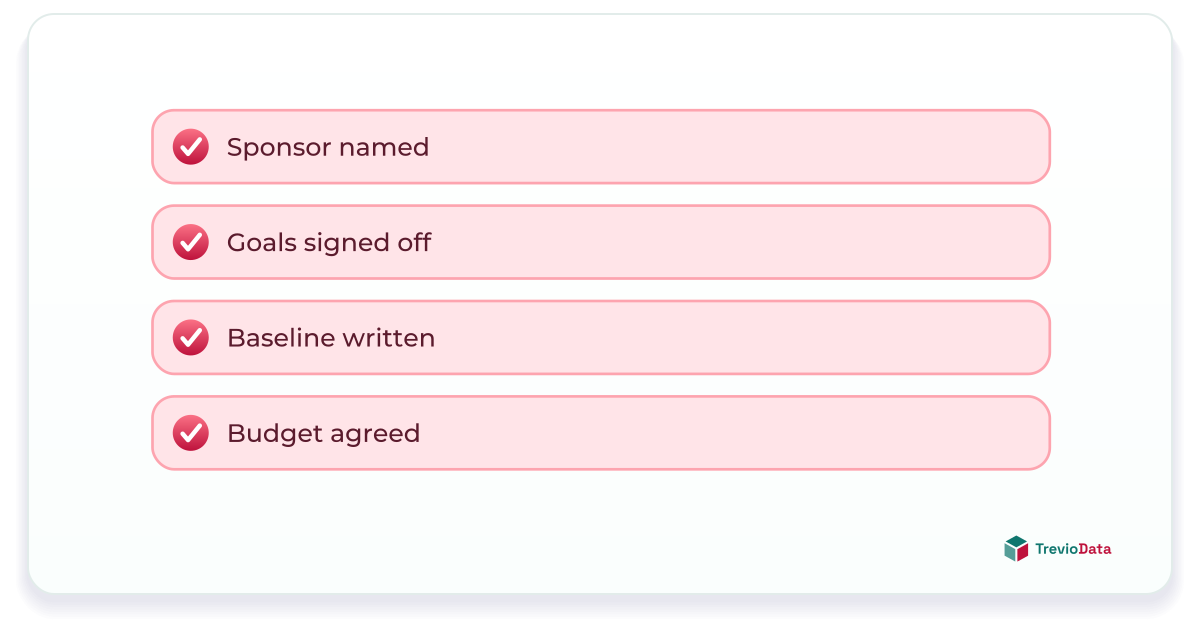
- One executive sponsor with budget authority is named.
- Three to five business goals are written in plain language.
- A baseline exists for reporting time, duplicate metrics and tool count.
- Exit check: your sponsor can state the goals without looking at notes.
Phase 2: Foundations (Weeks 5 to 12)
Foundations are unglamorous and they decide everything after them. Pick the three to five data domains that carry your goals, usually customer, product, finance and one operational domain. For each, name an owner, write down the definition of its two or three key metrics and set one quality rule you can measure.
Resist the urge to cover every domain. In my client work, programs that start with eight domains finish two. Programs that start with three tend to finish all three and then add more, because the first wins earn the time. Once the domains are chosen, the data strategy framework shows how ownership, standards and technology fit together, so your foundations do not conflict later.
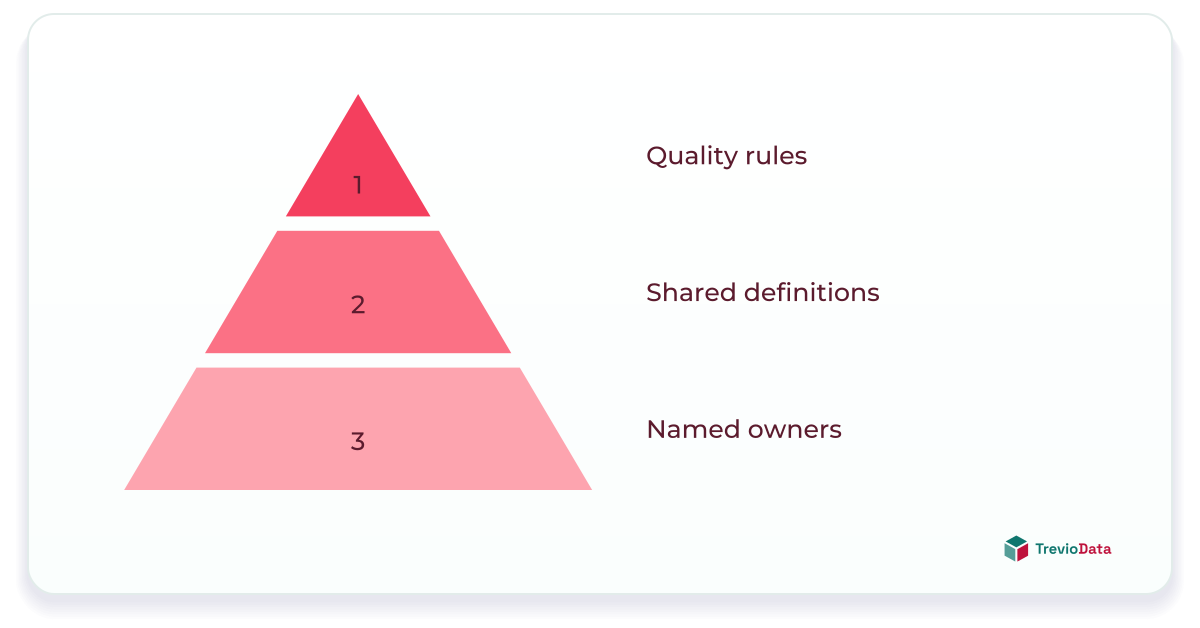
- Each priority domain has one named owner and a backup.
- Key metrics have written definitions that finance and sales both signed.
- A short decision log exists, so disputes have a place to be settled.
- Exit check: you can open one report where every number has a single agreed definition.
Phase 3: First Use Cases (Months 4 to 6)
Now you build something people can see. Choose two use cases from your scored list: one quick win that takes four to six weeks and one medium project that needs the new definitions. A good quick win is a trusted revenue dashboard, a churn report or a cleaned customer list. A good medium project is a forecast or a campaign model that depends on the work you did in phase two.
Measure each use case against the baseline from phase one. If reporting time fell from six days to four, write that down with the date. These numbers are what keeps your sponsor funding the next phase, and they are what you will show the board when someone asks what the strategy has delivered so far.
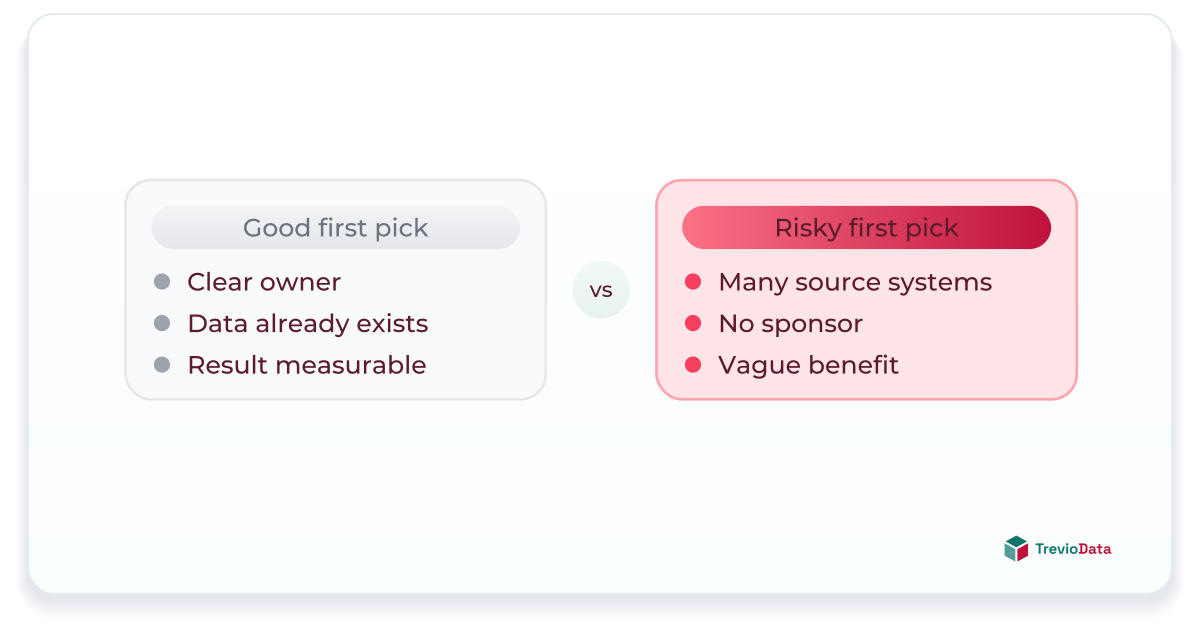
- Two use cases are live and used by named people.
- Each has a before and after number measured against the baseline.
- Known data issues found during the build are logged with an owner.
- Exit check: a business leader, not the data team, presents the result.
Phase 4: Scale (Months 7 to 12)
With proof in hand, you invest in the platform. This is the phase where pipelines, a warehouse or lakehouse and monitoring get built or rebuilt, because you now know which use cases they must serve. Buying a platform in month one is the mistake I see most often, and it usually ends with an expensive system that fits last year’s ideas.
Add use cases in batches of two or three, and keep a rule that each new one needs a business owner and a target before work starts. Review the roadmap every quarter in a one-hour steering meeting. Moving a milestone is fine, as long as someone writes down why. The data strategy implementation guide goes deeper on the delivery problems you will hit in this phase.
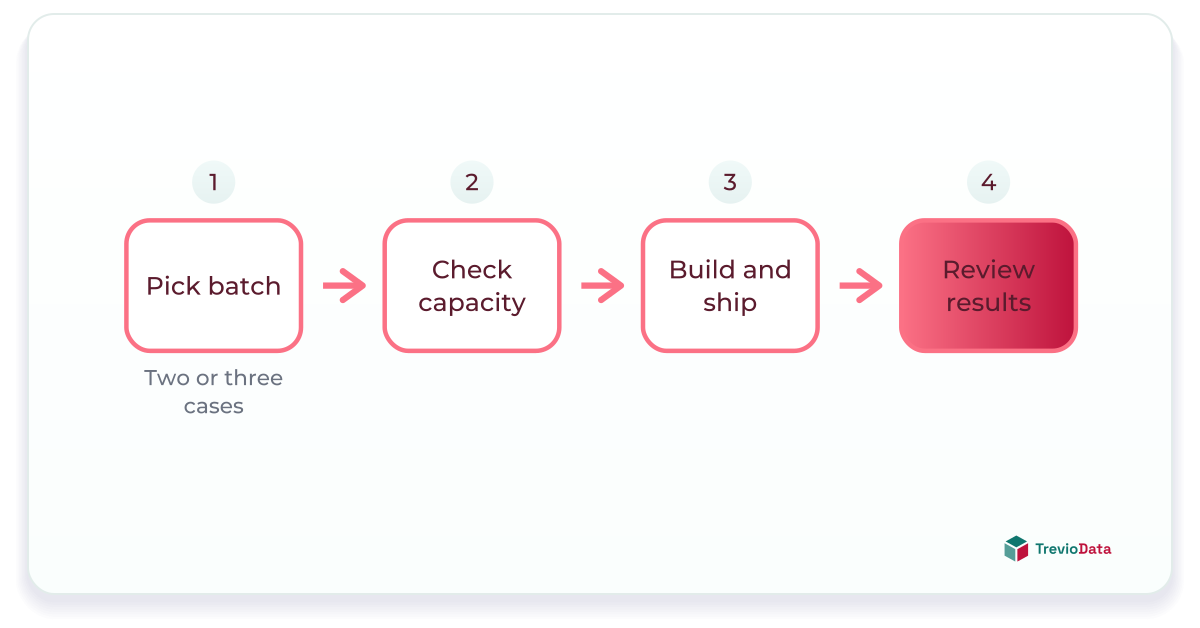
- Five to eight use cases run on shared, monitored pipelines.
- Data quality checks alert an owner before a user notices a problem.
- Platform cost per use case is tracked monthly.
- Exit check: a new use case can be started in weeks, not quarters.
Phase 5: Optimize (Months 13 to 18)
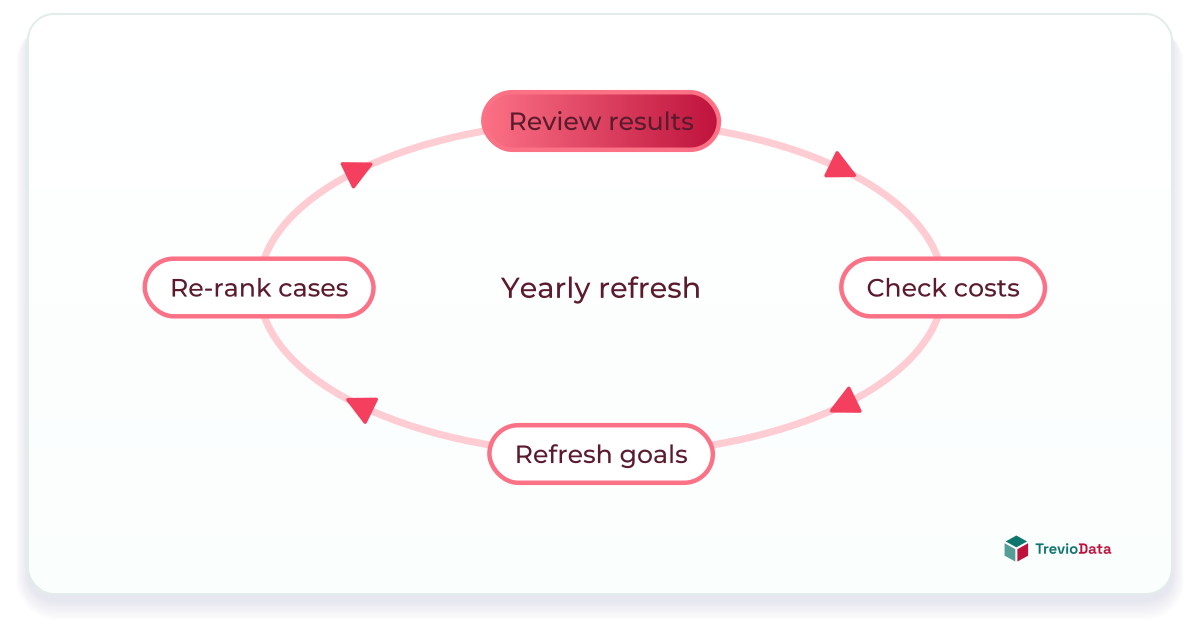
By now your first plan is partly wrong, and that is healthy. Compare what you expected with what happened: which use cases paid back, which cost twice as much as planned and which goals changed with the market. Retire the roadmap items that no longer earn their place and add new ones from real requests instead of guesses.
This is also the time to decide what to keep in-house and what to buy. Teams that built everything themselves often hand routine pipeline work to a partner here, and teams that outsourced everything pull the key decisions back. Either choice works if you make it on purpose.
- The strategy document is refreshed and re-approved by the sponsor.
- Costs and benefits are compared per use case, with honest notes on misses.
- Skills gaps are listed with a hire, train or buy decision for each.
- Exit check: next year’s roadmap has dates and owners again.
How the Timeline Changes by Company Size
The 18 months above fit a company of a few hundred people. Smaller and larger firms compress or stretch the same five phases, and the table shows typical ranges from my own projects. Treat them as planning ranges, because your data quality and sponsor availability move the dates more than headcount does.
| Company size | Phases 1 and 2 | First live use case | Full roadmap |
|---|---|---|---|
| Under 50 people | 3 to 5 weeks | Month 2 to 3 | 9 to 12 months |
| 50 to 500 people | 8 to 12 weeks | Month 4 to 5 | 15 to 18 months |
| 500+ people | 12 to 20 weeks | Month 5 to 7 | 24 months or more |
If you run a smaller business, skip the steering group and merge phases four and five. My notes on a data strategy for small business show what a lean version looks like.
Why Roadmaps Slip, and What to Do About It
In my experience, four things move dates: a sponsor who stops attending, a source system nobody understands, a definition fight that is never settled and a platform decision made too early. Each has a cheap fix if you catch it in the first month. The expensive version of each shows up in month nine.
Build slack in on purpose. I add a two-week buffer to every phase and tell stakeholders about it up front, which turns a slip into a planned use of time. When a milestone does move, update the roadmap page the same day, so nobody works from a stale copy.
A Milestone Checklist You Can Copy
Paste the list below into your own planning tool and replace the dates. Every line has an owner field in your tool, and any line without one is not ready to start.
- Week 2: sponsor named, ten interviews scheduled.
- Week 4: goals and baseline approved.
- Week 8: owners and metric definitions agreed for the first domain.
- Week 12: three to five domains covered, decision log live.
- Month 5: first use case live, result measured.
- Month 6: second use case live, steering group reviews results.
- Month 9: platform and monitoring support the first five use cases.
- Month 12: cost per use case reported to finance.
- Month 15: strategy refresh workshop held.
- Month 18: next roadmap approved.
How to Choose Your Starting Pace
Pick the pace that matches your sponsor’s attention, not your ambition. A fast plan with a distracted sponsor stalls in phase two, while a slow plan with an engaged sponsor keeps moving. Check these four things before you commit to dates:
- Your sponsor can give one hour every two weeks for the first quarter.
- At least one person can spend half their week on foundations.
- Your two most important reports are already known and listed.
- Budget for phase four is pencilled in, even if it is not approved.
If one or more of these is missing, start with phase one only and treat the rest as a proposal. That keeps expectations honest and still produces a useful baseline. Many teams find a short outside review helpful at this point, because it shows whether the dates are realistic before anyone has promised them.
Questions About Data Strategy Roadmaps
How Long Should a Data Strategy Roadmap Be?
Plan for 12 to 24 months, split into five phases or fewer. Anything shorter than a year rarely lets you show results, and anything longer than two years is guesswork. Keep the detail high for the next six months and low beyond that, then refresh the plan every quarter.
What Should the First 90 Days of a Data Strategy Include?
Leader interviews, a written goal list, a baseline of your current reporting and data quality, a named sponsor and owners for three to five domains. You should also have agreed definitions for your most disputed metrics. A live dashboard in 90 days is a bonus, and the foundations are the real target.
Who Should Own the Roadmap?
A business executive should sponsor it, and a head of data or program lead should run it day to day. If only IT owns it, business teams treat it as an IT project and stop showing up. The steering group reviews it every quarter with both sides in the room.
How Detailed Should Milestones Be?
Each milestone needs an owner, a date and a check that proves it is done. Skip internal task lists, which belong in your team’s own board. If a leader cannot tell from the milestone whether it was met, rewrite it.
When Should We Buy a Data Platform?
Wait until you know your first use cases, usually after phase three. Buying earlier locks in assumptions you have not tested. If your current tools are failing right now, fix the single worst bottleneck and defer the full platform decision.
How Do We Handle a Roadmap That Is Already Behind?
Pause and find the cause before moving dates. In most cases a missing owner, an unsettled definition or a blocked source system is behind it. Fix that item, reset the next milestone honestly and tell your sponsor the new date with the reason.
What Is the Difference Between a Data Strategy and a Roadmap?
The strategy explains what you want from your data and why. The roadmap says what you will do, in which order, with whom and by when. You need both, and the roadmap is the one people check every month.
Note: This article is general information, not legal, financial or tax advice. Figures and examples are estimates based on typical projects, so check current details with your providers and advisers before you decide.
Was this article helpful?
Thank you for letting us know.
Camille leads the Trevio editorial team and works with our consultants to turn real client projects into practical guides on data strategy, engineering and governance. Before joining Trevio, she spent 11 years in data engineering and analytics roles. She has since edited more than 300 articles on data management and reviewed pipelines and platforms from over 100 client projects. She is based in Denver, Colorado.