Key Takeaways
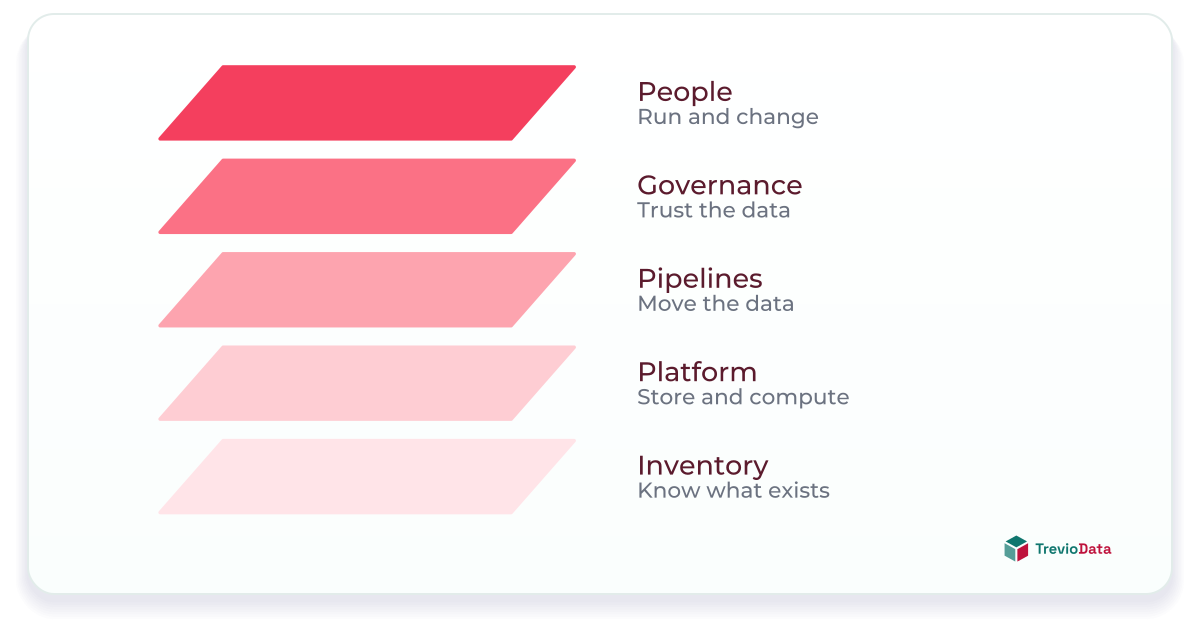
- The framework has five layers: inventory, platform, pipelines, governance and people.
- Work bottom-up: you cannot plan platform or pipeline work before the inventory is honest.
- A simple priority formula ranks workloads by value, risk and cost against effort.
- Score every system the same way, then adjust for deadlines and dependencies.
Ask five teams what data modernization means and you get five answers: a cloud move, a new warehouse, cleaner pipelines, better dashboards, AI readiness. A framework gives them one picture. In my data modernization consulting work, the first workshop is always about agreeing on the layers, because a disagreement about words becomes a disagreement about budget six months later.
This guide explains the five-layer model I use, how the layers depend on each other and how to rank workloads with a simple formula. A worked example and a checklist follow.
The Five Layers of the Model
Think of modernization as five layers stacked on each other. Each rests on the one below, and trouble in a lower layer shows up as noise in every layer above.
| Layer | Scope | Typical question | Typical failure |
|---|---|---|---|
| 1. Inventory | Systems, jobs, reports, owners, costs and dependencies | What do we run and who uses it? | Hidden systems discovered at cutover |
| 2. Platform | Storage, compute and the modeling layer | Where should this data live? | A platform sized for a demo, not your load |
| 3. Pipelines | Ingestion, transformation, scheduling and monitoring | How does data get there, and who hears when it breaks? | Silent failures and manual reruns |
| 4. Governance | Ownership, definitions, quality, access and retention | Who decides what the data means? | Faster access to numbers nobody trusts |
| 5. People | Skills, roles, training and ways of working | Who can run and change this? | A new stack run by the old habits |
Layer 1: Inventory, the Base You Cannot Skip
Every other layer depends on knowing what you have. The inventory lists systems, the jobs that move data between them and the reports people use. For each entry you record an owner, yearly cost, vendor support status and what breaks if it stops.
It also gives you each system's verdict: keep, move, rebuild or retire. The reasoning for these four choices is laid out in my data modernization strategy guide. Most programs find that a meaningful share of what they run can simply be retired, and that is the cheapest migration there is.
Layer 2: Platform, Chosen After the Inventory
The platform layer holds storage, compute and the place where data is modeled for reporting. Common patterns are a cloud data warehouse, a data lake and the lakehouse, which combines warehouse-style management with low-cost open storage, as described in the CIDR 2021 paper from Databricks and university authors (Lakehouse paper).
You pick the platform for your workloads, not for the vendor's keynote. Test two options on your first real workload and measure load time, query time, cost and how easy it is for your team to operate. Teams that need help with the choice often start with my overview of the data management framework, which covers the day-to-day rules the platform must support.
Layer 3: Pipelines, Where Most Pain Lives
Pipelines move data in and shape it for use. Modernizing them usually means three changes: moving from fixed nightly batches to a mix of batch and incremental loads, replacing scripts with tested transformations in version control and adding monitoring that alerts a named person.
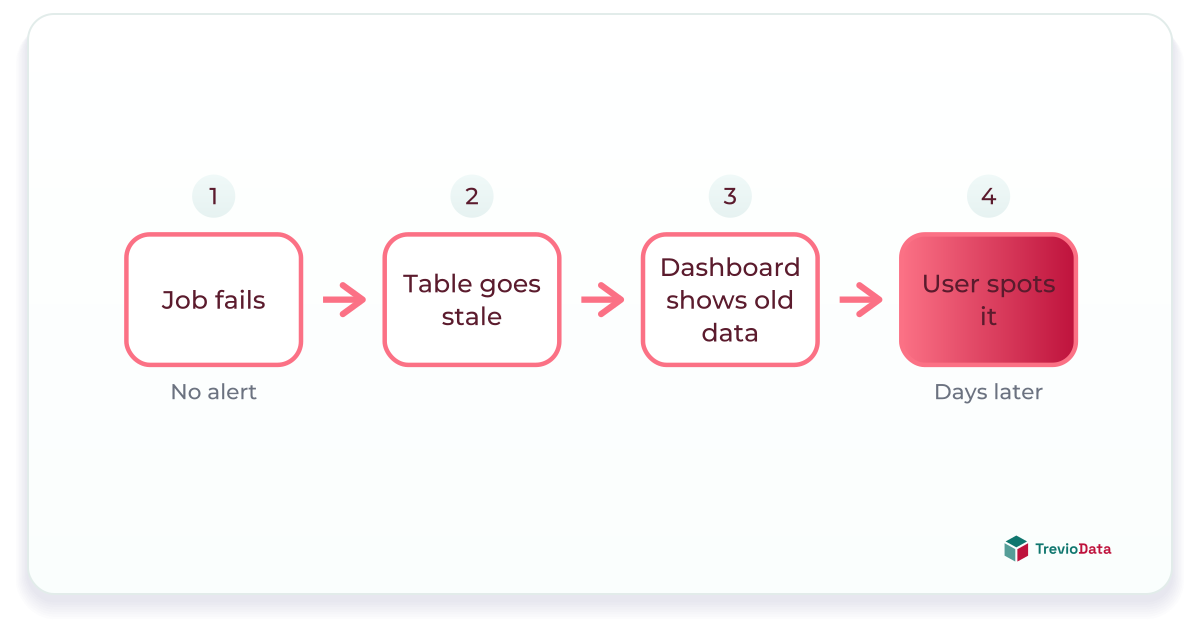
Silent failure is the enemy. A job that fails loudly gets fixed the same day, while a job that quietly loads half the rows distorts reports for weeks. Set freshness and row-count checks on every pipeline that feeds a report people rely on.
Layer 4: Governance, the Layer People Skip
Faster pipes make bad data arrive faster. Governance puts a named owner on each domain, agrees definitions for key numbers, sets quality tests and decides who may see what. You do not need a heavy program. Five definitions and a clear owner for customers and products give most teams a visible improvement within a quarter.
The challenges that appear when this layer is missing are covered in my list of data modernization challenges, and the habits that prevent them are in the data modernization best practices.
Layer 5: People and Ways of Working
A new stack run with old habits becomes an old stack on new hardware. Plan training for analysts and engineers, change who is on call and decide who owns each pipeline after go-live. Budget the learning time. In my client work, teams that set aside a few hours a week for learning in the first quarter had fewer production incidents than those who did not.
Treat people as a layer, with its own milestones: roles named, training done, on-call rota agreed, documentation handed over. The timing of these steps is part of the data modernization roadmap.
The Priority Formula for Ranking Workloads
To decide what moves first, score each workload on four things, each from one to five:
- Business value: how much people rely on it.
- Risk of staying: support deadlines, failures and security exposure.
- Run cost: licenses, hosting and the hours spent keeping it alive.
- Effort to move: sources, code volume and undocumented logic.
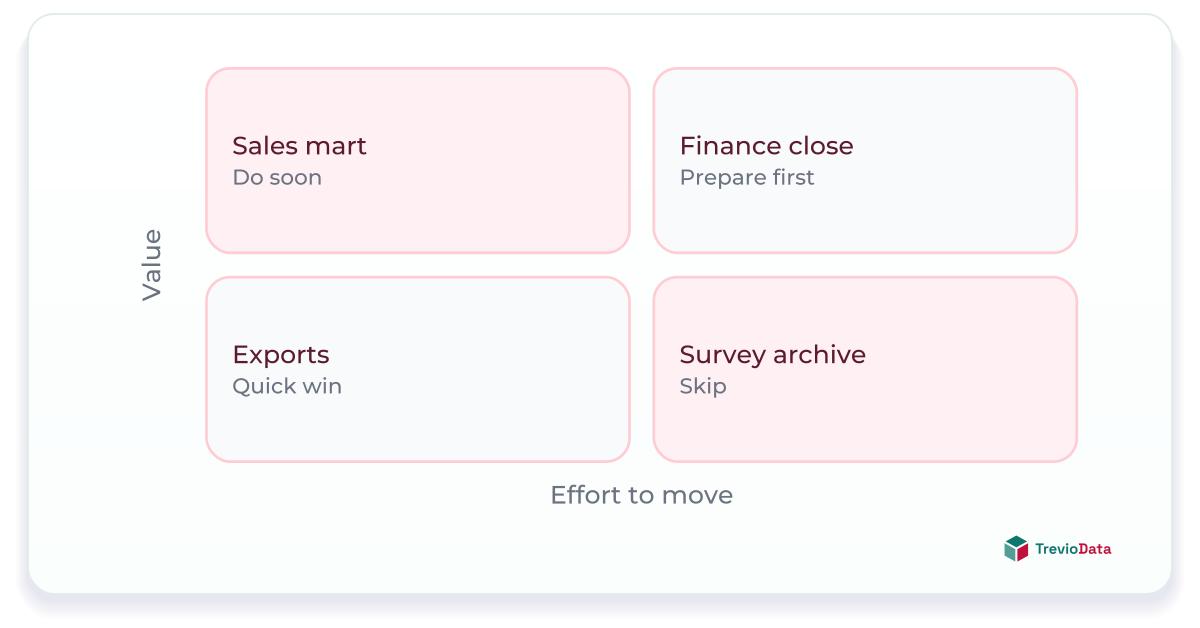
Then calculate: Priority = (Value + Risk + Cost) ÷ Effort. A high score means the workload pays off and is easy to move. A low score means it is a later stage or a retire candidate.
A Worked Example With Five Workloads
| Workload | Value | Risk | Cost | Effort | Priority |
|---|---|---|---|---|---|
| Sales reporting mart | 4 | 3 | 4 | 2 | 5.5 |
| Marketing exports | 2 | 2 | 3 | 1 | 7.0 |
| Finance close database | 5 | 5 | 4 | 5 | 2.8 |
| Inventory feeds | 4 | 4 | 3 | 3 | 3.7 |
| Old survey archive | 1 | 2 | 2 | 2 | 2.5 |
The marketing exports score highest because they are cheap to move, but their value is low. For a first stage, I would pick the sales reporting mart: high value, moderate effort and a visible win. The finance close scores low because of effort, and it carries the highest risk, so it moves later with a full parallel run. The survey archive is a retire candidate.
How Mature Is Each Layer in Your Business?
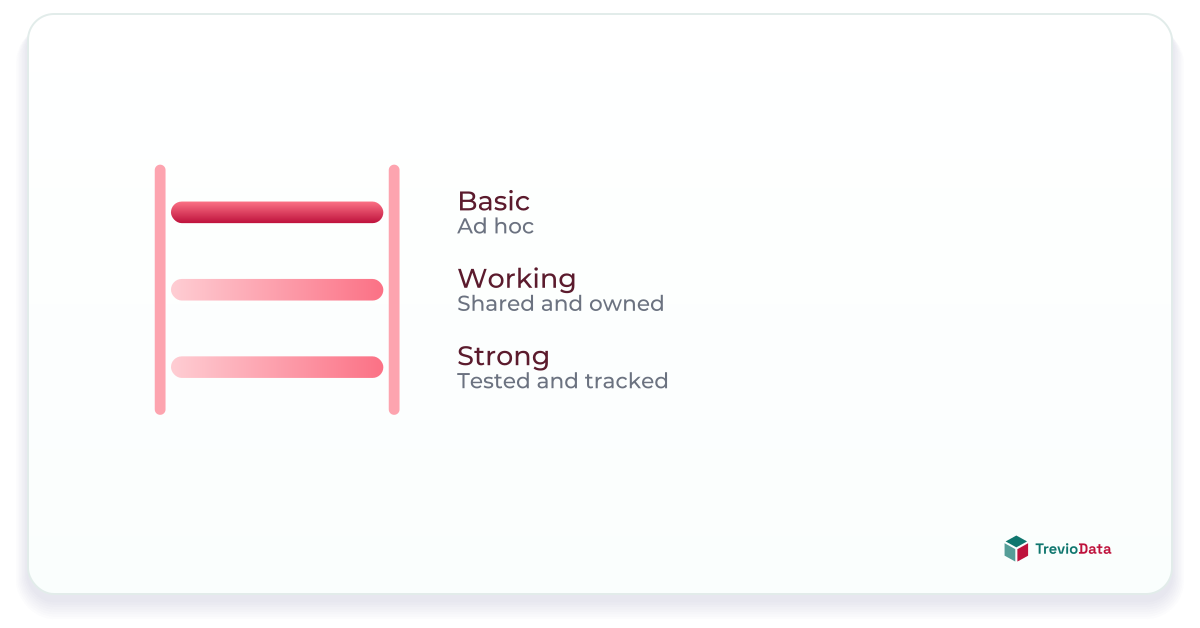
You can use the layers as a quick self-assessment. Rate each one as basic, working or strong, and look for the weakest. The weakest layer sets the pace for everything above it, which is why a polished platform on top of a weak inventory disappoints.
| Layer | Basic | Working | Strong |
|---|---|---|---|
| Inventory | Partial list in a spreadsheet | Full list with owners | Lineage and costs kept current |
| Platform | Several unmanaged databases | One main platform in use | Sized, monitored and cost-tracked |
| Pipelines | Scripts run by hand or cron | Scheduled jobs with retries | Tested, versioned and alerting |
| Governance | No named owners | Owners for core domains | Definitions, quality tests and access reviews |
| People | Knowledge in one head | Documented and shared | Trained team with on-call rota |
Most mid-sized companies I meet rate basic or working on all five. That is normal and not a reason to delay. Choose the weakest layer that blocks your first workload, lift it one level and move on. Chasing strong across all five before you start would take years and delay any result.
Repeat the rating every quarter. Seeing a layer move from basic to working is a good, simple progress signal for sponsors, and it shows where the next effort should go.
How the Layers Depend on Each Other
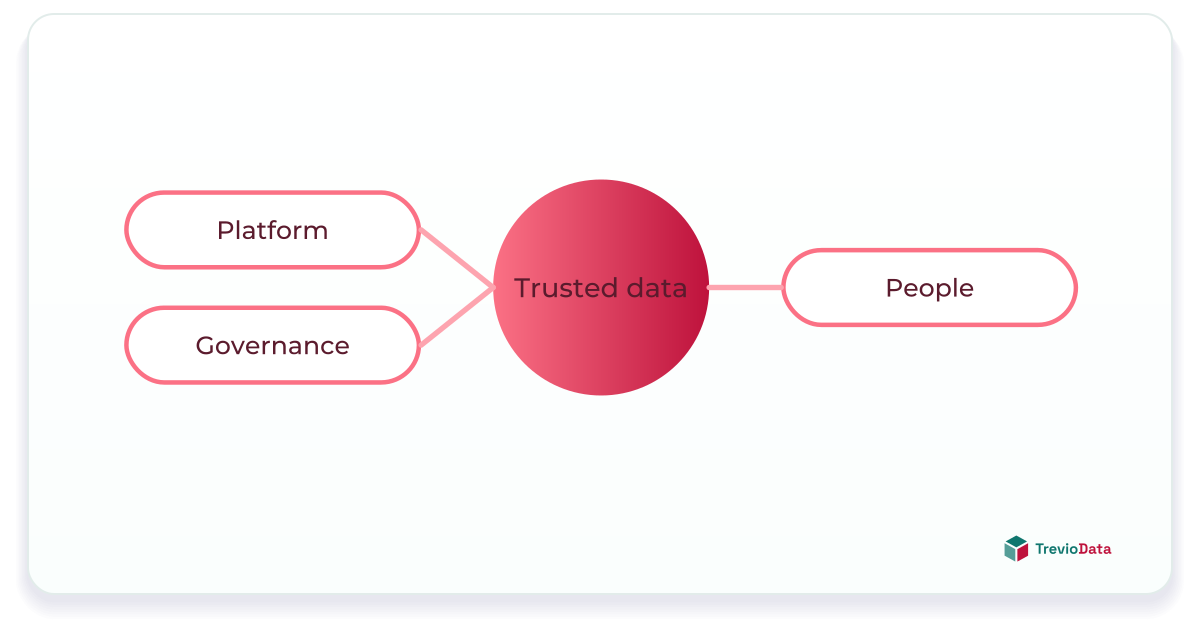
The layers are not independent. A weak inventory misleads the platform choice, a weak platform limits what pipelines can do and weak governance undermines the trust people place in everything above it. Fixing a higher layer without the lower one produces short-lived improvements.
Take a common case. A company buys a new warehouse and rebuilds its pipelines, and users still distrust the numbers. The cause is usually layer four: no owner decided what active customer means, so two reports disagree on the faster platform too. Going back down the stack to name an owner and agree a definition fixes it in a week.
The reverse also happens. A team spends months on governance meetings while reports run on a failing nightly job. Pipelines were the bottleneck. When a problem appears, ask which layer it sits in before choosing a fix, and you will save yourself a purchase or two.
Where Tools and Standards Fit
Tools sit inside the layers, not above them. The warehouse or lake belongs to layer two, orchestration and transformation tools to layer three and catalogs to layer four. The DAMA body of knowledge is a useful reference for governance vocabulary (DAMA-DMBOK), even if you use only a slice of it.
Buy tools after you know which layer has the gap. A catalog does not fix a pipeline problem, and a new orchestrator does not fix a missing owner.
How to Apply the Framework to Your Business
Run the model as a checklist. For each layer, answer the question and mark the gap:
- Inventory: can you list every system that feeds a report, with an owner?
- Platform: do you know the load and query pattern of your first workload?
- Pipelines: does a named person get an alert when a key job fails?
- Governance: do the five most disputed metrics each have one definition?
- People: can your team run the target platform without outside help?
Fix the lowest layer with a gap first. Then score your workloads with the formula, pick the top one that fits your capacity and write down the exit criteria. A short call is often enough to check the scoring before you commit.
Questions About the Data Modernization Framework
What Is a Data Modernization Framework?
It is a model that breaks modernization into parts you can plan and measure: the data and systems you run, the platform they move to, the pipelines that connect them, the rules that govern them and the people who use them. It gives your team shared words for the work, so a conversation about moving a report and one about retiring a database use the same logic.
Do I Need a Formal Framework to Modernize?
You need a shared way of deciding, and a framework is that. It can be one page. Teams without one tend to make each migration decision from scratch, which is slow and produces inconsistent results.
How Is This Different from a Data Management Framework?
A data management framework describes how you handle data every day. A modernization framework describes how you change the systems that hold and move it. They overlap on ownership and quality, and you will use both.
Which Framework Layer Should I Fix First?
Start with the foundation layer: inventory, owners and verdicts. Without it, platform and pipeline work lands on the wrong systems. After that, the layer that hurts most today is usually the pipeline layer.
How Do I Score Workloads with the Priority Formula?
Rate business value, risk of staying and run cost from one to five, then divide the sum by the effort to move, also rated from one to five. Higher results go first. The score is a conversation starter, so adjust for deadlines and dependencies before you finalize the order.
Can a Small Company Use This Framework?
Yes. A small company runs fewer systems, so the inventory is short and a single person can hold several roles. The layers stay the same, and the whole model can be applied in a few weeks.
How Often Should I Review the Framework?
Review it every quarter during the program and once a year afterward. Systems change, new data sources appear and priorities shift, so rankings and verdicts need updating.
Sources
- Armbrust et al.: Lakehouse, A New Generation of Open Platforms (CIDR 2021)
- DAMA International: Body of Knowledge
Note: This article is general information, not legal, financial or tax advice. Figures and examples are estimates based on typical projects, so check current details with your providers and advisers before you decide.
Was this article helpful?
Thank you for letting us know.
Camille leads the Trevio editorial team and works with our consultants to turn real client projects into practical guides on data strategy, engineering and governance. Before joining Trevio, she spent 11 years in data engineering and analytics roles. She has since edited more than 300 articles on data management and reviewed pipelines and platforms from over 100 client projects. She is based in Denver, Colorado.