Key Takeaways
- A realistic roadmap has five stages, from the first 30 days to year two.
- Name owners and settle definitions first, then add a catalog around month four to six.
- Show a visible result inside 90 days, then repeat the playbook one domain at a time.
- Review milestones monthly and cut scope before you move dates.
A governance roadmap turns good intentions into dated work. Without one, programs drift: a policy gets written, a tool gets bought and six months later nobody can say what changed. My data governance consulting projects use the same five-stage shape every time, and you can copy it.
The timing below reflects what I see in mid-sized companies with a sponsor and a part-time lead. Larger or heavily regulated organizations take longer. Treat the dates as a starting point and adjust them to your own capacity.
The Five Stages at a Glance
| Stage | Timing | Main milestone | Who leads |
|---|---|---|---|
| 1. Foundations | Days 0 to 30 | Sponsor, goals, first domain and baseline agreed | Sponsor and governance lead |
| 2. First Domain | Days 31 to 90 | Owners named, five definitions settled | Domain owner |
| 3. Rules in Action | Months 4 to 6 | Access, quality and sensitivity rules live, catalog set up | Governance lead and stewards |
| 4. Scale Out | Months 7 to 12 | Second and third domain governed | Council |
| 5. Embed | Year two | Governance built into projects and onboarding | Sponsor and council |
Stage 1: Foundations, Days 0 to 30
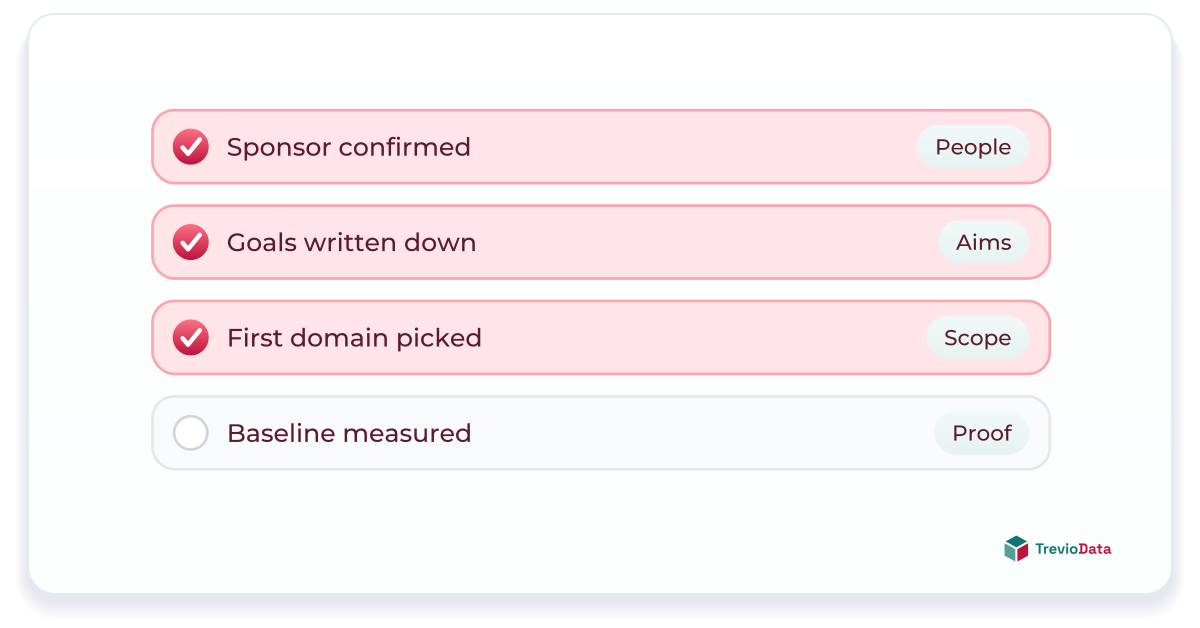
The first month is about decisions, not documents. You confirm a sponsor, choose two or three business goals and record a baseline for each, such as days to close the books or days to approve data access. You also pick the first domain with a simple score for value, error cost, sensitivity and effort.
Milestones for this stage:
- Executive sponsor named and time committed.
- Governance lead appointed, even part-time.
- Goals written with baselines you can measure.
- First domain chosen and owner agreed.
The most common delay here is waiting for the perfect sponsor. Pick the most senior person who feels the pain, and move on. If you are unsure how to rank domains, my data governance strategy guide shows the scoring method.
Stage 2: First Domain, Days 31 to 90
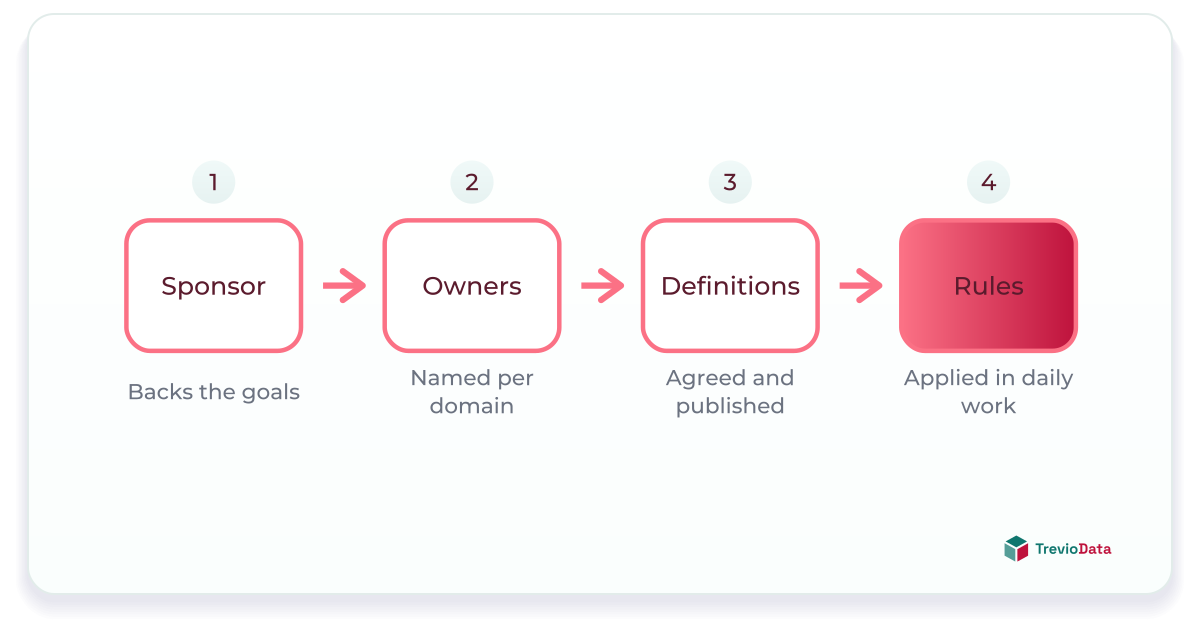
Now you do the real work on one domain. Run a short workshop for each of the five metrics people argue about most, and write one definition, one formula and one source for each. Name the owner and steward, and agree how they will handle conflicts.
Publish the results somewhere people already look, such as the shared drive or the BI tool's landing page. The goal for day 90 is concrete: a reduction in disputed numbers that your sponsor can see. In my client work, this stage often surfaces a surprise, such as a report that nobody owns but half the company uses.
Milestones and Evidence for the First 90 Days
| Milestone | Target | Evidence |
|---|---|---|
| Owner and steward named | Day 45 | Written in the decision log |
| Five definitions agreed | Day 75 | Glossary page with owners |
| Disputed reports reviewed | Day 90 | Count compared with baseline |
A Small Example of Stage 2 Going Wrong
One mid-sized retailer I worked with held its first definition workshop with eleven people and left with no decisions. We cut the next one to the owner, the steward and one person from each disputing team, and settled the definition in forty minutes. Keep workshops small and bring a draft, since people react to a draft faster than they create one from nothing.
Expect two or three rounds per metric. When a definition cannot be settled, record the open question, name who will decide and set a date. An open item with an owner is progress, and an open item without one is how programs stall.
Stage 3: Rules in Action, Months 4 to 6
With owners and definitions in place, you can write rules that people will follow. Add sensitivity labels, an access path with a response target and three to five quality tests on the most important datasets. Failures go to the owner, not to a shared inbox.
This is also the point where a tool starts to pay off. Load the owners, definitions and labels into a catalog, and turn on lineage for the first domain. Your choice depends on your stack, and my ranking of data governance tools helps you narrow it down. Plan implementation time, since catalog connections and permissions take longer than demos suggest.
Check the current legal requirements that apply to your sensitive data with your legal advisor before you set retention and access rules, and record what you decided and why.
Staffing the Stages Realistically
Most mid-sized programs run on a part-time governance lead, one owner per domain and one or two stewards. Owners need about two to three hours a week in stage two, and stewards need more once the catalog goes live. Put those hours in the plan and ask managers to confirm them, because unplanned governance work gets pushed aside the first time a deadline appears.
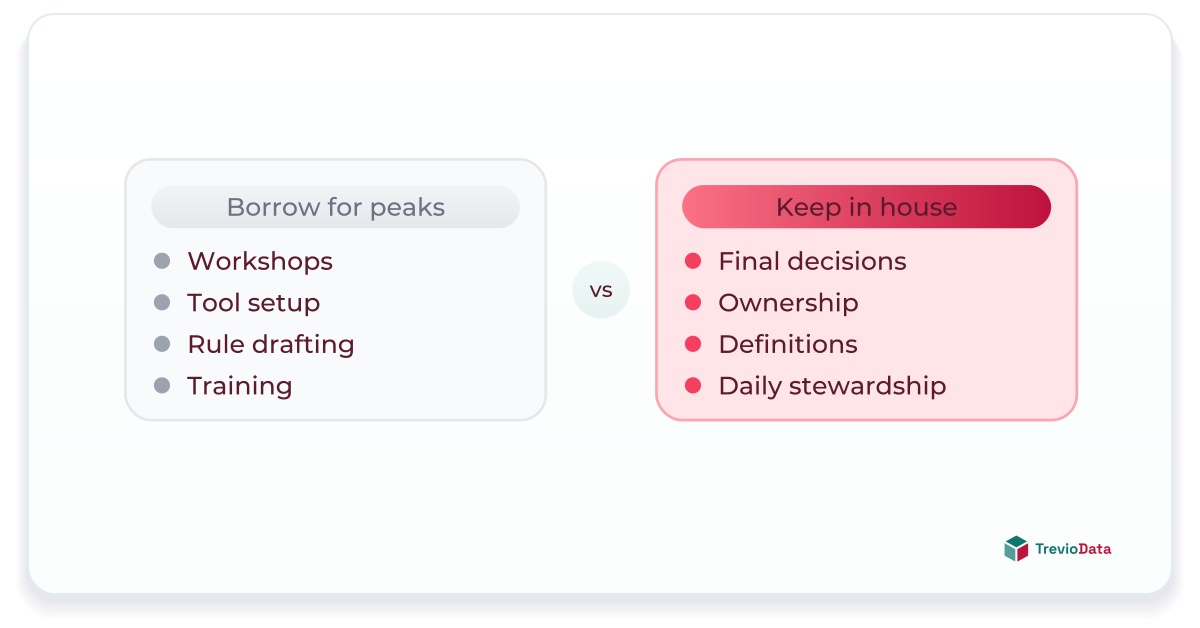
If you lack the people, borrow them for the heavy stages. Workshops, tool selection and the first catalog load are good places for outside help, and day-to-day stewardship should move to your own team as soon as the routines are stable. A handover plan with documentation and training keeps the capability in your company.
Budget deserves the same honesty. Count staff time first, then tool licenses, then implementation help. A common mistake is to fund the license and leave the people unfunded, which produces a tool nobody has time to use. Ask your sponsor to approve the hours and the money together, and write both into the roadmap so they are reviewed together each quarter.
Stage 4: Scale Out, Months 7 to 12
Repeat the playbook on the second and third domain. Each one goes faster, because templates, workshop formats and the decision log already exist. Expect the second domain to take about two thirds as long as the first.
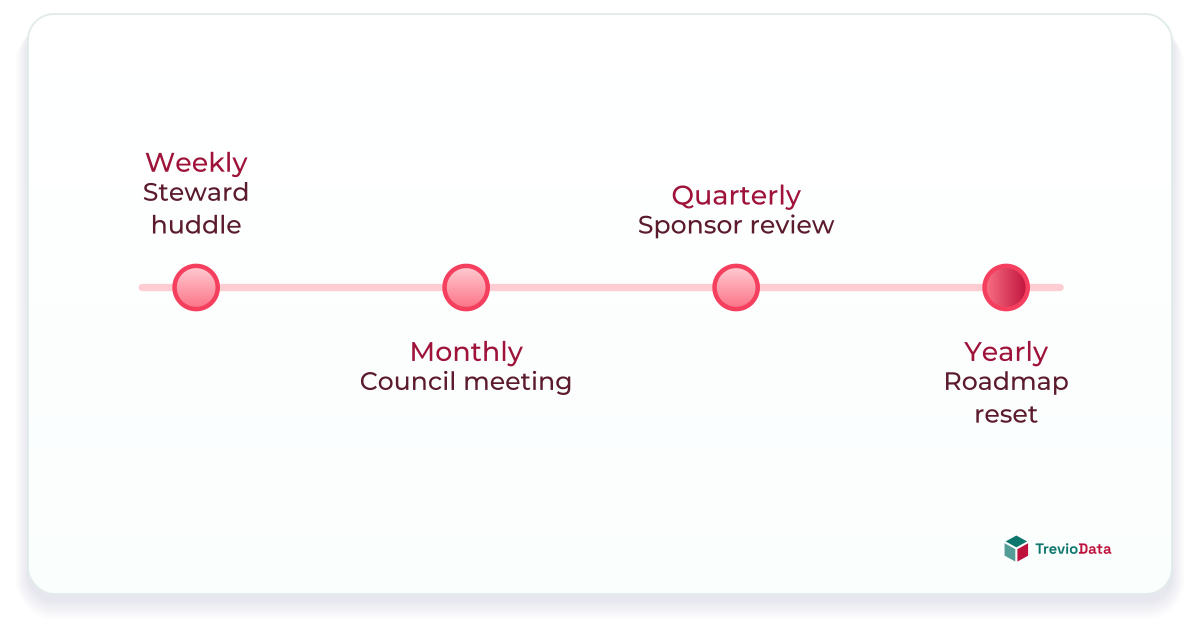
Add a monthly council to settle cross-domain conflicts, such as two domains defining "active customer" differently. Report your four measures to the sponsor: ownership coverage, access turnaround, disputed reports and quality pass rate. Real companies show this pattern; the data governance examples I reviewed grew domain by domain and not all at once.
What Usually Slips in This Stage
Owner time is the first casualty. People agree to the role and then lose their calendar to other work. Ask each owner to block a recurring hour a week, and have the sponsor confirm it. The second slip is scope: a new domain brings a new set of systems, and effort grows. Cut features before you cut dates.
How to Report Progress to Your Sponsor
Send one page each month. Show the four measures against the baseline, list the milestones due next month and name any blocker that needs a decision from the sponsor. Keep the tone plain. Sponsors who see steady, honest numbers keep supporting the program, and sponsors who hear only good news lose trust when a problem finally surfaces.
Include one short story each month, such as a report that used to be disputed and now is not. People remember stories long after they forget percentages, and your owners will repeat them to their own teams.
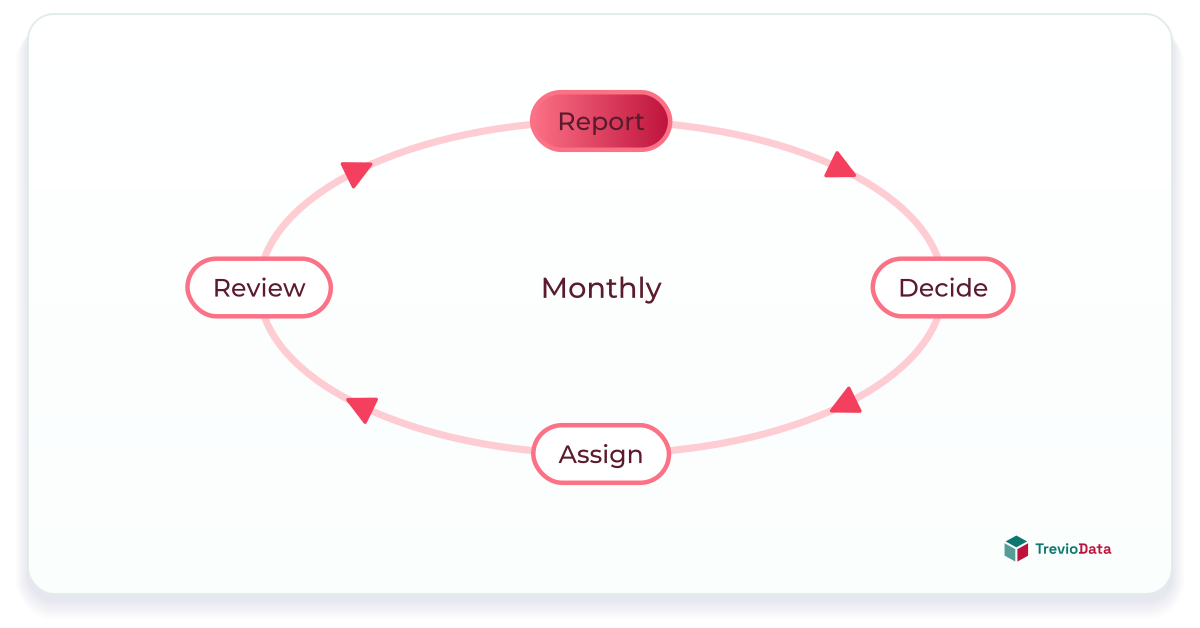
Keep one running list of decisions that were postponed. Review it at each council meeting and close at least one item every month. A growing backlog of postponed decisions is an early warning that owners lack time or authority.
Stage 5: Embed, Year Two
By year two, governance should sit inside normal work. New projects check owners and sensitivity at kickoff, new hires learn the glossary during onboarding and new data sources go through the same intake as the first ones. The governance lead spends more time coaching and less time chasing.
Review the roadmap itself at the start of the year, drop milestones that no longer matter and add the ones leaders now ask about. Use this stage to widen the use cases. Approving data for AI, safe sharing with partners and data products all build on the owners and rules you already have. My list of data governance use cases ranks them by return, so you can decide which to add next.
How to Choose Your Own Timeline
Copy the stages, then adjust the dates with four questions:
- How many hours a week can your owners really give?
- How many systems feed your first domain?
- How strict are your audit and privacy obligations?
- Do you have a platform change that can share milestones?
If owners have two hours a week and your domain has more than five systems, add a month to every stage. If you face heavy oversight, bring access and sensitivity rules forward into stage two. A short call usually settles the timing, and a written plan keeps everyone honest.
| Situation | Adjustment to the roadmap |
|---|---|
| Small team, one main system | Compress stages 2 and 3 into one quarter |
| Many systems per domain | Add a month to each stage |
| Heavy audit obligations | Pull access and sensitivity rules into stage 2 |
| Platform migration in progress | Align owner naming with the migration plan |
Questions About Building a Data Governance Roadmap
How Long Does a Data Governance Roadmap Take?
A first visible result usually takes about 90 days, and a solid first-year program covers two domains. Full coverage of a large company takes years, because each domain needs owners, rules and habits. Plan in stages and set a review point at the end of each one, so you can adjust before moving on.
What Should Be on a Data Governance Roadmap?
Include the business goal, the domains in order, the roles you will fill, the policies and standards you will write, the tools you will add and the metrics you will track. Each item needs an owner and a target month. Anything without both is a wish, not a milestone.
Should I Buy a Tool at the Start of the Roadmap?
Usually not. Roles, definitions and a review rhythm come first, and a catalog goes in around month four to six, once you have owners and rules to load into it. Buying earlier often leaves you with an empty catalog and a license to pay for.
How Many People Do I Need to Run Governance?
A small company can start with a part-time governance lead and one owner per domain. Larger organizations add a full-time lead and stewards for each domain. What matters most is that owners have time set aside, usually a few hours each week.
How Do I Keep a Roadmap from Slipping?
Keep stages short, review them monthly and cut scope instead of moving dates. Slips usually come from owners without time and sponsors who are not involved. Fix those two causes first, and the schedule mostly takes care of itself.
What Is the Difference Between a Roadmap and a Strategy?
A strategy says why you govern data and what you will focus on. A roadmap puts those choices in time order, with milestones, owners and dates. You need both, and the roadmap is the one that your teams check each month.
Can I Run the Roadmap Alongside a Platform Migration?
Yes, and it often helps. A migration forces you to decide what data you keep, who owns it and how sensitive it is. Align the governance milestones with the migration plan so owners are named before data moves.
Note: This article is general information, not legal, financial or tax advice. Figures and examples are estimates based on typical projects, so check current details with your providers and advisers before you decide.
Was this article helpful?
Thank you for letting us know.
Camille leads the Trevio editorial team and works with our consultants to turn real client projects into practical guides on data strategy, engineering and governance. Before joining Trevio, she spent 11 years in data engineering and analytics roles. She has since edited more than 300 articles on data management and reviewed pipelines and platforms from over 100 client projects. She is based in Denver, Colorado.